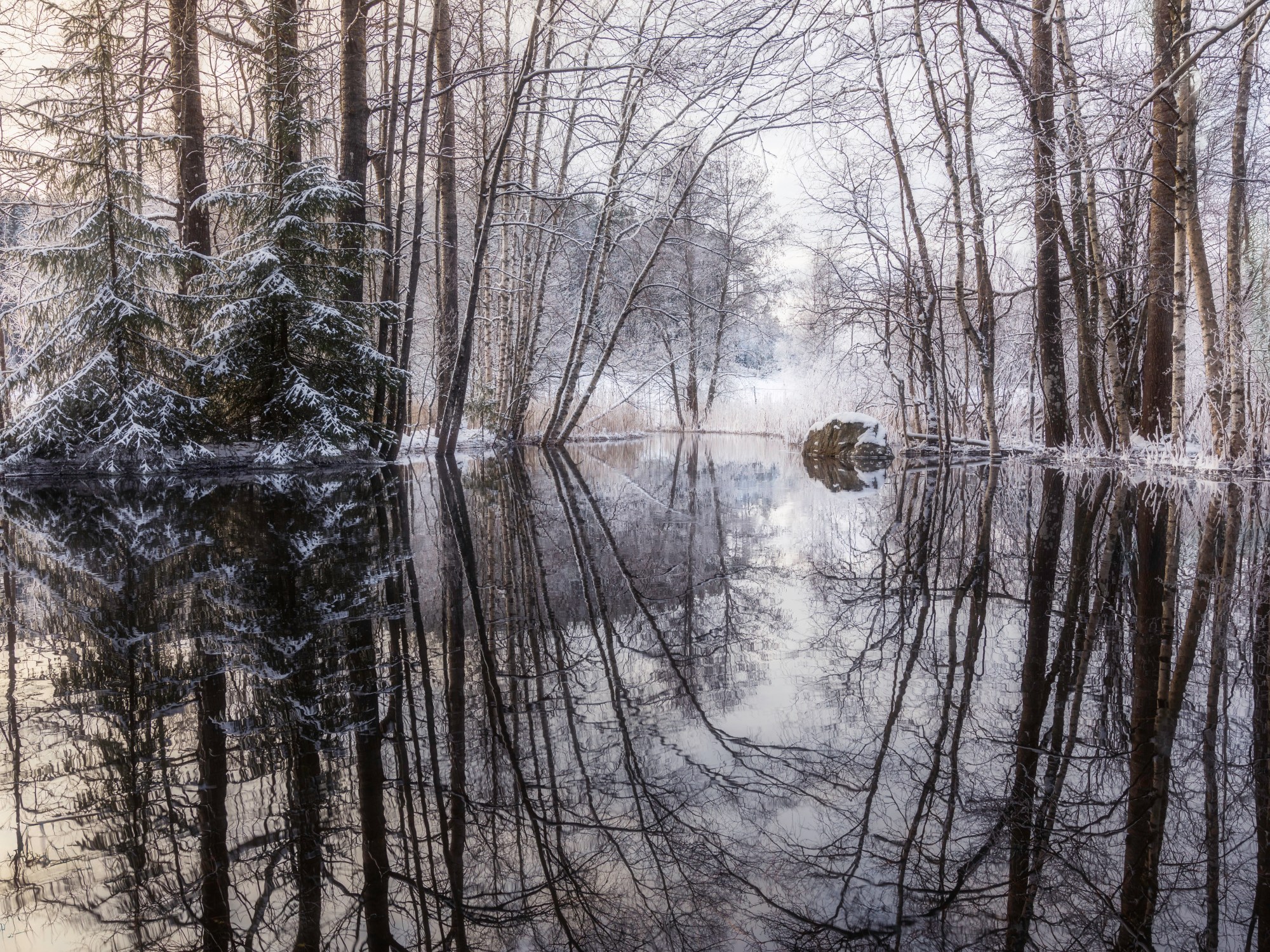
I am studying photography in a one-year course at Kamerakoulu.fi. Our latest task was to create a mini-project featuring at least ten photographs and the topic was completely open. The time to finish the task was only three weeks, which meant quite a lot of work.
Choosing my topic didn’t take long. Flowing water, the various forms of ice, and cultural landscapes are themes close to my heart. I decided to focus on the Kärkelä River and its surroundings, located in the historic Kärkelä ironwork area. The name of my project is: By the Kärkelä River.
Kärkelä River and its surroundings
The Kärkelä copper smelter was established in 1776, with copper production continuing until the 1880. After that, the area transitioned into use as a farm. The ironwork’s area still boasts about twenty well-preserved red ocher-painted workers’ houses. The current owners rent houses out as summer homes. The Kärkelä ironwork is a part of the industrial and ironwork history of eastern Southwest Finland and western Uusimaa. In case you want to read more (in Finnish) about Kärkelä click HERE.
Photo trips to Kärkelä
On weekends, when the sun peeked through the clouds, I took the opportunity to photograph in Kärkelä. On cloudy days the river is pretty dark as there are tall trees growing by the river. When photographing with tripod the darkness does not matter, but especially photographing birds, you need light. I also wanted to have beautiful golden tone in some of my photographs. Because of this, I had to return to the river four times.
By the Kärkelä River – Photo gallery
The final choice for my mini-project includes 14 photographs. In my opinion, they beautifully capture the essence of the Kärkelä River and the surrounding nature.
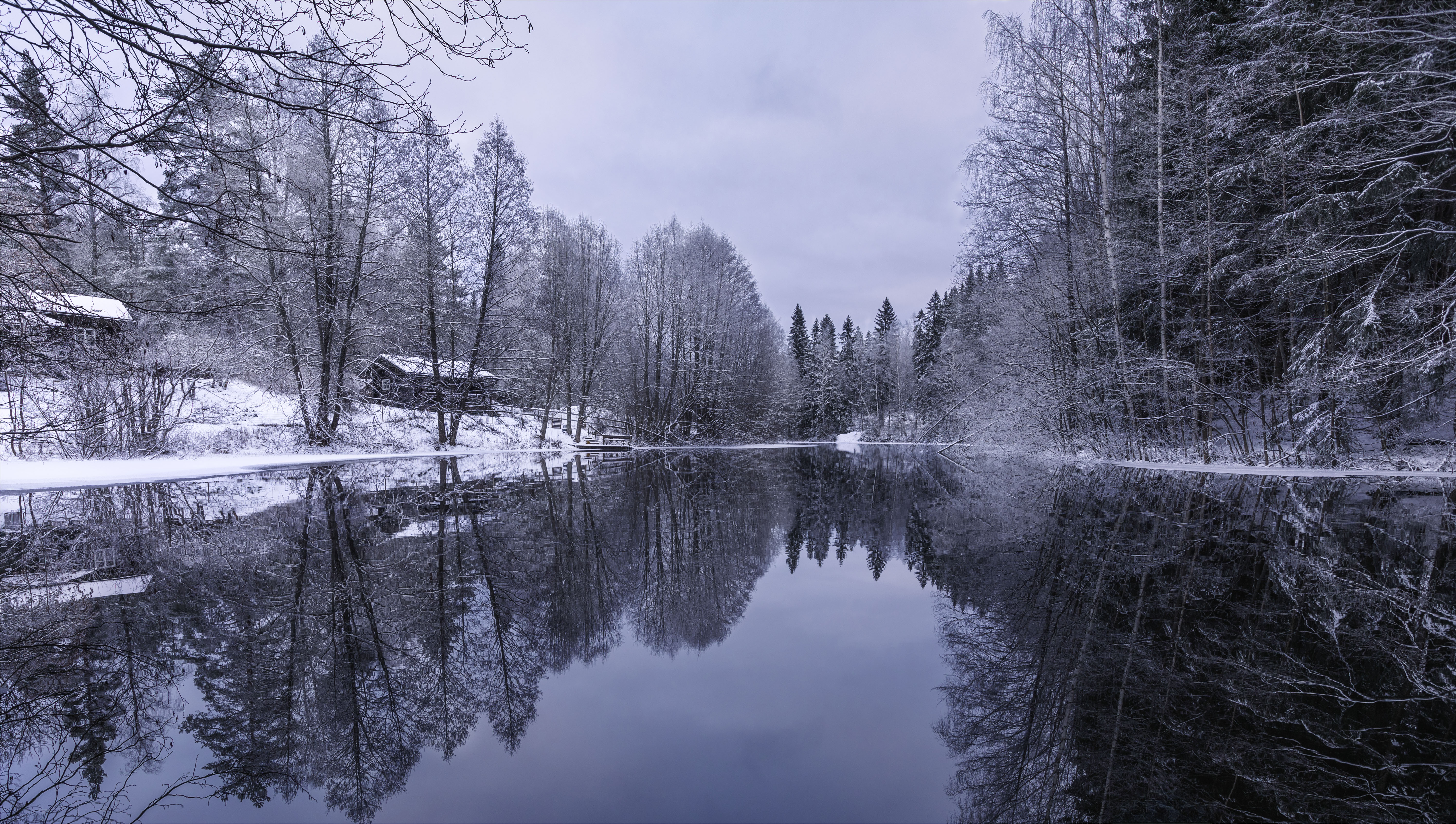
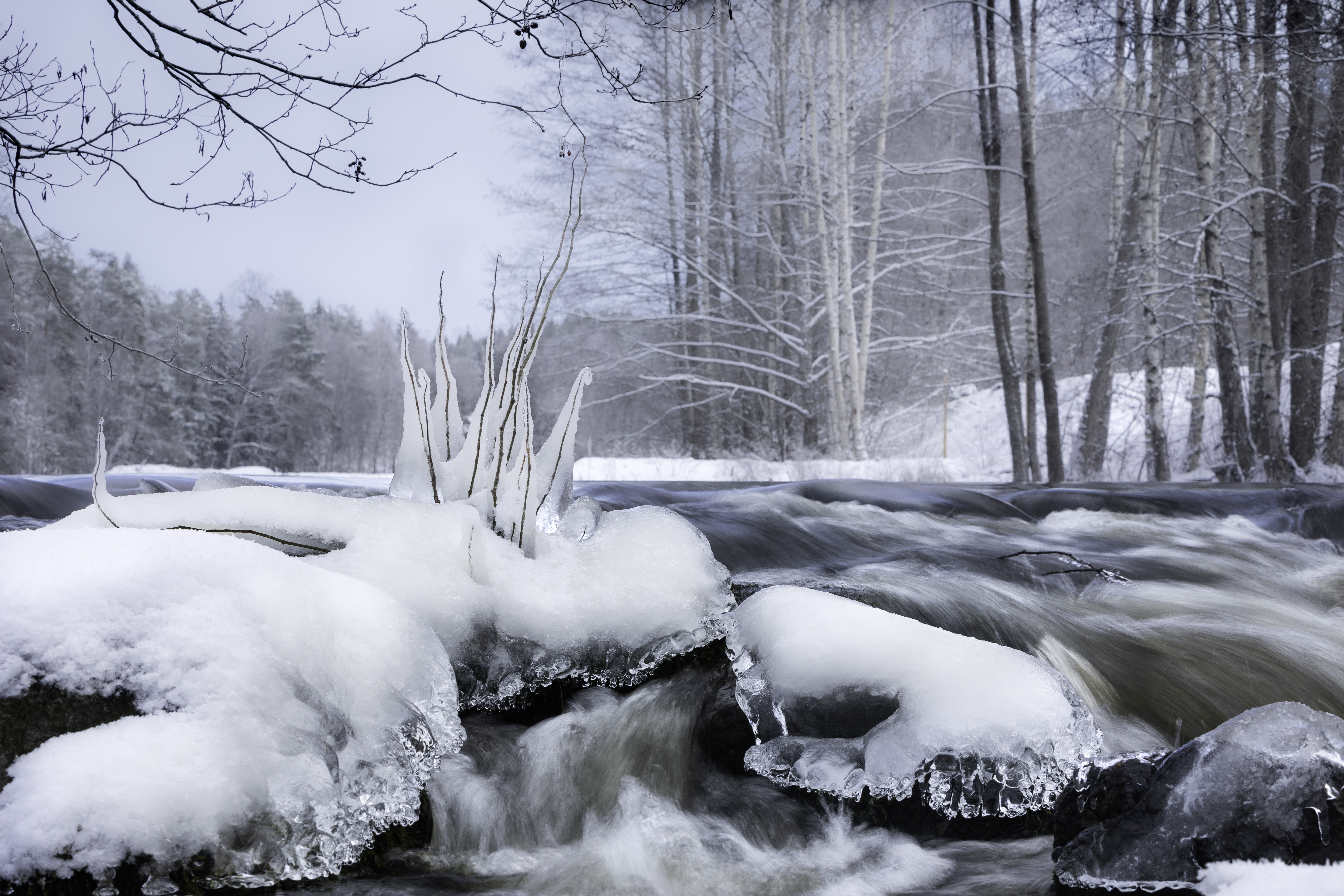
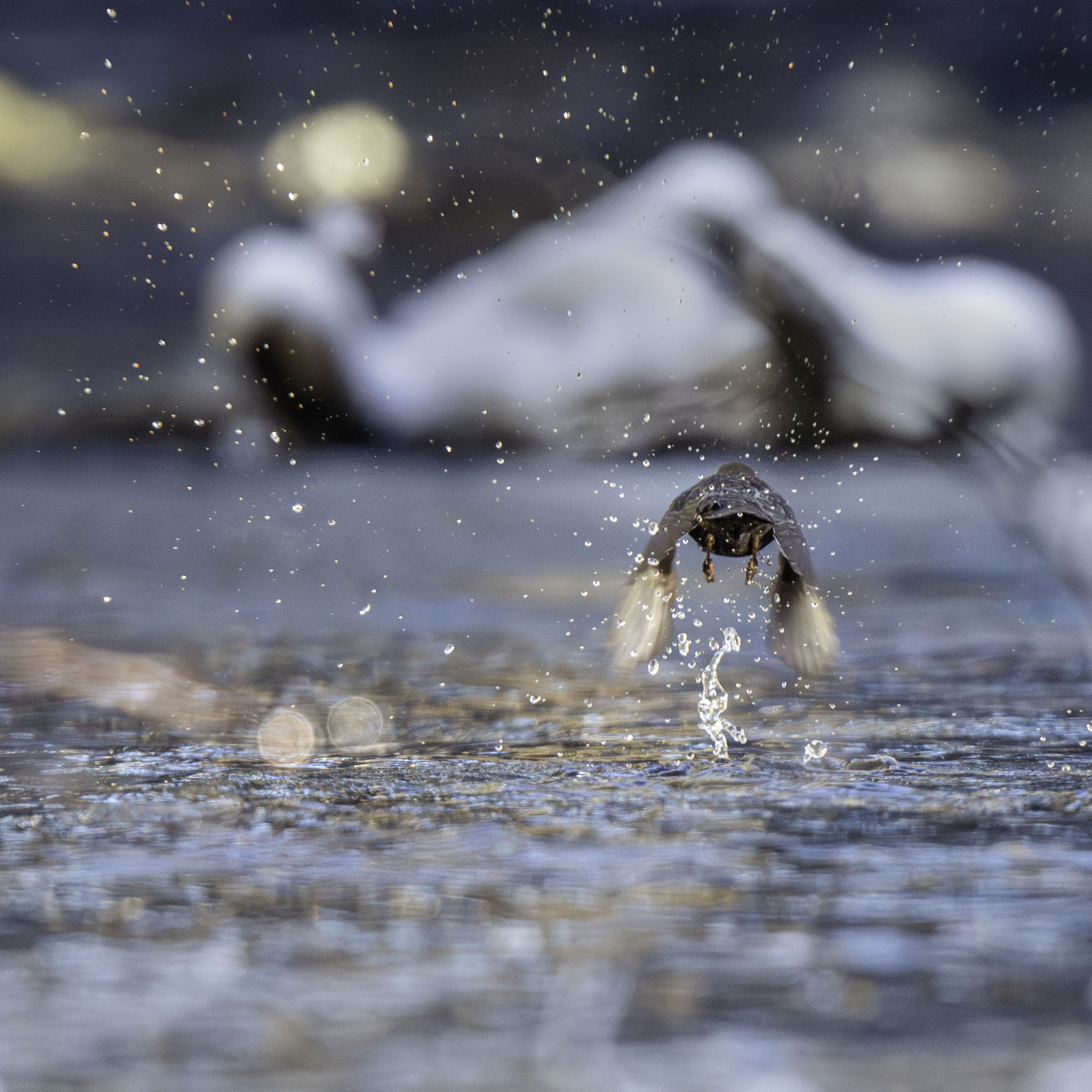
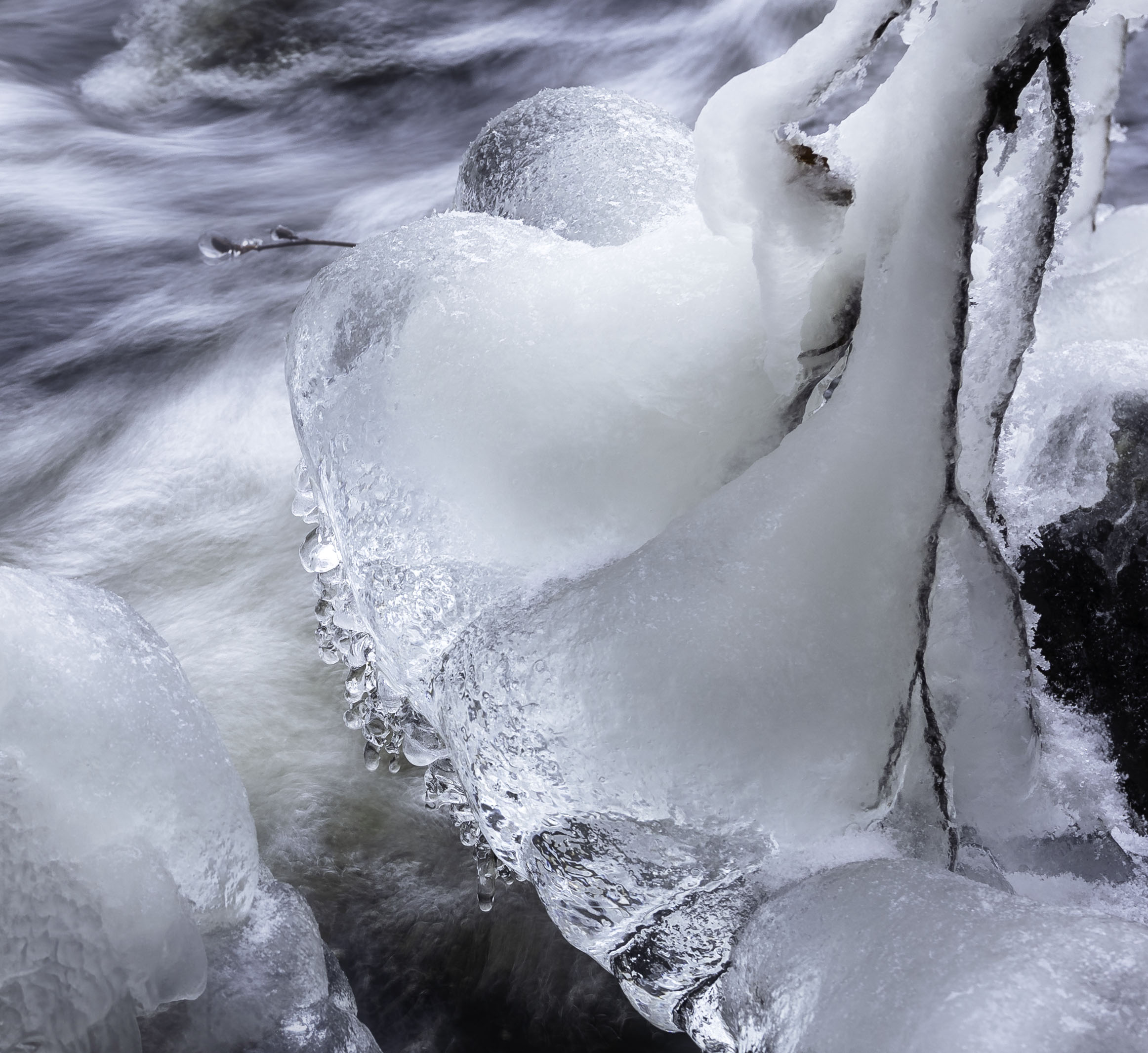
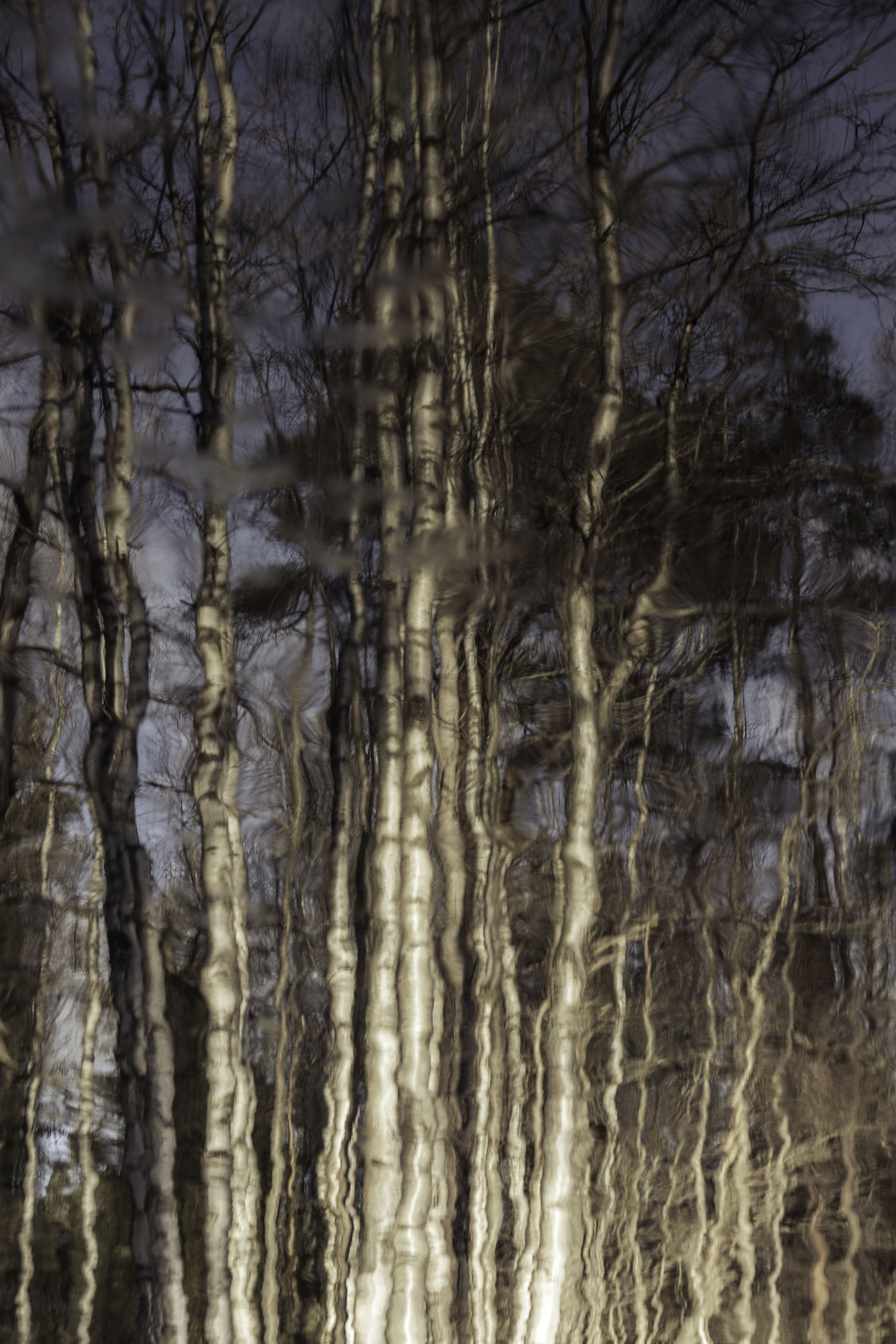
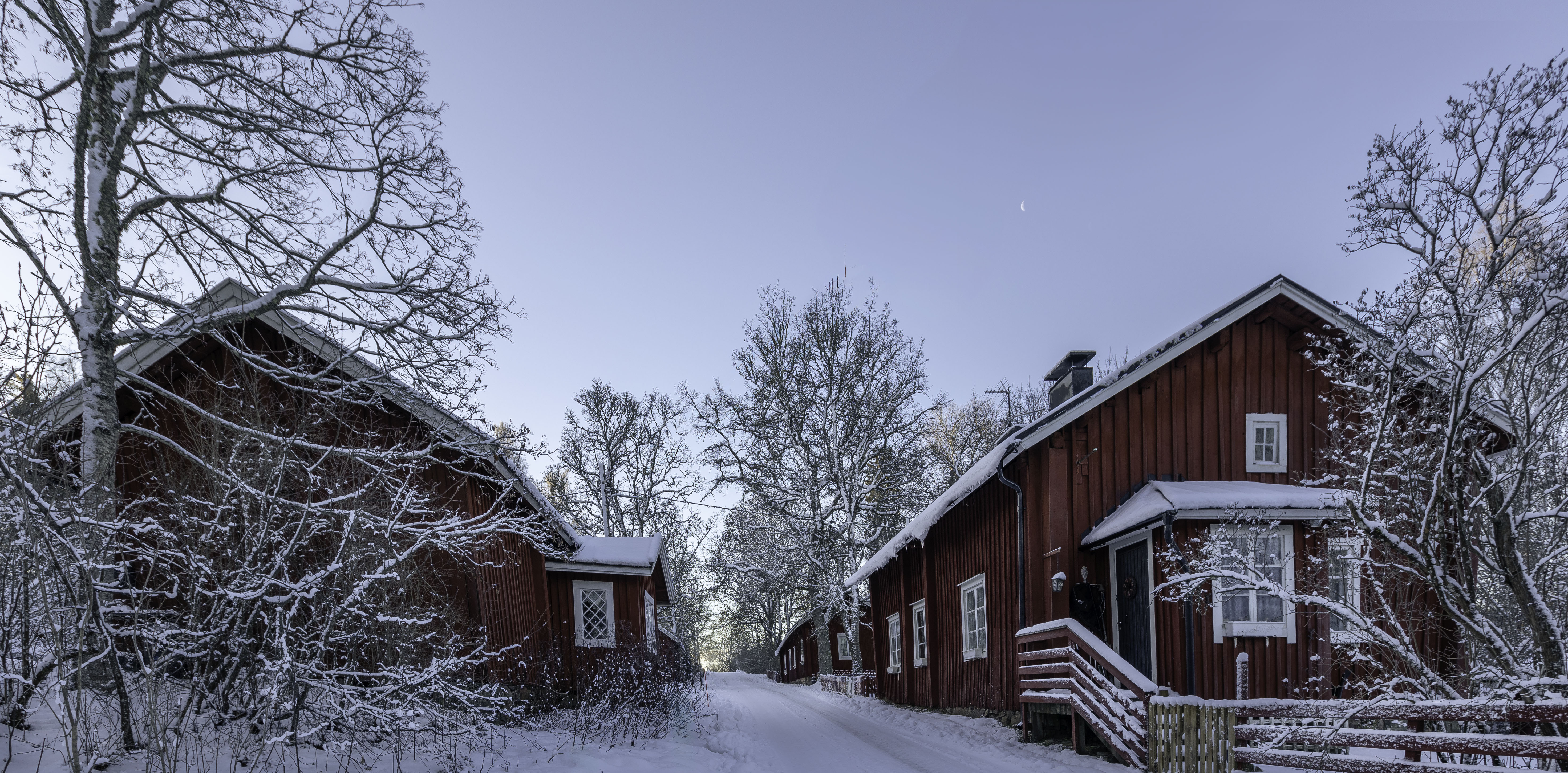
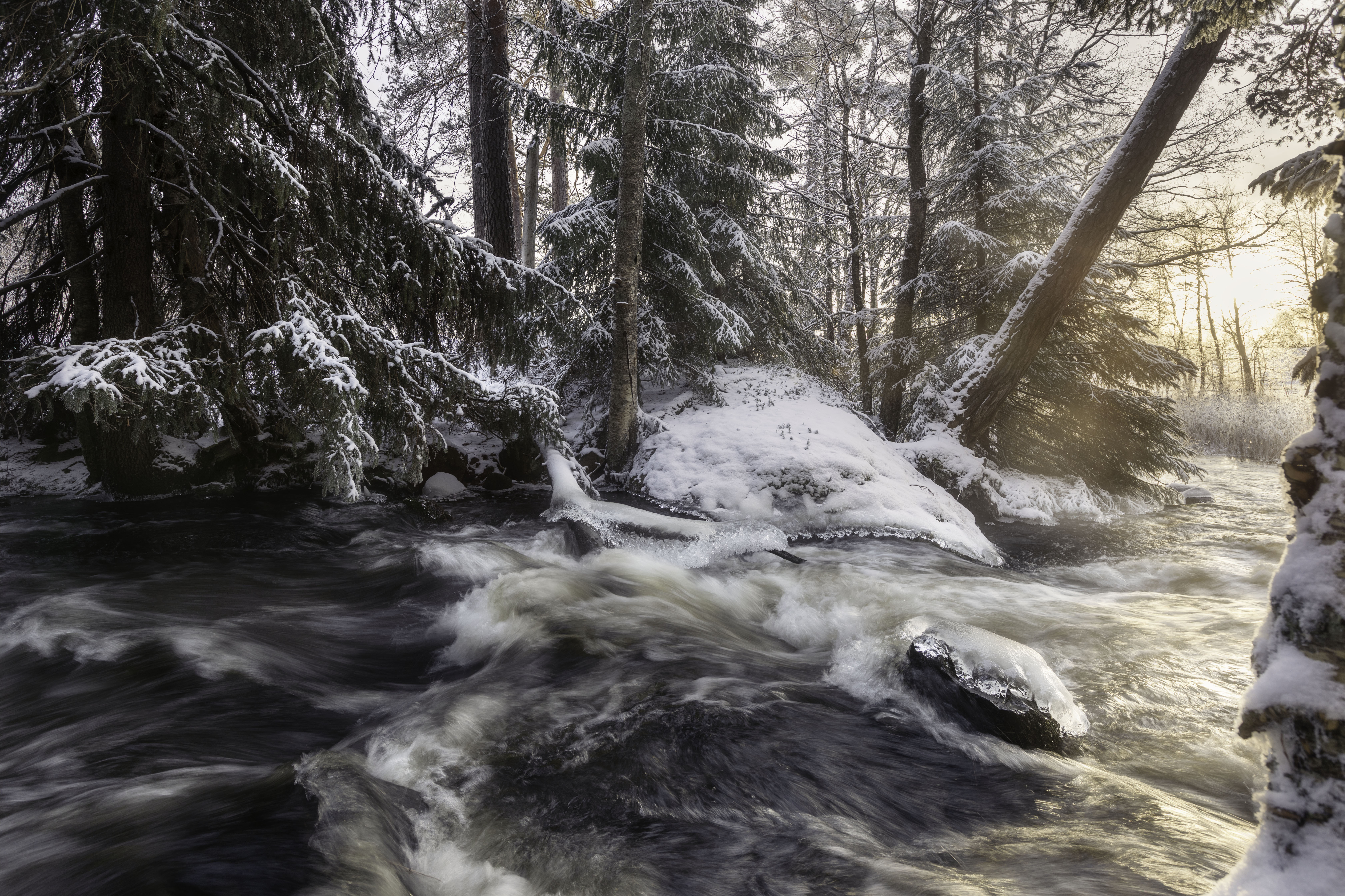

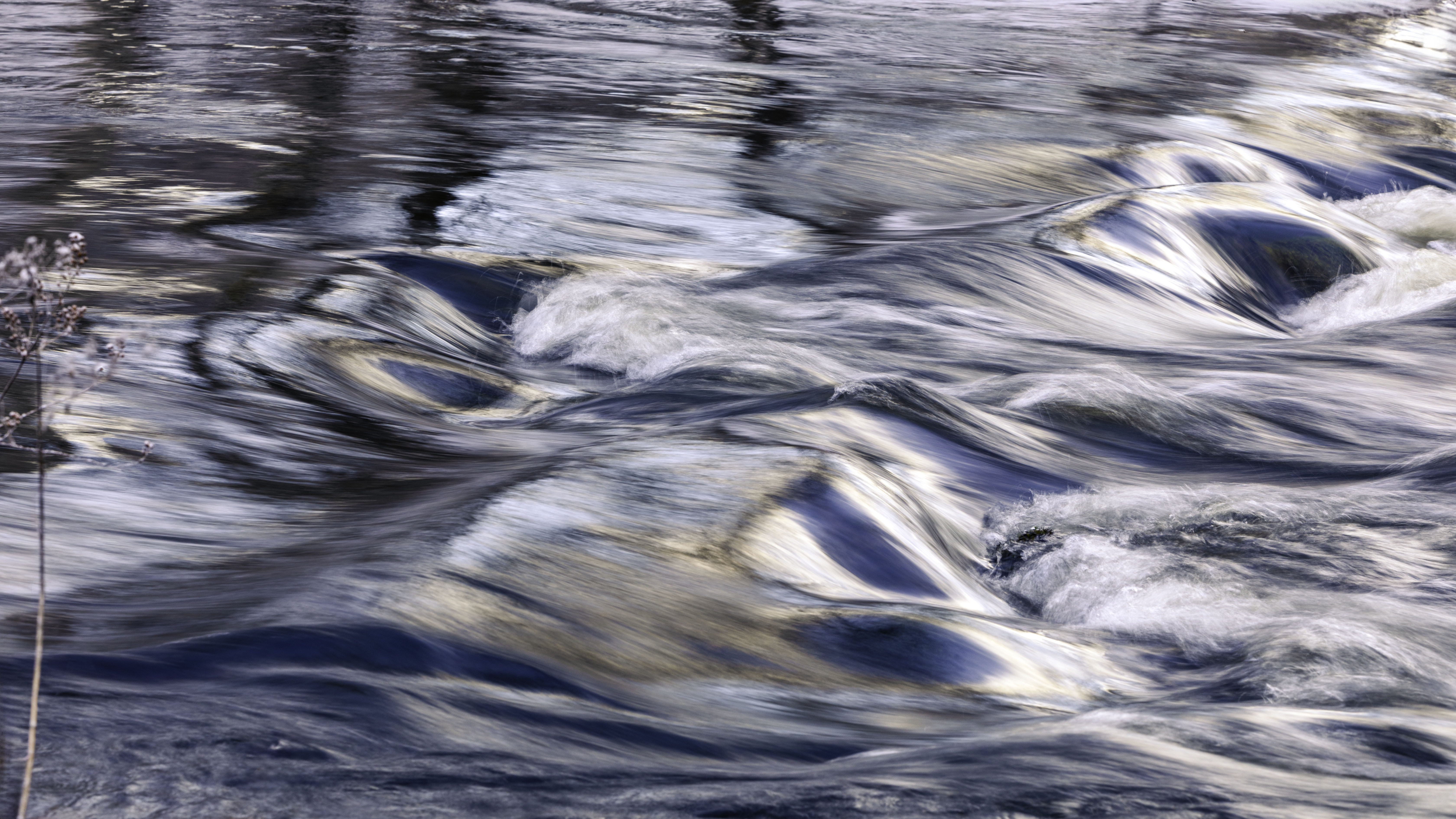

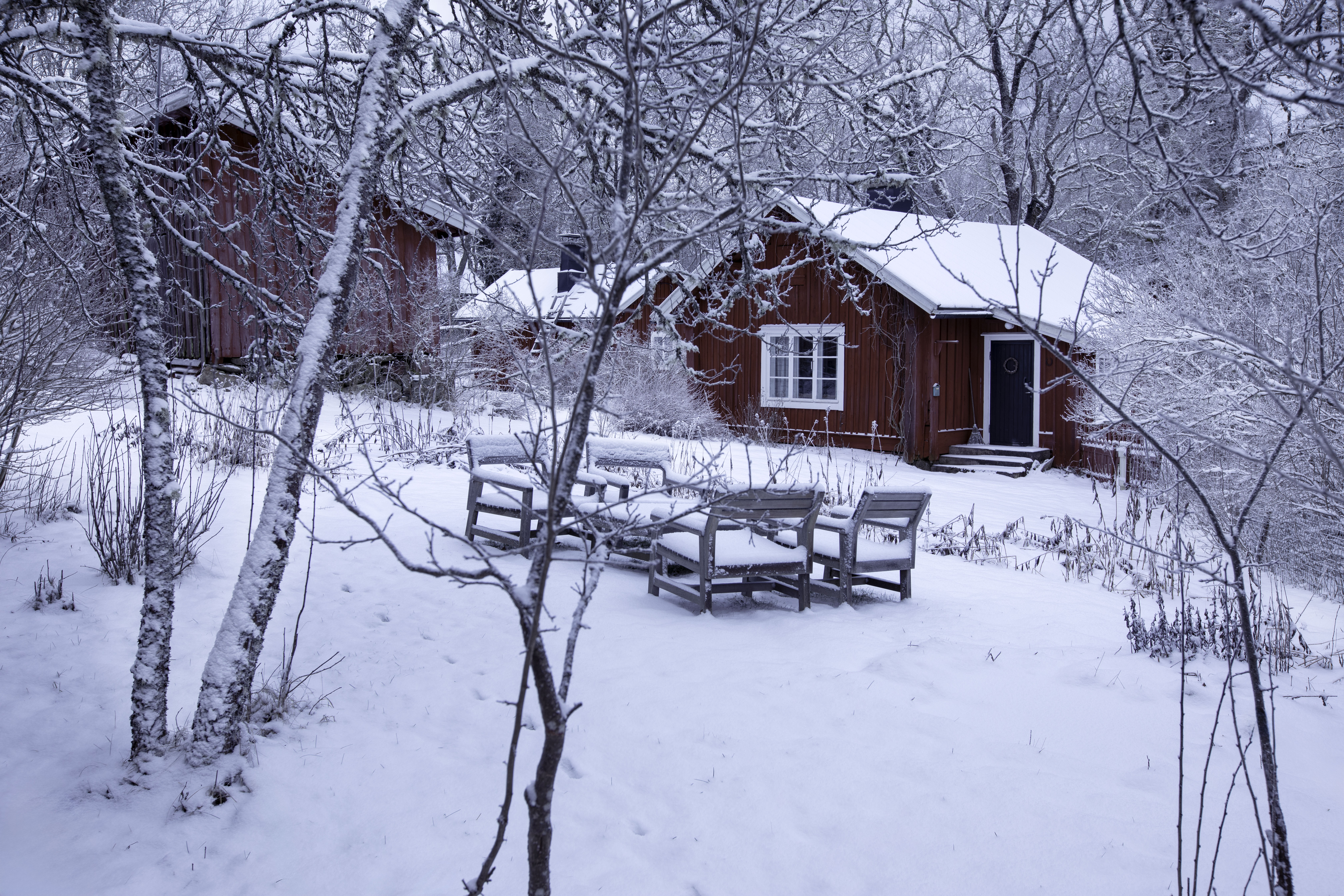

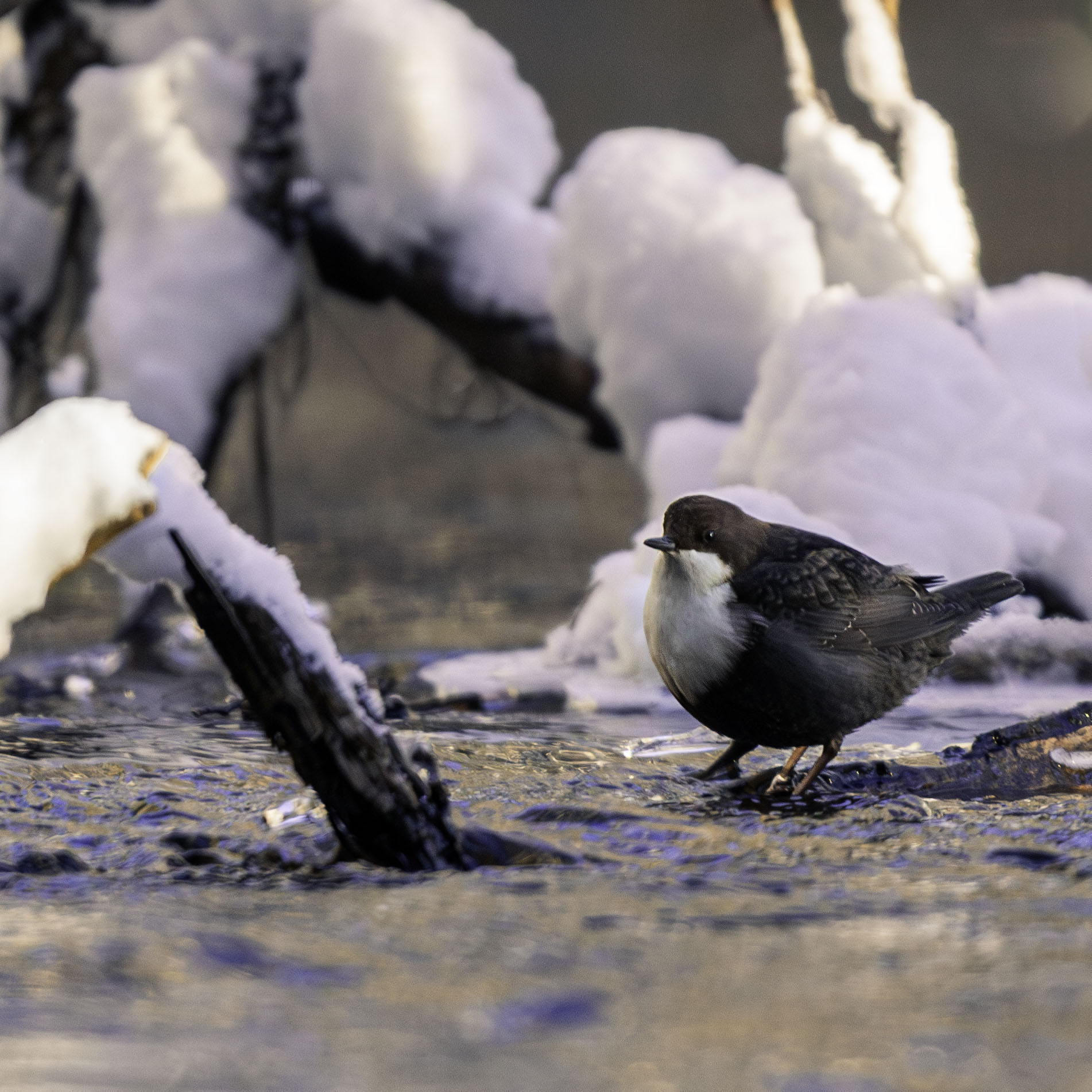
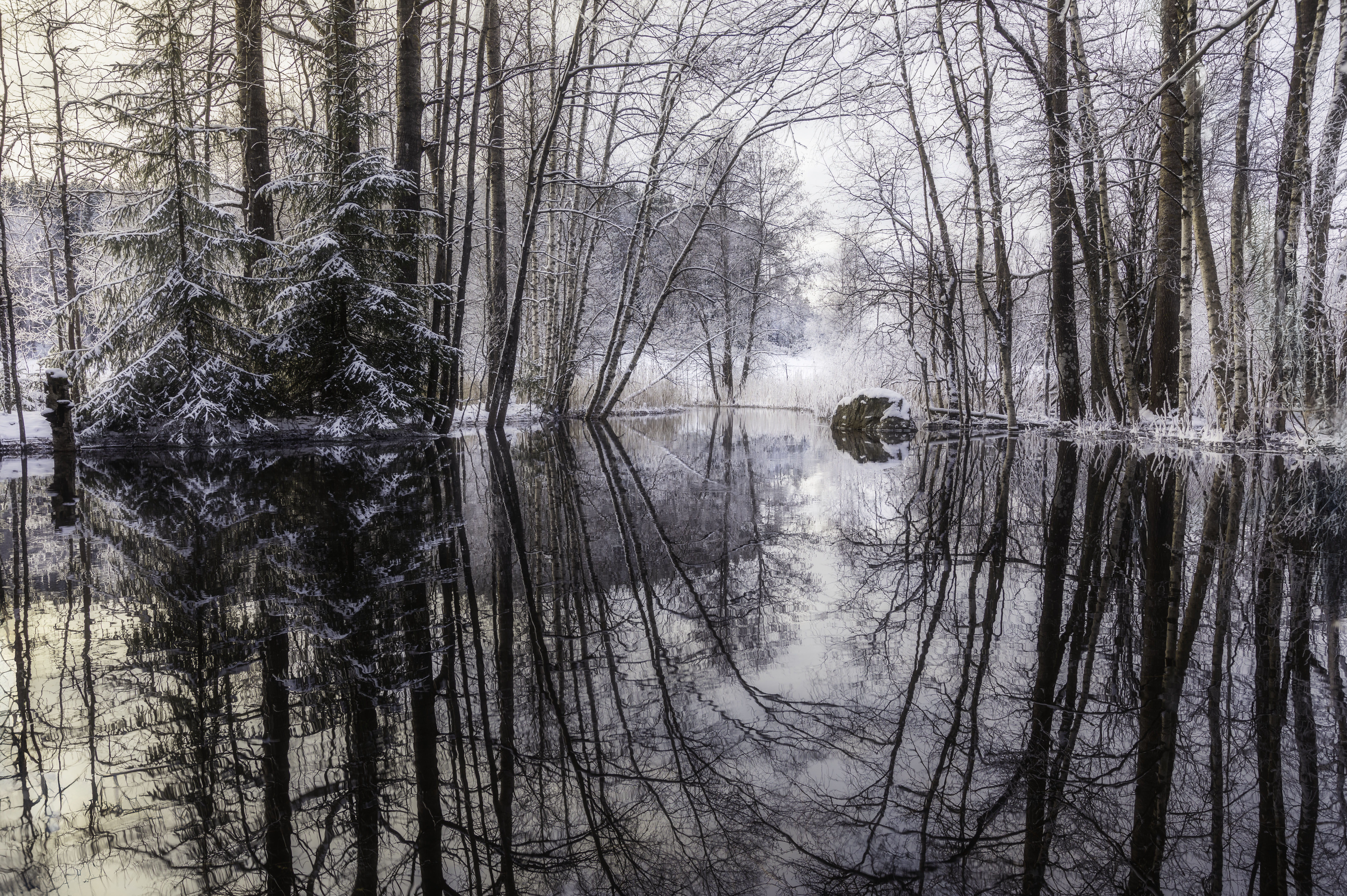
I enjoyed stunning winter days by the river. I was surrounded by the beauty of this unique natural and historical site. Altogether I spent nearly 24 hours photographing by the river and its surroundings.
The river was carrying an exceptional amount of water, causing the rapids to surge powerfully. The churning water had frozen along the riverbanks, making it dangerous to walk near the edge. Nevertheless, the turbulent water had also created stunning ice sculptures, which were incredible to photograph. The only real challenge was the tripod freezing. On one occasion, the tripod became completely unusable, and I couldn’t even detach the camera from it.
This project taught me a lot. First, I realized how important it is for the theme to tie the images together. It was equally crucial to capture a variety of photos. This variety creates a sense of dynamism within the series. The series contrasts calm waters with stunning reflections against the powerful rapids or frozen water forms. Besides the water, the river’s historical surroundings and its living organisms played a key role in the project.
I plan to continue this project by photographing more of Kärkelä’s cultural landscape and everyday life along the river.
My gear
I photograph with a Canon 5D Mark IV. For these photos, I used the EF 16-35mm f/2.8L II USM, EF 70-200mm f/2.8L IS USM and EF 300mm f/2.8L IS USM lenses. I typically use a tripod, as it significantly improves the quality of my photos. For this project, a tripod was essential due to the low light conditions.
Nonetheless, I noticed that the tripod froze quite easily when it came into contact with snow or water. At times, it was impossible to adjust the height, as the legs had become frozen. Have you had this problem? How did you fix it?
Thank YOU!
Thank you for visiting my blog and exploring this project! I hope you enjoyed it.
I love to hear your thoughts on my photos! Did you have a favorite from the collection? How do you feel these images show the theme By the Kärkelä River? Your feedback means a lot to me and helps me grow as a photographer.
Feel free to follow my blog for more stories and photography projects—there’s a link at the bottom of the page. Bye, bye!
 MINNA JACOBSON
I think the images are beautiful. my favourite being the Dipper.
Perhaps a smear of petroleum jelly on the tripods moving parts might help, we don’t have such temperatures in the UK so I have never experienced the problem.
LikeLiked by 1 person
Thank you for your comment and hint. I will try, as it not nice when suddenly your tripod is useless 😟 Photographing Dipper was not easy, as it stayed quite far away. Only once it approached a little bit closer…
LikeLike
It’s nice to revisit your living waters. Keep going on that path, the currents are constantly changing and challenging, so there’s never an end to the motifs. It’s nice to see how you try to tie the series together into a story, the present and the past have their place, but with the water as the link between them. I especially like the more general images that take in the entire environment around the river.
Regarding the tripod, in an emergency it can be solved with so-called locking spray (car accessories), but it can freeze again just as quickly if it’s cold and humid in the air. I would probably try a thin oil, the kind used for sewing machines, fishing reels or bicycle chains.
Good luck with your education, looking forward to more projects.
LikeLiked by 1 person
Thank you Hans for your lovely comment 😀 I have been photographing all the time even not posting in my blog. I try to be more active here in the future 🥳
Thx for the hints. I will try the thin oil, as it is a huge problem when the tripod is totally frozen 🤨🥶
LikeLike
Your photographs are exquisite! And winter in all its glory is one of my favourite topics. I think you have done very well with your course and look forward to seeing more photos. Best wishes.
LikeLiked by 1 person
Thank you so much for your comment! The Kärkelä ironwork area is amazing and I am planning to continue my project 🌞
LikeLike
Gorgeous photos! It was difficult to choose a favourite as I like them all! The ice formations in image 5895 are amazing.
LikeLiked by 1 person
Thank you Magickmermaid! I am glad that you found favorite one. This winter has been somewhat difficult. After couple of cold days, the weather has changed and the snow has melted away 😟
LikeLiked by 1 person
Your photos are beautiful! Snow and ice always make for interesting and eye catching pictures. I really like the contrast in the photos with the red buildings and the snow, and the river reflections are stand outs for me as well. 🙂📷❄️
LikeLiked by 1 person
Thank you Sue for your comment! The ironwork area is so beautiful and especially the old red houses. I am planning to continue my mini-project to real project 😀
LikeLiked by 1 person
Stunning photos that are beautifully composed. Very tranquil and serene.
LikeLiked by 1 person
Thank you so much Lynette! I am so glad that you visited my blog 😍
LikeLiked by 1 person
This is eye-catching, I would love to see more.
LikeLiked by 1 person
Thank you for your kind comment 🤩💫
LikeLike
Hello Minna!
So glad to see your post. Congratulations on your photography course! How do YOU think you are doing? Where did you think you’d be at this point in the journey, and where do you want the experience to take you?
The photo series depicts nature, moving & still water and ice elements, and finally wildlife. Without the written story I would not have been able to know which river/body of water this was, or the history of the area being photographed. With that said, connecting the story/location to the images needs more emphasis if that’s where you wanted to take things.
Images of old smelting equipment or something else tying things historically to the significance and importance of the past would have boosted the historical/cultural aspect.
With regard to landscape shots, I’ve seen remarkable and interesting results on occasion with use of wide-angle or fish-eye lenses. What are your thoughts on them?
In addition to a couple of the other great suggestions on keeping the tripod functional (petroleum jelly, thin oil, etc) possibly some sort of covering like a footwear/pant leg snow gaiter, but ones fashioned for thin tripod legs. Or some other weather-resistant ‘sock’ to keep out moisture and allow for collapsibility and repositioning.
Overall, the images are well-captured, interesting and showcase varied winter scenes which beckon the viewer to explore and learn more.
Thank you for venturing out in what might have been some unpleasant weather conditions to gather for (us) and future viewers of your series some idyllic images of Finland in winter.
All the best in your pursuit of photography exploration!
-Kate
LikeLiked by 1 person
Thank you for your constructive feedback, Kate, and it’s lovely to hear from you after such a long time! Since summer, I’ve been studying under photographer Atte Tanner. During this time, my approach to photography has become more systematic, and I’ve been actively seeking new perspectives. I’ve also been working on improving my editing skills.
My goal is to continue this project and, through it, offer viewers even more insight into life around the ironworks. Nowadays, the area hosts cattle farming, and there’s also a small riding stable in the old dairy. These are aspects I aim to incorporate into future works. For now, time was limited for this mini-project, and I also wanted to avoid overwhelming viewers with too many images. That’s why I chose the specific photos now published on my blog. Personally, I’m satisfied with them, though I realize a larger project will require more material.
It’s possible to combine images in post-processing to present a broader view if needed. As a photographer, I focus more on capturing atmosphere and specific details. Wide-angle compositions demand a sense of openness in the landscape, which can be challenging in a river environment.
Thank you as well for the tips regarding the tripod. I’ll need to address the freezing issue, especially when the weather is cold.
Hopefully you are well and you enjoy your life in Lohja! Take care, Minna
LikeLiked by 1 person
Wonderful series, congrats!
LikeLiked by 1 person
Thank you so much for your comment! I am glad that you liked my mini-project 😁
LikeLiked by 1 person
Just stunning! I feel like I want to chew a piece of ice to immerse myself further in your photo series! 😊
LikeLiked by 1 person
Thank you so much for your comment! I am glad you liked my photos 😍
LikeLiked by 1 person