A landscape is never only a place. It is light, air and memory layered together.
Have you ever returned to a familiar view and felt that it was somehow completely different?
I often return to the same locations. The geography remains, but the experience does not. Mist and light change everything.
In this post, I reflect through six images on how mist, combined with light, reshapes the landscape.
Looking at these photographs, I see more than atmosphere. I see distinct moments in time when light and mist transformed something familiar into something almost unreal.
Misty Lake
A Grey Christmas Eve
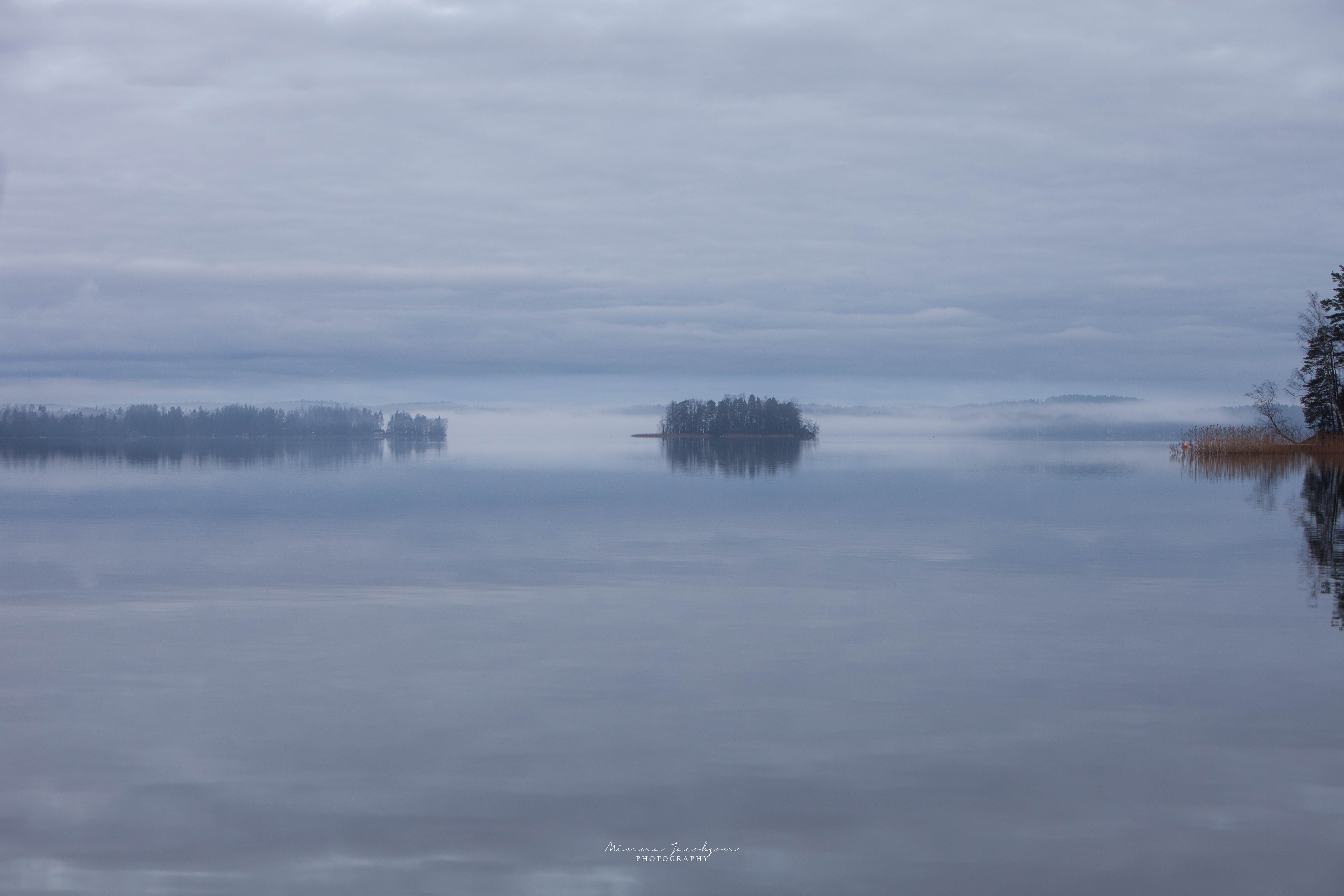
This image was taken on Christmas Eve 2019, the first time we spent Christmas at our cottage in Lohja.
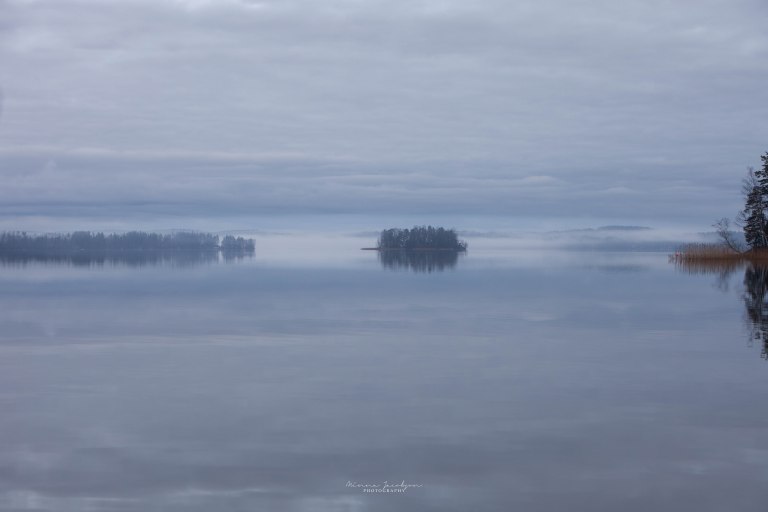
The day was gray. I do not remember whether it was raining, but I do remember the view across the lake.
As I watched the island float in mist, I thought of desert heat and mirages. I have never stood in a desert, yet the feeling was familiar. The lake seemed to hover between reality and illusion. I remember standing there longer than I planned, simply watching how the mist erased the horizon.
There was no sun. No shadows. No drama. And yet it felt magical.
Mist covered the landscape so completely that the island and distant trees appeared to float. The horizon dissolved and the sky and water blended into one surface.
Mist removes detail, but it adds depth. The farther the trees, the softer they became. Space appears through subtle transitions.
When the Lake Began to Freeze
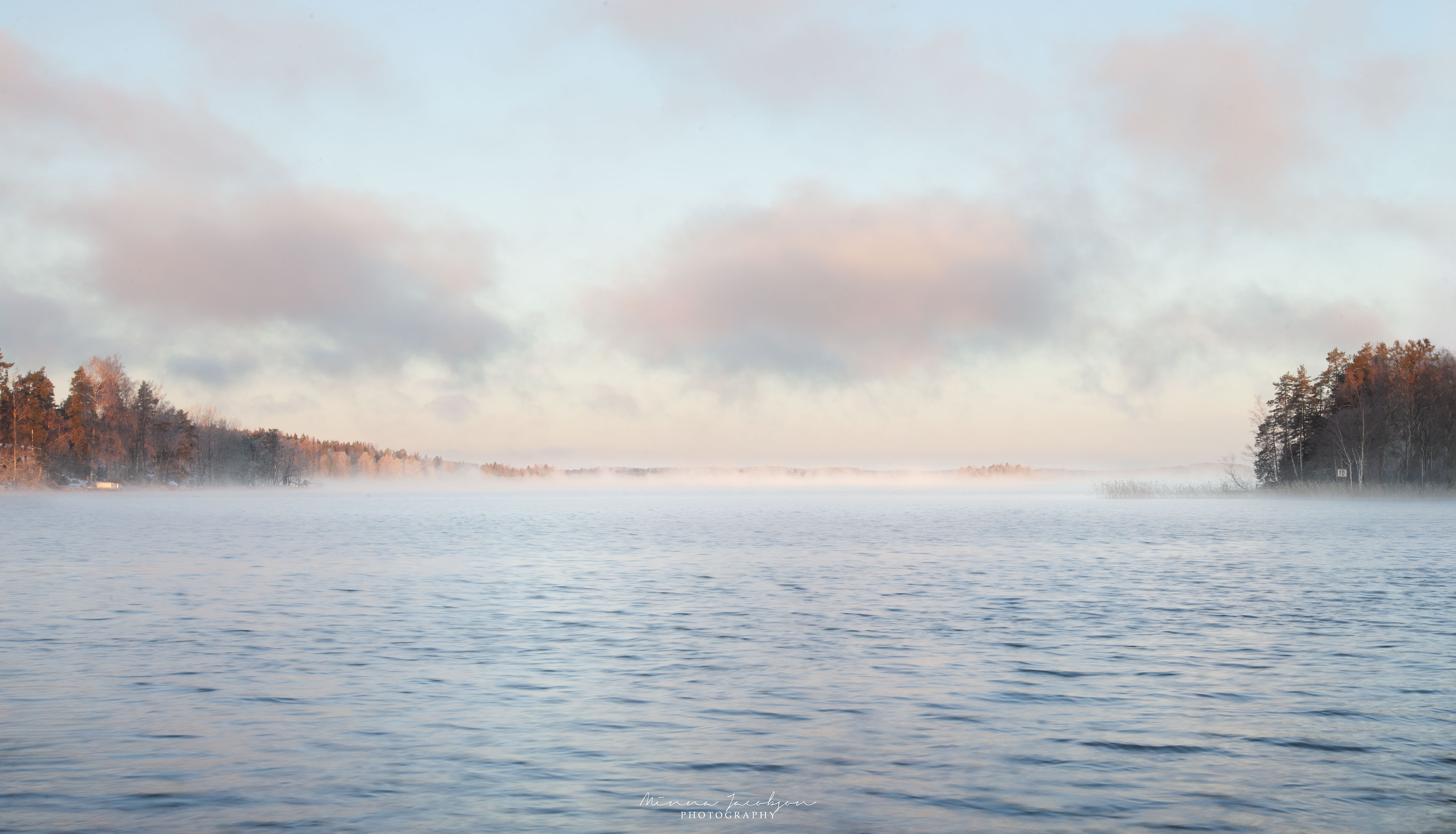
On 26 November 2023, at sunrise, Lake Lohja was freezing.
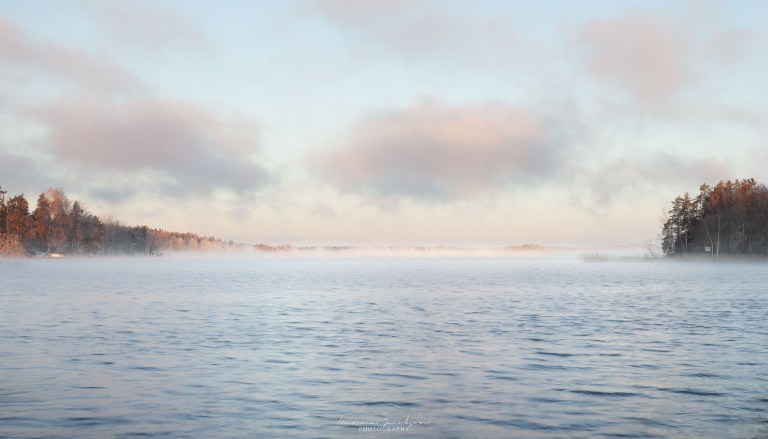
Sea smoke drifted over the lake as cold air moved across warmer water. The forest on the horizon faded behind the vapor. Sky and lake almost merged again, but the mood was entirely different.
The reason was light.
The rising sun colored the clouds pale pink. Low light moved across the water and made the mist glow. Artist Eva Wardi once said that mist creates layers in a landscape. That morning, the layering felt almost tangible.
If you are interested in sea smoke, check out my post Mute Swans and the Beauty of Finnish Winters.
How the Light and Mist Affect the Landscape
On a cloudy and misty day, the quality of light is completely diffused.
- There are no defined shadows
- Tonal transitions are soft
- Contrast remains low
In these conditions, composition becomes essential. When light does not dominate, shapes and lines begin to speak. Minimalism works beautifully. Negative space gains importance.
At sunrise, everything shifts.
Low, lateral light introduces warmth. It makes the mist visible and structures the surface. Rays appear in the mist. Soft glow replaces gray neutrality.
- Depth increases
- Movement appears
- The landscape gains energy
Misty Autumn Field
Running After the Mist
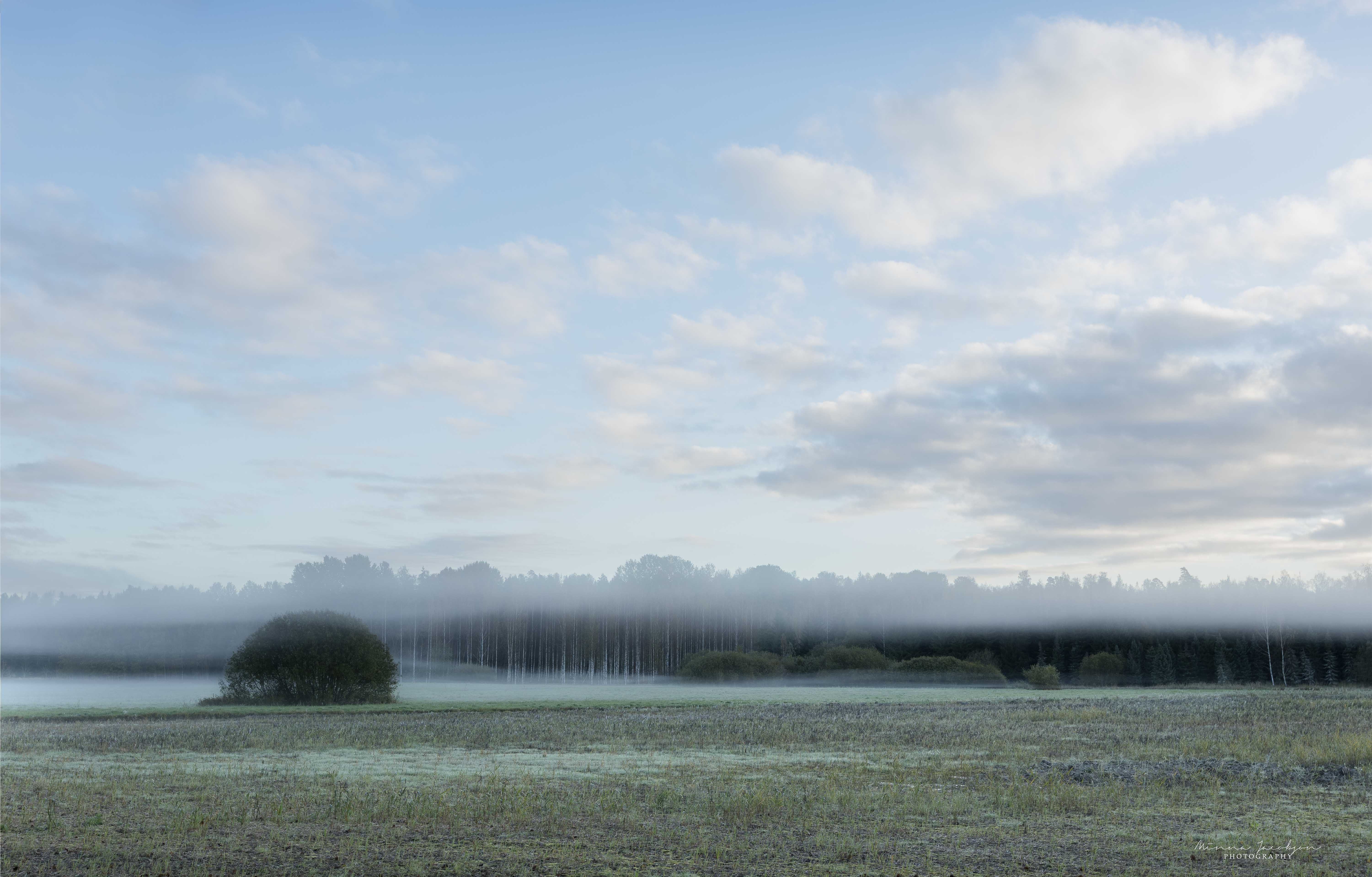
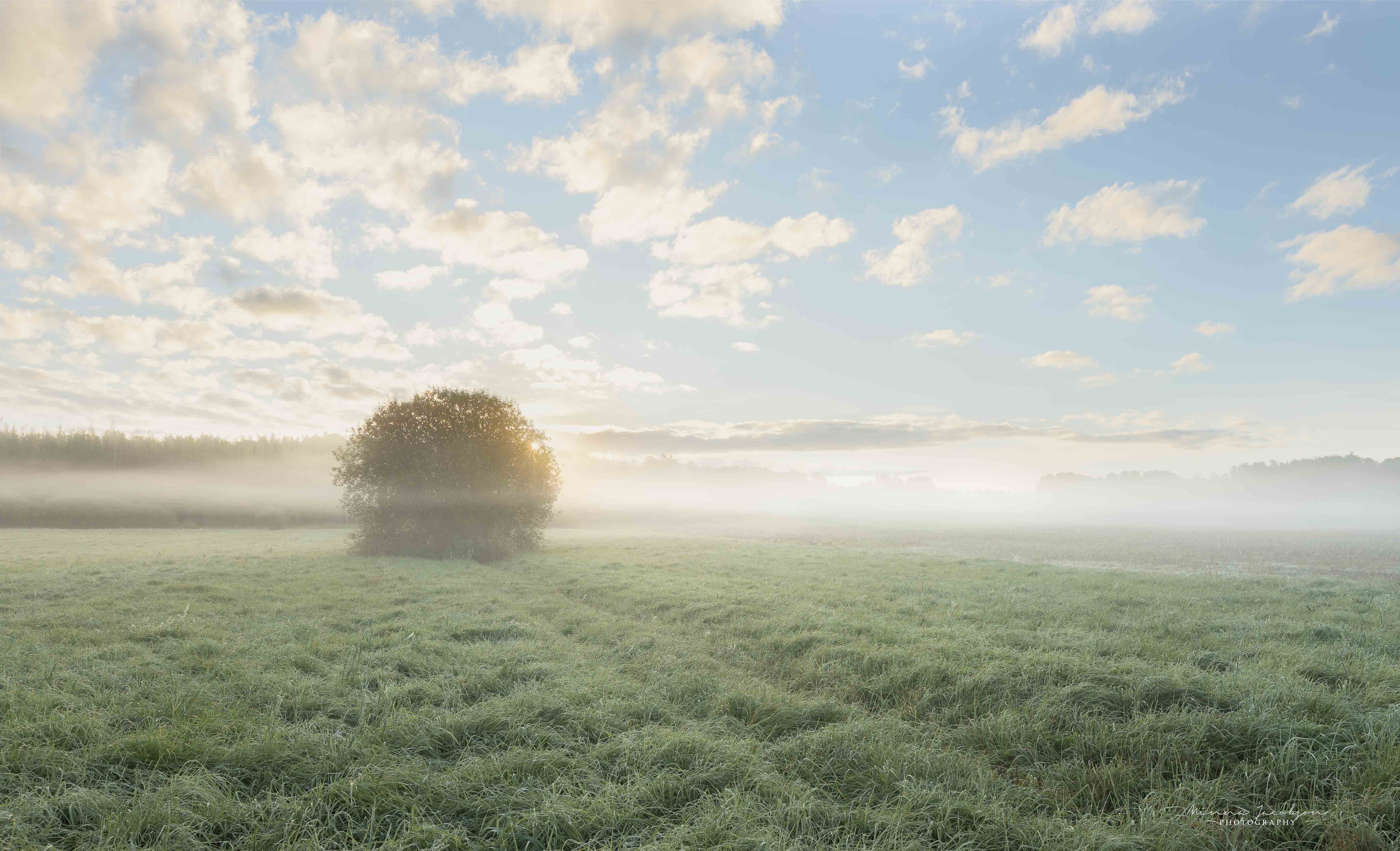
On 28 September 2025, I was photographing for a competition titled “There is Life in the Mist.”
The deadline was approaching, and I still needed more images. Luckily, it was a misty morning. I walked across the field, watching the air shift.
The mist was already thinning, so I ran after it.
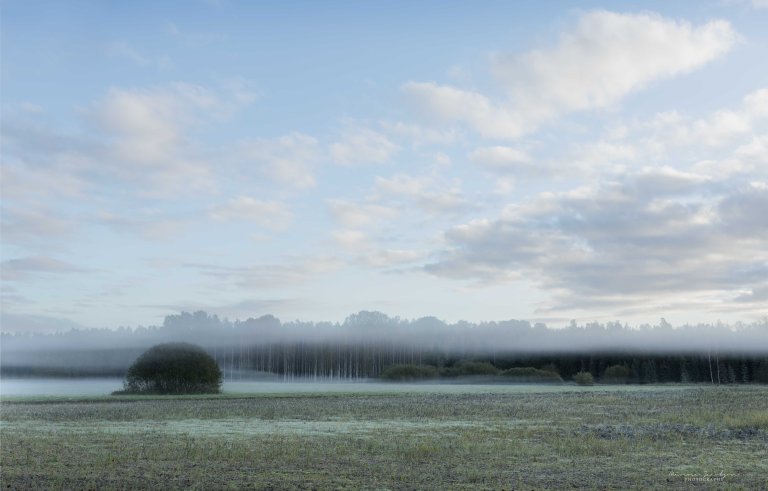
In the open field, mist hovered at treetop level. The light was cold. I felt the cold air on my hands while trying to move quickly before the mist vanished.
Mist forms under calm conditions, often after a cold night. As wind and rising sun quickly erases it, timing is everything. It is vital to be early enough in place. That urgency changes the way you work. You move faster and you observe more carefully.
Turning Toward the Sun
In another field image, I wanted the rising sun to enter the frame.
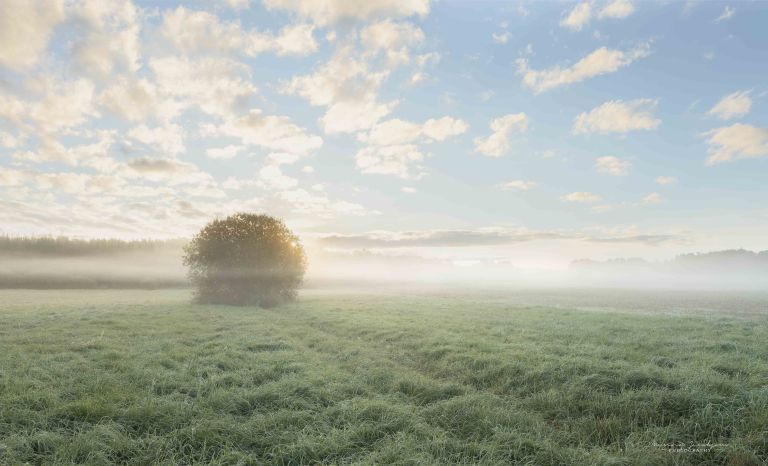
When I turned my camera toward the sun, the scene changed completely. I was standing almost in the same place, but now I was looking directly into the light. The mist remained, but everything began to glow. The field gained warmth and direction. Light moved through the air.
The Direction of Light
In these field images, the difference is not the amount of mist but the direction of light.
With side light, texture emerges and small irregularities cast shadows. The ground becomes tactile and three dimensionality increases. The landscape feels almost touchable.
Side light sculpts. Backlight reveals.
With frontal or diffused light, shadows fade and the surface flattens. Colors may appear brighter, but form softens. The scene becomes calmer.
Light does not simply illuminate the landscape. It determines whether we see surface or shape.
If you would like to explore backlighting further, you can read my post Tips for Stunning Backlit Images
Trees in the Misty Morning
Misty Apple Tree Garden
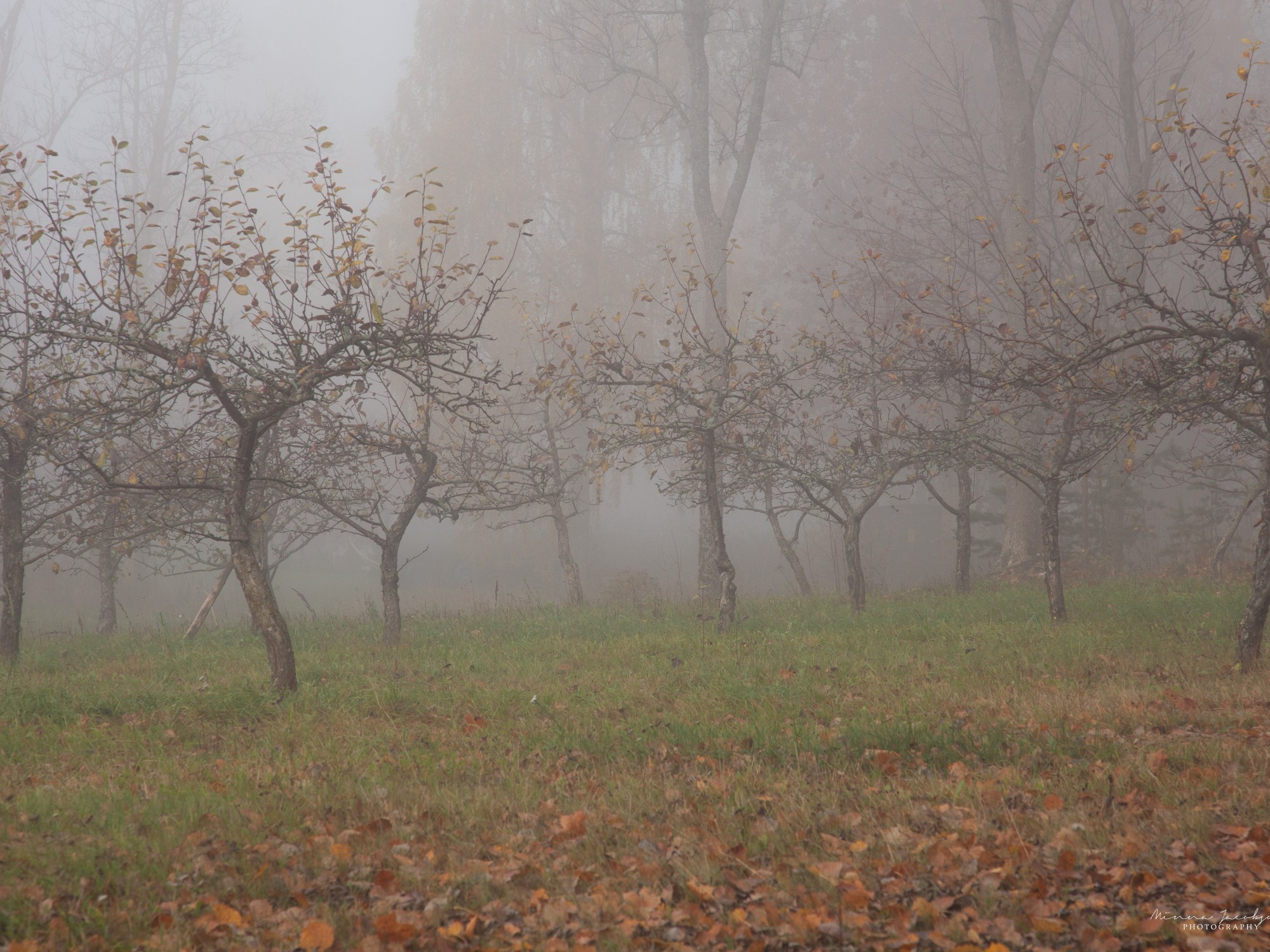
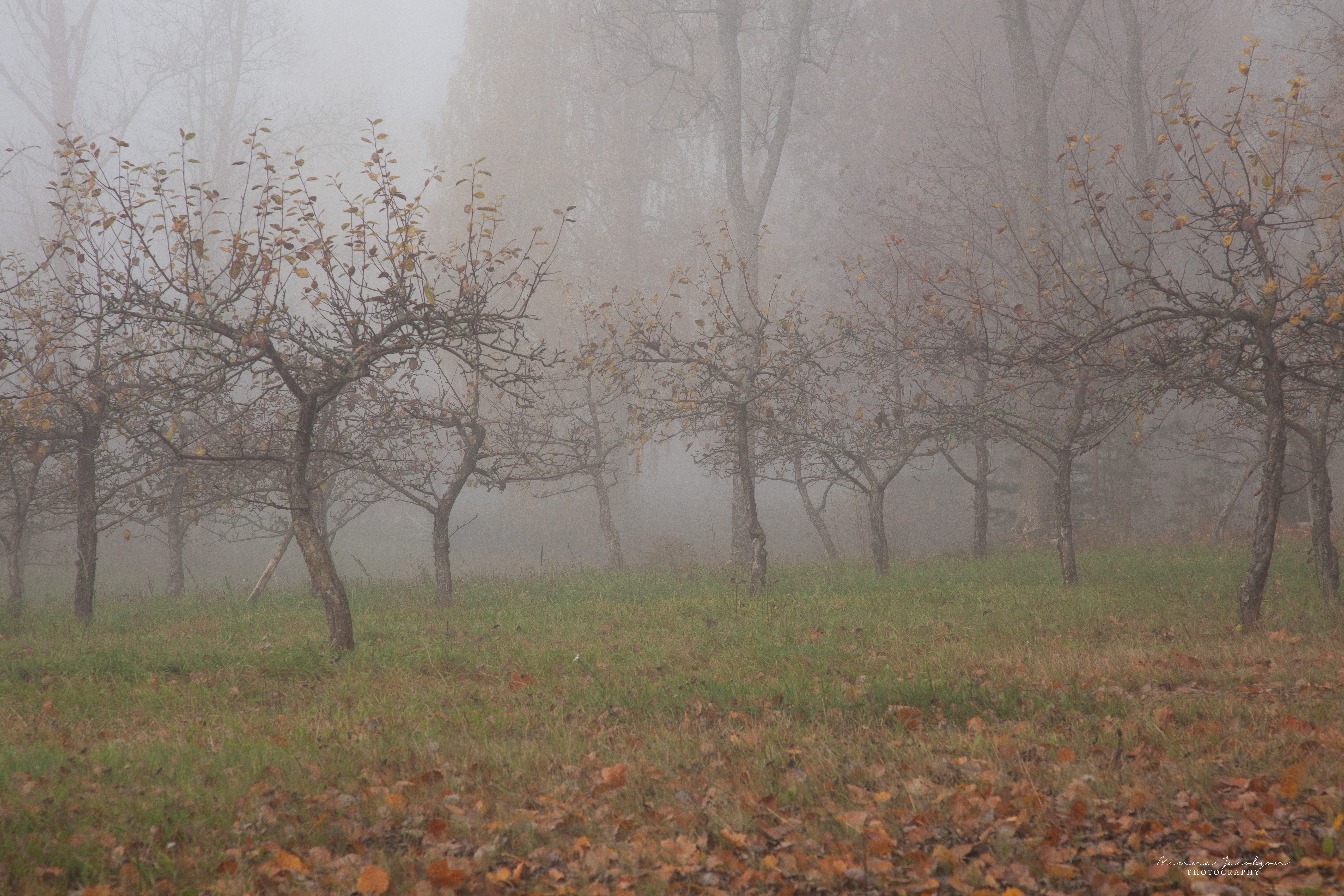
In October 2017, I was fascinated by the mist that swallowed the apple tree garden near our cottage.
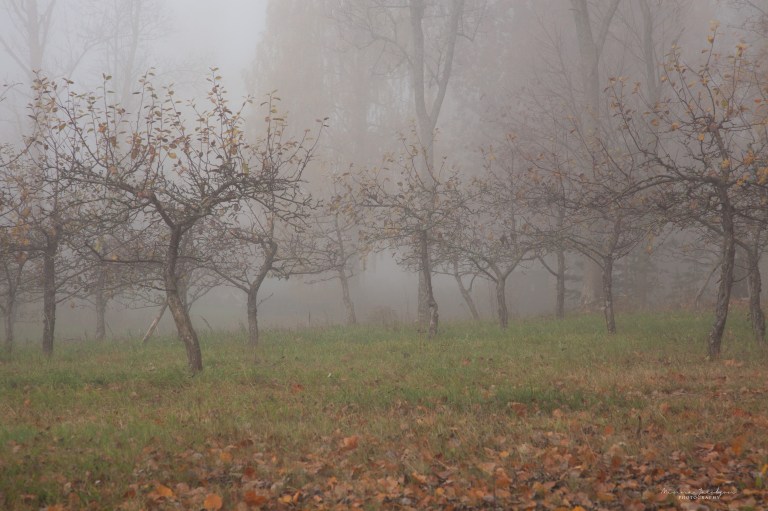
The mist was thick and transformed the landscape into gradual tones rather than clear lines. Apple trees emerged slowly from whiteness. Distance became a transition instead of a boundary.
That morning, I understood how much geography influences atmosphere and how much atmosphere influences photography. Low areas and gardens often collect mist. Knowing the place helps you anticipate the moment.
Sun Rays
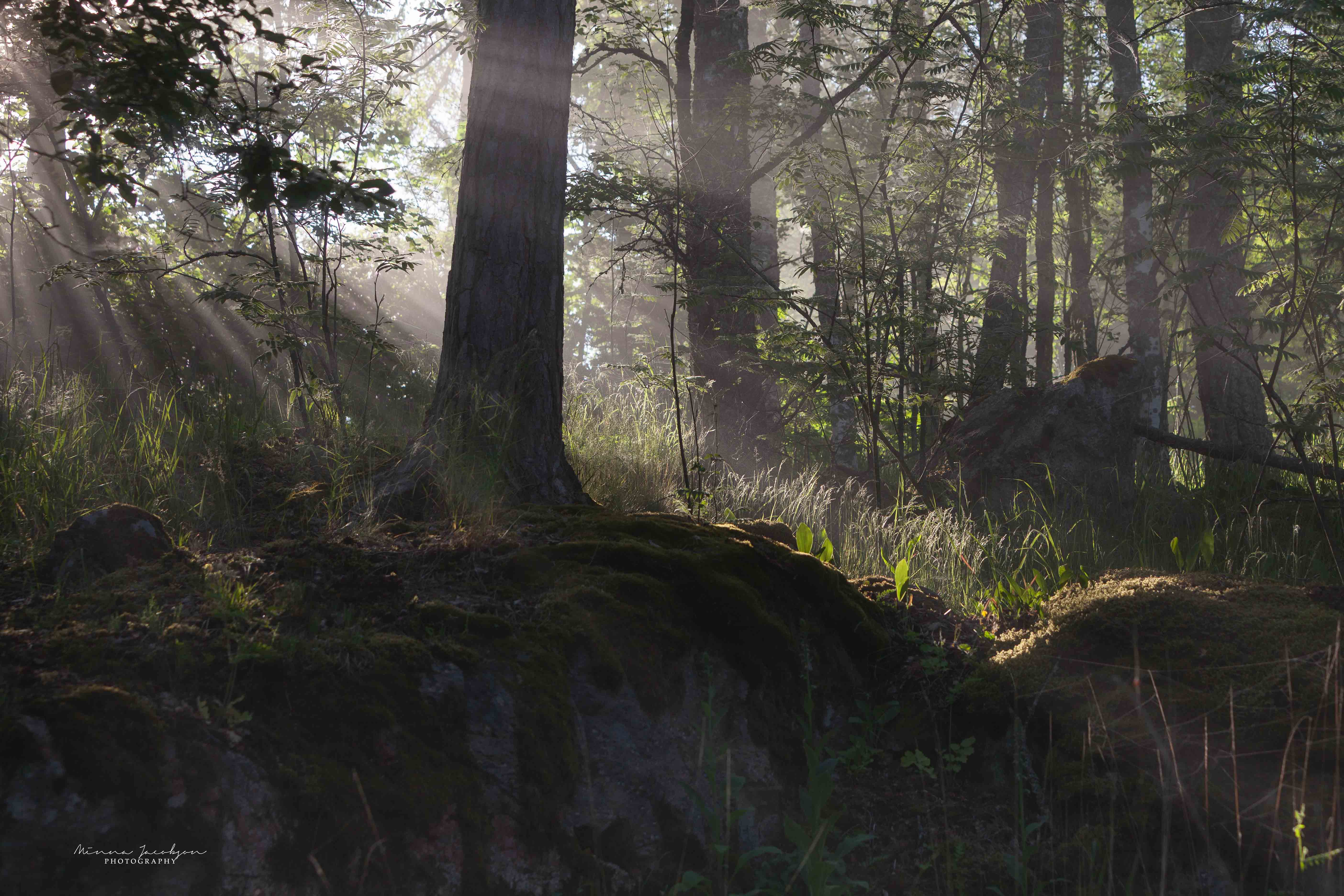
On June 2020, we lived isolated at our summer cottage during the corona lockdown. We were not allowed to meet people. Life felt restricted.
Still, I found quiet happiness in photographing the surroundings of our cottage every single day.
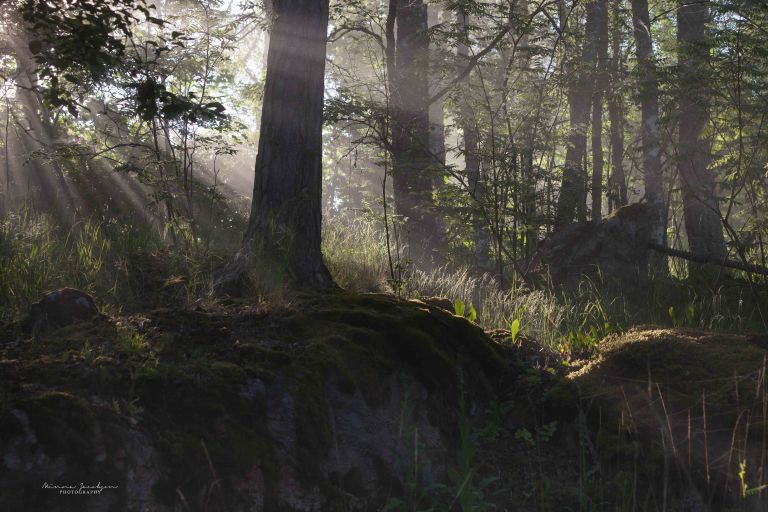
One morning, I woke early and saw dense mist drifting between the trees. It was one of those rare mornings when sunlight met heavy mist.
As the sun rose higher, beams of light broke through the branches. The mist made the light visible. It did not simply illuminate the forest, it moved through mist
The rays stretched diagonally between the trunks, creating bright corridors in the air. Some areas remained in shadow, others glowed intensely. The contrast between light and softness created depth and rhythm.
The Presence of the Sun
Without direct sunlight, forms soften. The mood quiets and contrast decreases. Atmosphere becomes more dominant than the light source.
When the sun is present, the image tells a story about illumination. When it is absent, it tells a story about air and form.
Why Mist Fascinates
Mist creates atmosphere.
When a veil of mist settles over the landscape, it gently hides the unnecessary. What remains are shapes, tones and feeling. It offers ideal conditions for atmospheric photography.
Mist is the finest sculptor of a landscape. It softens edges and blurs outlines, transforming the surroundings into something gentle and mysterious. As it reshapes familiar scenes, it invites imagination to move freely. At its best, mist creates a sense of calm and quiet harmony.
To photograph mist, it is worth heading out well before sunrise, when it is often at its strongest. As the sun rises, its changing colors filter beautifully through the mist. This creates endless opportunities to capture the delicate interplay between light and air.
Mist mixed with backlight makes sunrays visible. It is a magical combination and one I never tire of witnessing.
For me, it is important that my images are shaped by emotion. I hope that each photograph carries the feeling of that specific moment.
Mist has always fascinated me. It can transport you into another world within seconds, making even an ordinary landscape appear almost unreal.
Thank You
Thank you for sharing these moments with me.
If mist and light have ever transformed a familiar landscape for you, I would love to hear your experience. And if you enjoy reflecting on nature, atmosphere and photography, you are warmly welcome to follow my blog.
 MINNA JACOBSON
Mist is definitely magickal! You captured it beautifully! The apple trees do appear to be dancing. 🙂
LikeLiked by 1 person
It is magickal, thank you so much Magickmermaid 🧜♀️🧜♀️ I hope that soon we will have misty mornings again 🌫️🌫️🌫️
LikeLiked by 1 person