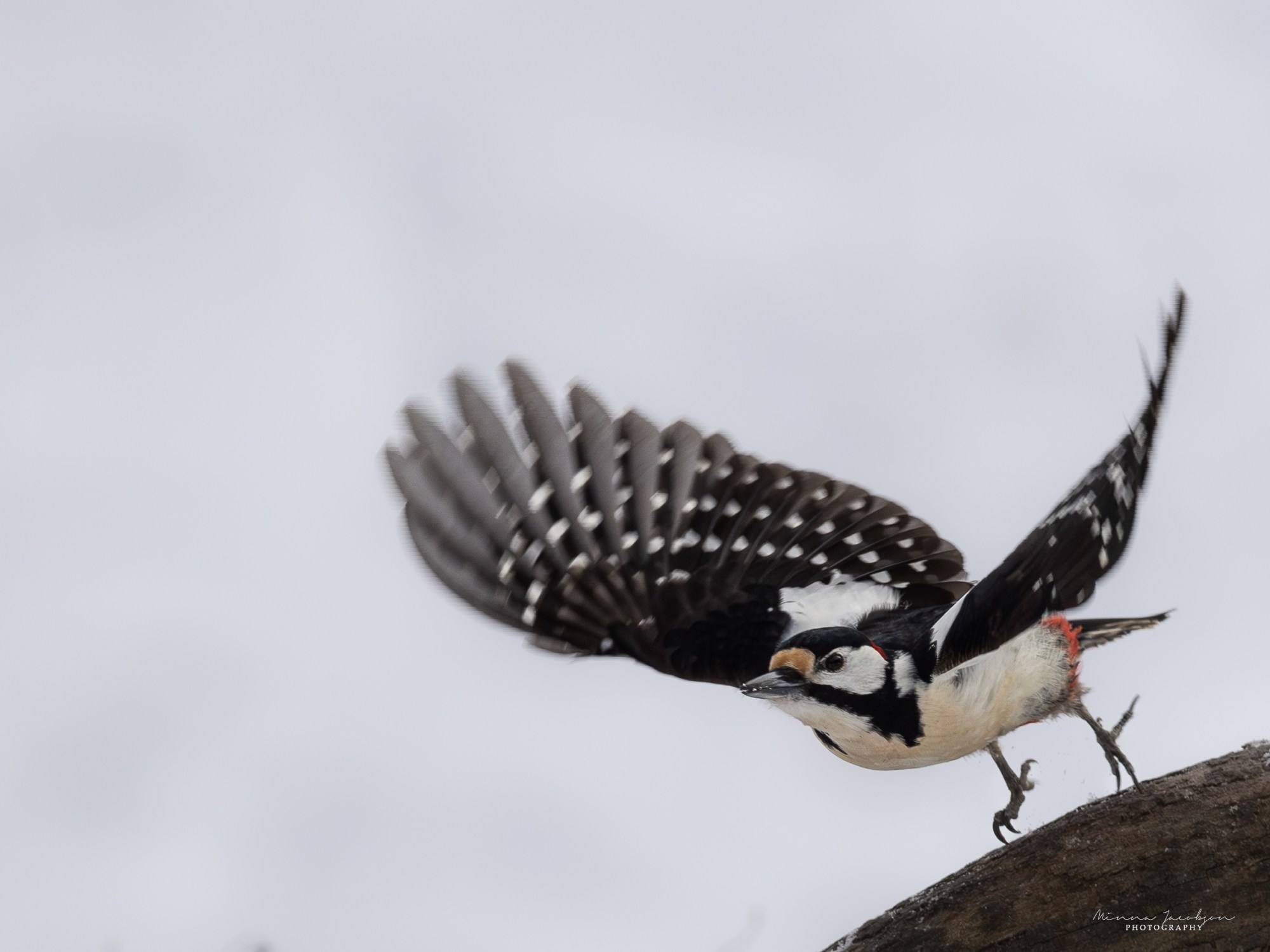
The winter forest was beautiful, the sun was about to rise. I knew that in this hide, there have been many different species. However, I did not expect to see three different woodpecker species in a single day.
Wildlife photography in a hide makes moments like that possible. From a wildlife hide in Estonia, we could watch and photograph woodpeckers behaving naturally. They were undisturbed by our presence as they did not see or hear us.
Photography Trip to Estonia
Instead of driving all the way to Kuusamo in northern Finland, we decided this time to head south. The distance made the decision surprisingly easy: around 240 kilometers to Estonia compared to over 800 kilometers to Kuusamo.
Earlier, Mr H had found a presentation video of this Estonian hide. On the video we noticed that there were a lot of different birds, especially birds of prey. When we started planning a winter photography trip, Estonia felt like the right choice.
Photographing From a Hide
I still remember the first time many years ago, when I photographed from a hide. It was surprisingly difficult for me to stay still and quiet. Now, my attitude has changed completely. I find it easier to sit patiently and simply observe. I have realized that I have grown more passionate about bird photography over time. As a result, my patience has quietly grown as well.
First Visitor at the Hide – the Grey-Headed Woodpecker
It didn’t take long before the first woodpecker arrived. The grey-headed woodpecker was the first to visit us.
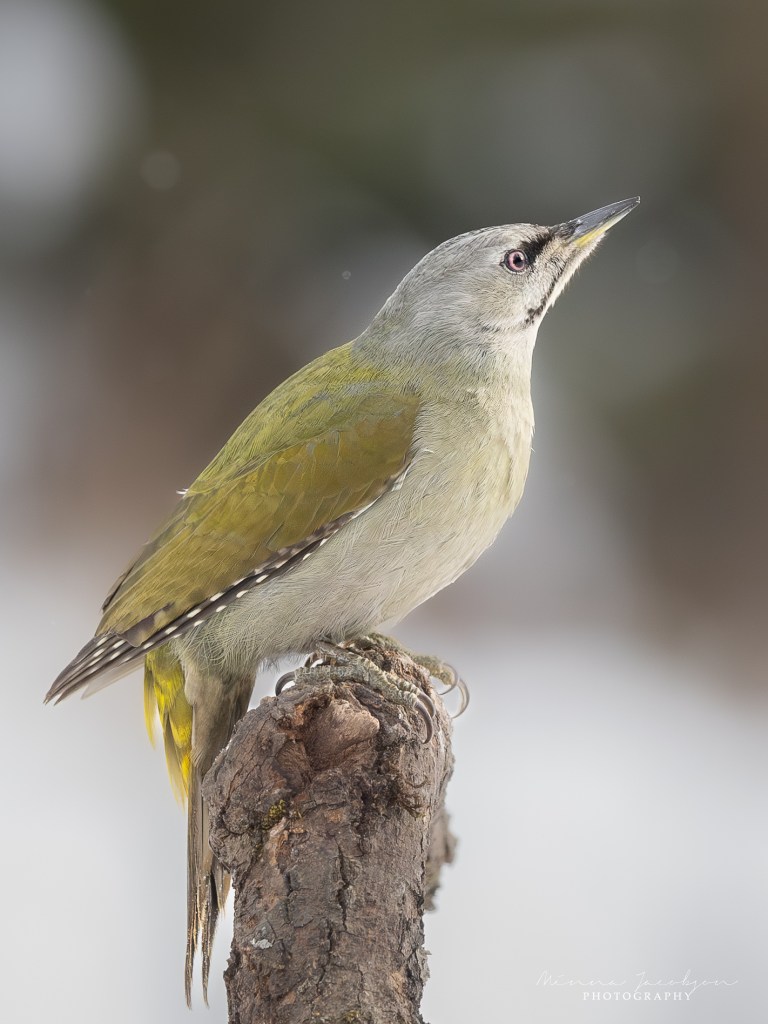
It climbed up and down the tree trunk searching for insects. After a while, it flew to the feeding log to eat. I was ready for that moment.
How to Photograph a Flying Bird?
To photograph a flying bird, you have to expect its takeoff. When it takes a certain posture, I start photographing. Many times I fail to capture the takeoff, but sometimes I succeed.
Photographing birds in flight requires a high shutter speed — usually somewhere between 1/1250 and 1/4000 of a second. Because I was photographing through glass, I lost roughly one stop of light. So my shutter speed was 1/2000 as I restricted the ISO to 6400. .
As the shutter speed was not higher, you can see some movement in the wings. But I was not aiming for strictly documentary images. I wanted to preserve a sense of motion. A slightly softer, more atmospheric feeling rather than a perfectly frozen moment.
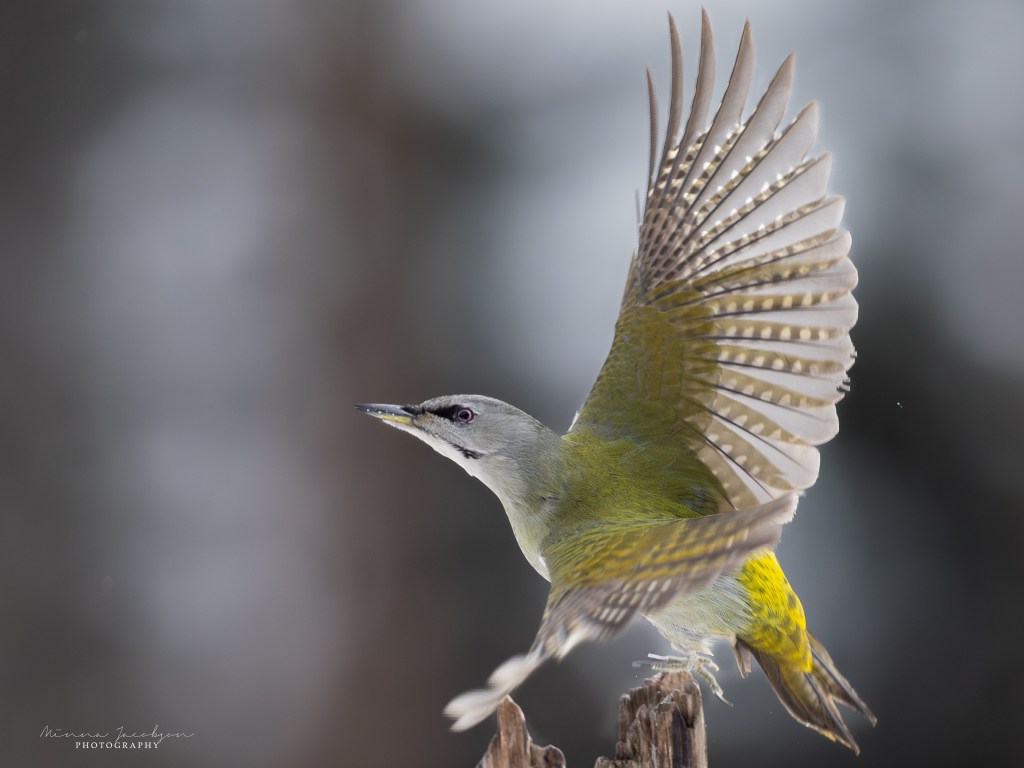
Its soft green plumage stands out beautifully against the winter forest, or what do you think?
Why Not Green Woodpecker?
I have often wondered why it is called the grey-headed woodpecker. Why not the green woodpecker? The colour is far more striking than the name suggests.
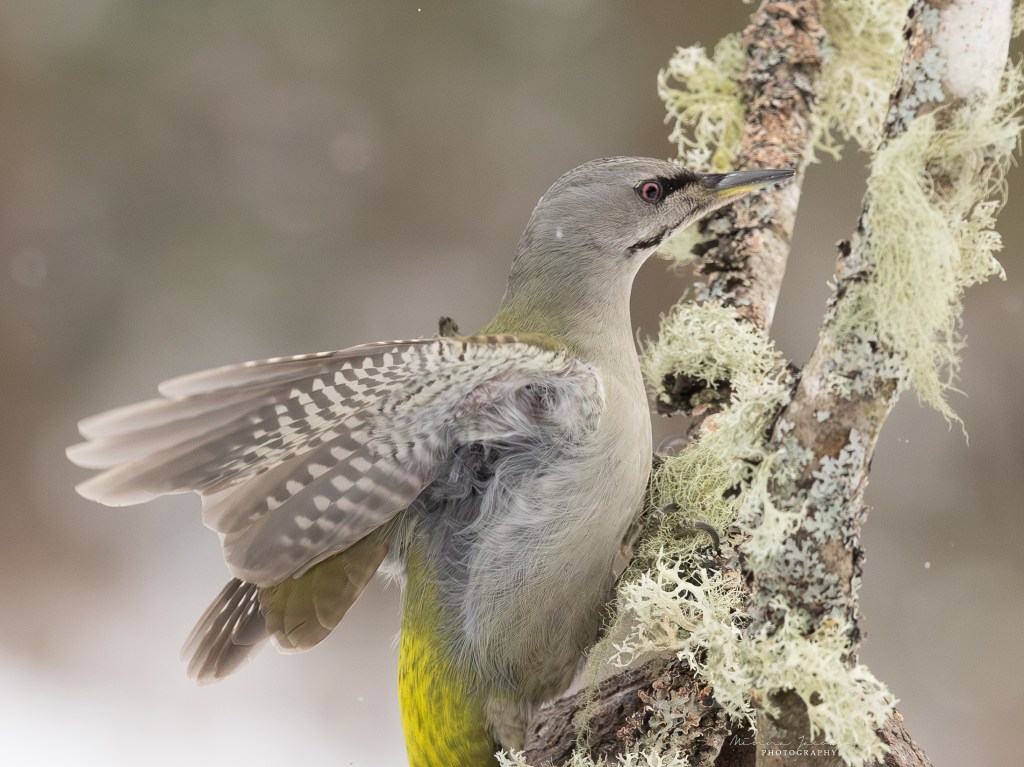
While writing this post, I became curious and decided to learn more about this beautiful bird. To my surprise, I discovered that there is indeed a green woodpecker. It is rare in Finland, and I have never seen one.
If you want to see the grey-headed woodpecker in Lapland, please have a look at my post Capturing Nature’s Rhythm: Woodpeckers Through My Lens.
Then Arrived a Rare White-Backed Woodpecker
The grey-headed woodpecker was only the beginning. After a while, a rare white-backed woodpecker landed on the tree.
The sun was just beginning to rise, and the light was still low and soft. I chose to photograph it in a low-key style, using less light than I normally would. The darker background suited the bird beautifully.
I slightly underexposed the image to preserve the atmosphere and highlight the red tones against the darker background.
The red crown and the red under the tail seemed to glow against the shadowed forest. The light along the trunk gently outlined its shape.
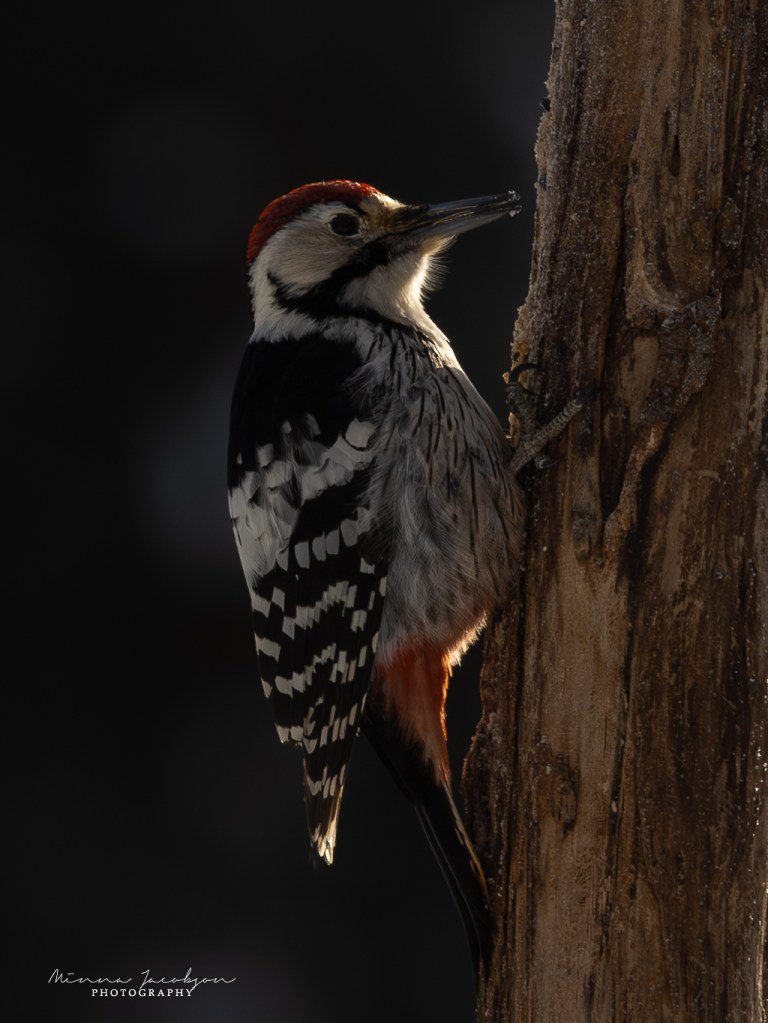
Endangered in Finland
I am not even sure if I had ever seen a white-backed woodpecker before. I was thrilled to see and photograph this rare woodpecker.
The white-backed woodpecker is one of Finland’s most endangered woodpecker species. It relies on old deciduous forests with plenty of dead wood It feeds on insects living inside decaying trees.
At the turn of the millennium, the Finnish population dropped dramatically to only a few dozen breeding pairs. Thanks to long-term conservation efforts, the number has increased, and today the population is estimated at around 500 breeding pairs. Still, the species remains vulnerable, and its future depends entirely on the preservation of suitable habitats.
Takeoff
For a short while, the white-backed woodpecker climbed along the trunk. Suddenly I realized it was ready to takeoff from the tree trunk. As with the grey-headed woodpecker I was ready!
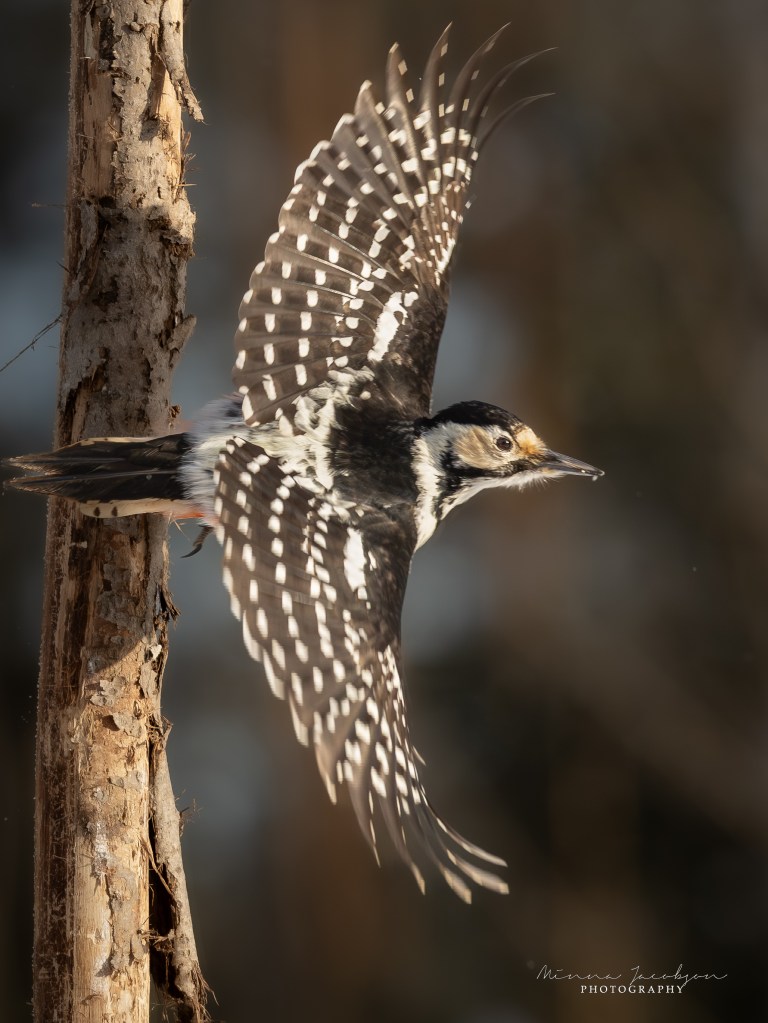
When it took off from the trunk, I could see the pattern on its back clearly. The white patches flashed against the darker forest behind it.
Third One was Great Spotted Woodpecker
The third woodpecker was the great spotted woodpecker.
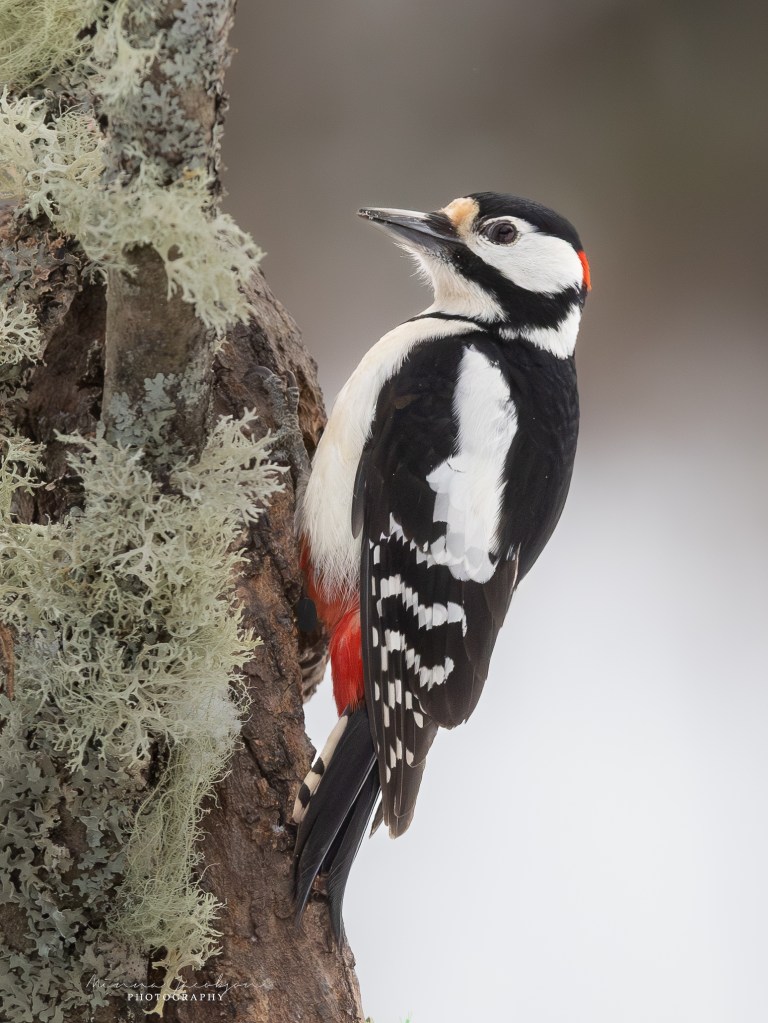
Unlike the white-backed woodpecker, this woodpecker is very familiar to me. I see it daily at our feeding site in Finland. It is confident, active and often the first to claim its place.
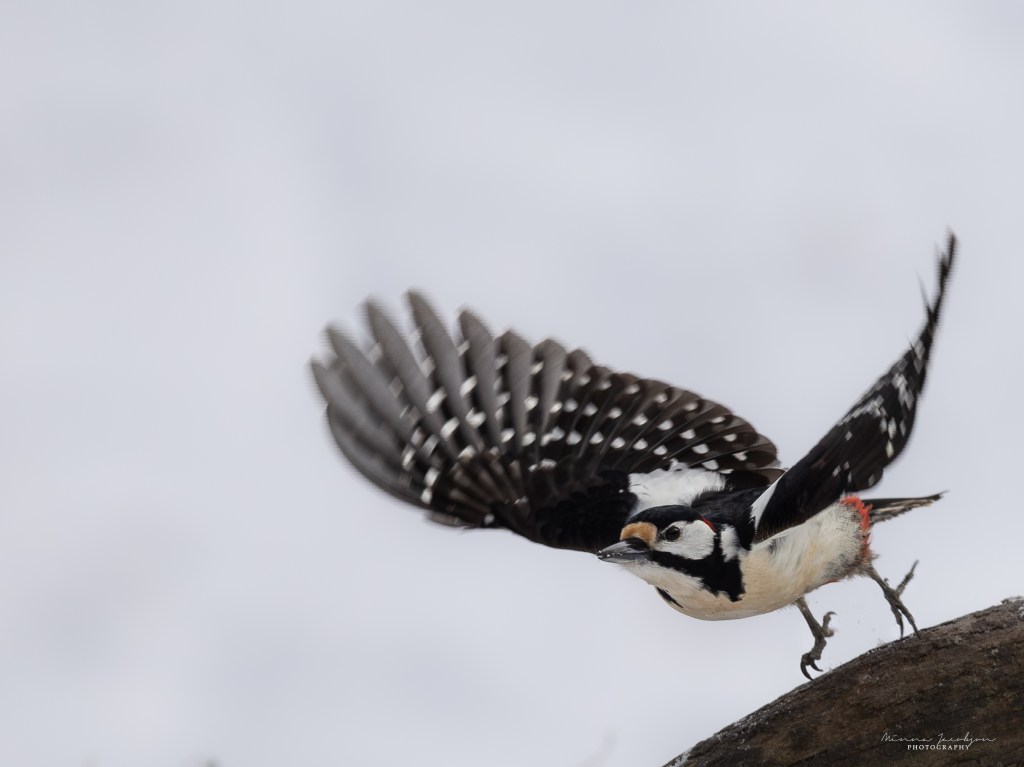
Feeding Habits
During winter, it feeds largely on seeds from cones. It opens them in so called a “woodpecker’s workshop”. This is a small crack or cavity in a tree trunk where the cone is wedged tightly in place.
I have watched this routine many times. The bird flies to a spruce, selects a cone and carries it to its workshop. Then begins the steady tapping. Within minutes the seeds are gone, and soon it is back in the tree searching for another cone.
After shooting these different woodpeckers, there was more to come.
When Three Woodpeckers Shared the Same Tree
What made these two winter days truly special was not just seeing three different woodpeckers. It was seeing different species at the same tree.
Two Grey-Headed Woodpeckers
Until now, I had been lucky if I managed to photograph even one individual at a time. In Estonia, my luck clearly changed.
Now I managed to photograph two grey-headed woodpeckers, male and female, at the same time.
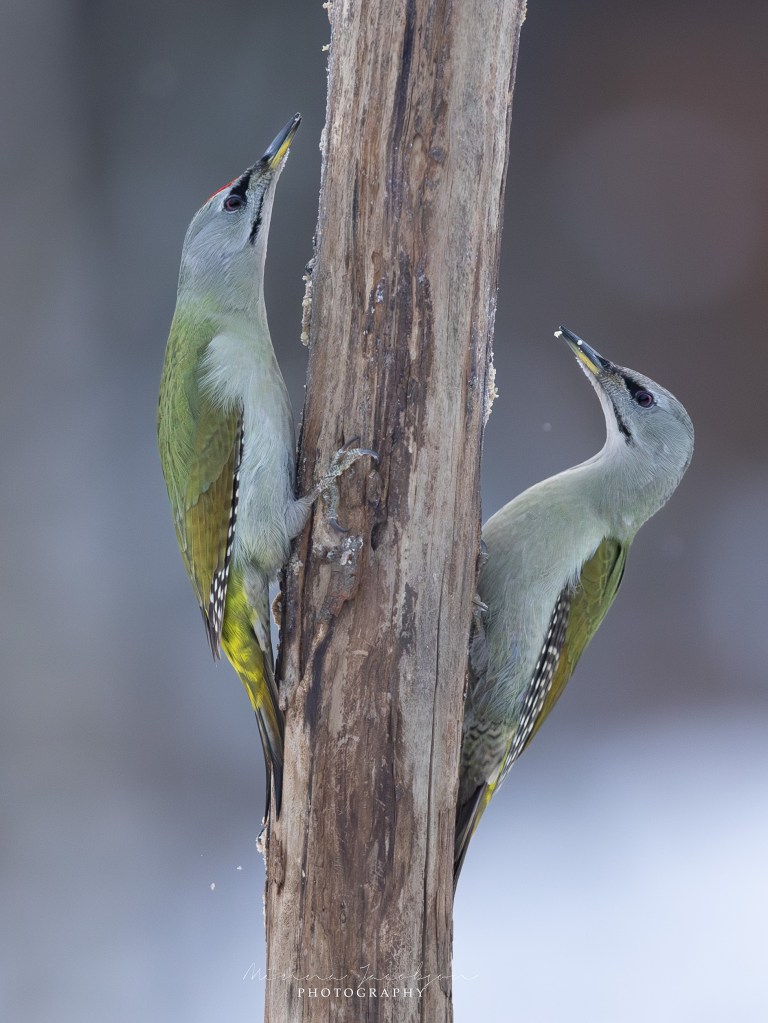
They were feeding on the same tree trunk for a while. It was wonderful to watch how they moved in the same direction, always keeping a certain distance between each other. After feeding side by side for some time, one of them left. But I had already captured the photo I had never even dreamed of.
Grey-Headed Woodpecker Together With a Great Spotted Woodpecker
As it was gold outside (-20 C) woodpeckers were actively searching for food. There were different combinations of birds on the feeding trunk. At one point Great Spotted Woodpecker was feeding together with the Grey-Headed Woodpecker.
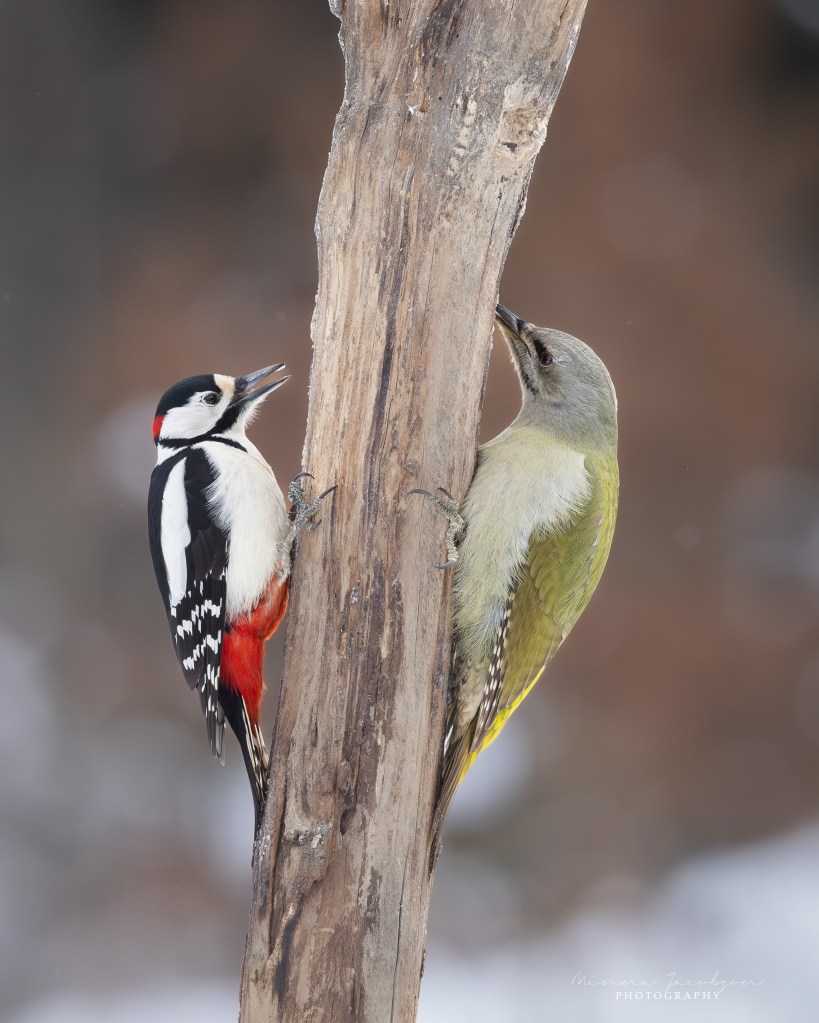
And then the moment came that I had never experienced before.
Three Woodpeckers
On the same tree there were three woodpeckers: a grey-headed woodpecker and a pair of white-backed woodpeckers, male and female. Three individuals. Two species. One shared trunk.
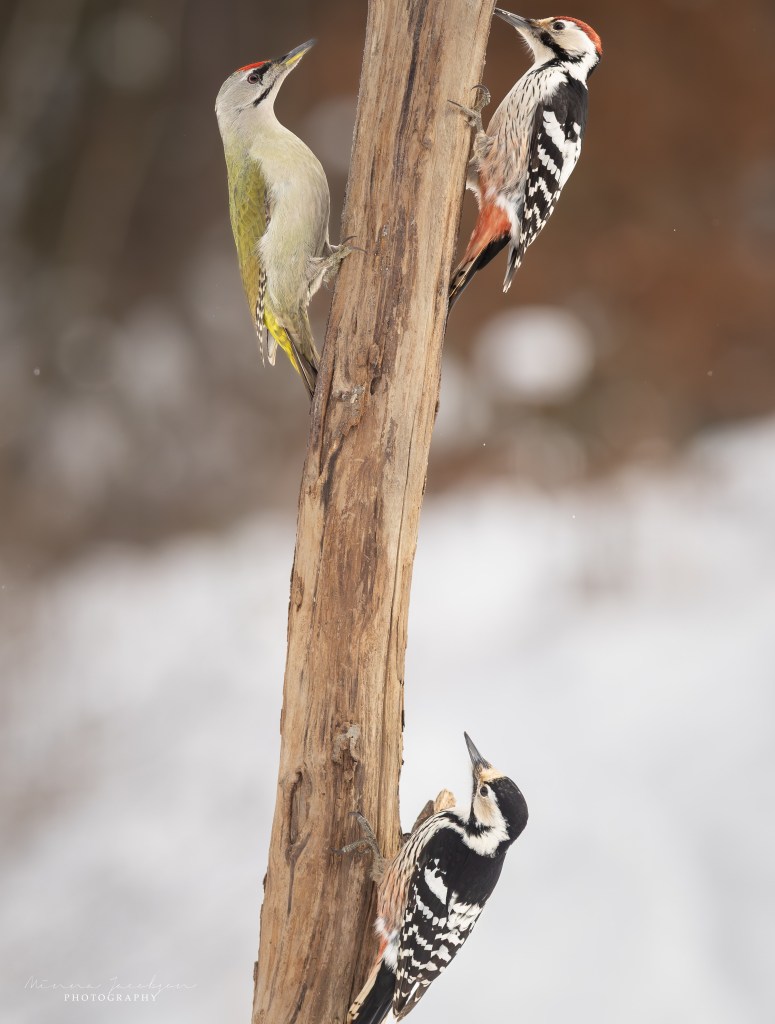
For a brief while, they climbed together. Each bird focused on its own search for food, yet connected by the same piece of wood.
Moments like that cannot be planned.
You can travel, prepare, wait and hope, but you cannot force nature to arrange itself for you. That is why such encounters feel like gifts.
Thank You!
Two winter days in Estonia. One modern hide. Three different woodpecker species.
Moments like these remind me why I return to wildlife photography again and again. Not only for the photographs, but for the experience of seeing wildlife.
This trip also reminded me how much my relationship with hide photography has changed. What once felt restrictive now feels exciting. When you are willing to sit still and wait, you quite often get what you were waiting for.
Seeing three woodpeckers share the same tree was a rare gift. One of exciting moments that stay with you long after the camera is packed away.
Thank you for taking the time to follow this winter story.
Have you ever experienced a wildlife encounter that surprised you — or perhaps changed the way you see nature? I would love to hear your story.
You are warmly welcome to follow this blog for more reflections on light, nature and photography.
 MINNA JACOBSON
Well captured! Staying in a hide pays back well. 👌
LikeLiked by 1 person
Indeed it does! Thank you 😊😊
LikeLiked by 1 person
beautiful shots!
LikeLiked by 1 person
Thank you so much 😊😊
LikeLike
How wonderful to see all those birds and especially that rare one. I do hope its numbers will keep increasing. your developing passion for bird photography is quite evident. Those shots are brilliant. I love seeing your photos and I had never seen pictures of these woodpeckers before, so that was a special treat!
LikeLiked by 1 person
I’m so happy you enjoyed them — thank you for your kind words 🤍
It truly was a special moment to see the white-backed woodpecker. It’s considered rare here in Finland, so encountering it felt like a real gift. I also hope its numbers continue to recover — healthy old forests are so important for species like this.
Bird photography has definitely become more than just a passing interest for me. There’s something about waiting, observing, and finally capturing that fleeting moment that keeps drawing me back. And knowing that the images bring joy to others makes it even more meaningful.
Your support means a lot — thank you for following along on this journey 🪶🪶🪶
LikeLike
Wonderful tips and beautiful pictures, Minna. Thank you.
LikeLiked by 1 person
Thank you Lynette 🤗🤗 It was wonderful trip. I am glad you liked my post 😊😊
LikeLiked by 1 person
Superb and stunning images. A trip that certainly gave you great memories.
LikeLiked by 1 person
Thank you! The trip was worth of money and time spent 😊 We got a lot of great memories.
LikeLike
Wow, so cool! Great shots!!!!
LikeLiked by 1 person
Thank you Kawtie 😊🪶
LikeLiked by 1 person
Magnificent photos of these beautiful birds! I was not familiar with these woodpeckers so it was especially nice to learn something new.
LikeLiked by 1 person
Thank you Magickmermaid 🥰🥰 I am so glad that my post was valuable for you 😊😊 Have a great day 🪶🪶
LikeLiked by 1 person
so beautiful photos
LikeLiked by 1 person
Thank you so much 🤗
LikeLike