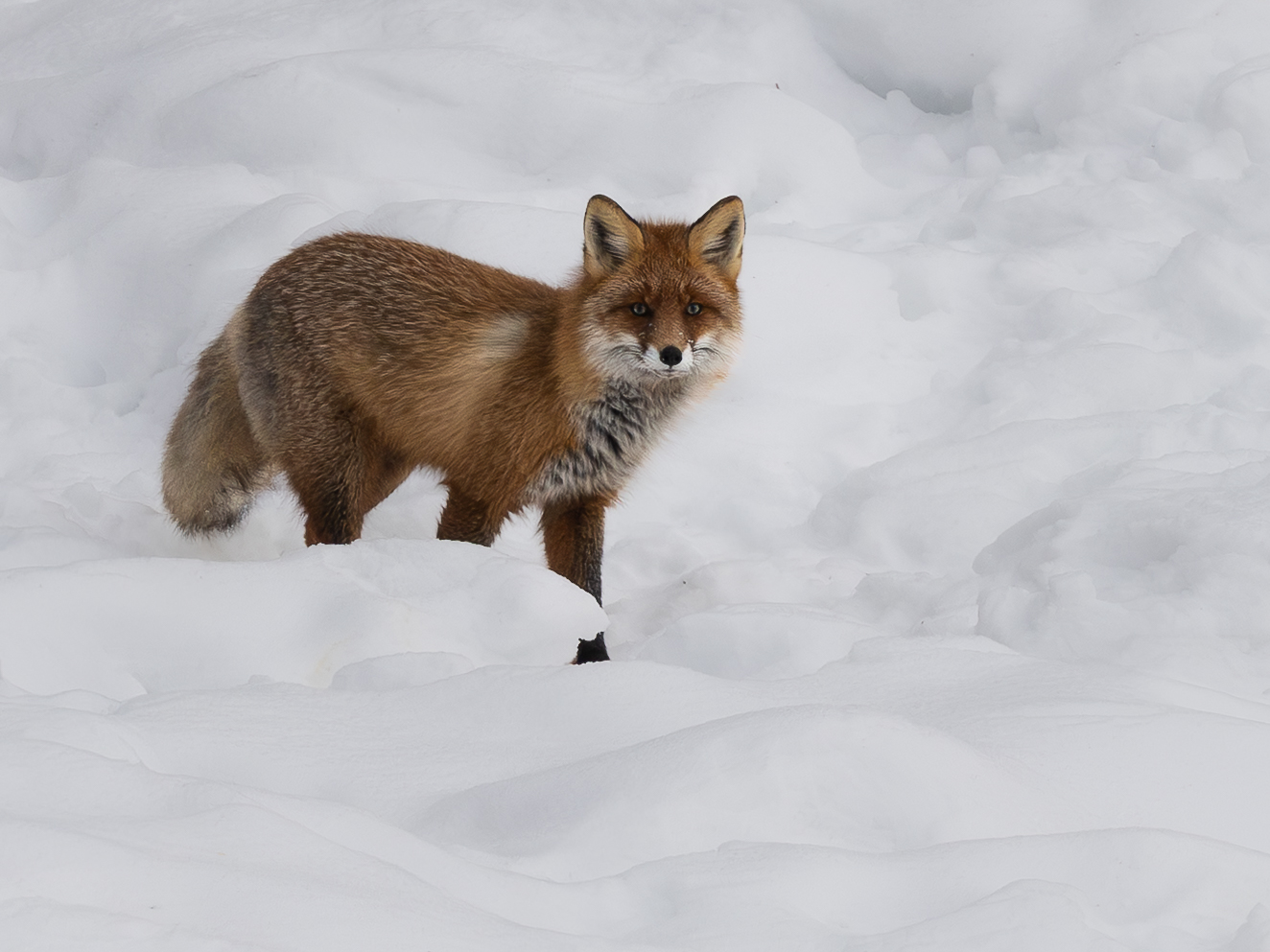
We travelled to Estonia to photograph birds, but I knew foxes also lived in the area. When the first fox appeared near the hide, I was in heaven. My dream, a fox in winter landscapes, came true.
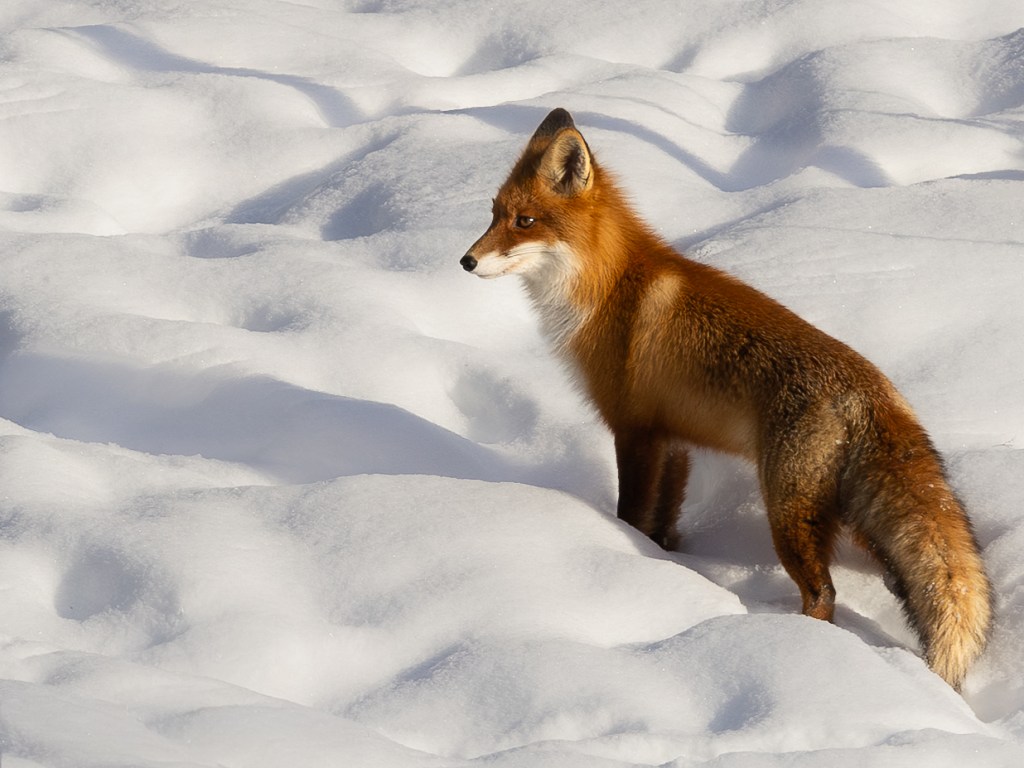
The winter fox was standing in the woods and looking carefully around. I was ready with my camera. When it finally decided to enter into the stage, I got my first photo of the winter fox. How beautiful it was!
The winter light was beautiful. Snow emphasised the reddish tones of the winter foxes’ fur, and every movement stood out clearly against the white background.
Photographing Wildlife in Snow
Photographing animals in snow brings its own challenges. Snow reflects a great deal of light, and the camera often underexposes the scene. I usually add positive exposure compensation to keep the snow white instead of grey.
I also watch the histogram carefully. Highlights can burn out quickly, especially in bright winter light.
At the same time, snow simplifies everything. The background becomes clean and minimal, and the animal stands out more clearly. In winter conditions, light and contrast become part of the story.
In short, winter wildlife photography requires:
- Slight positive exposure compensation
- Careful monitoring of highlights
- Attention to contrast between fur and snow
- Patience in cold and often very still conditions
A Winter Fox and a Skeleton
Foxes were near the hide because they were searching food. One of the foxes grabbed a large skeleton and began dragging it towards the edge of the forest.
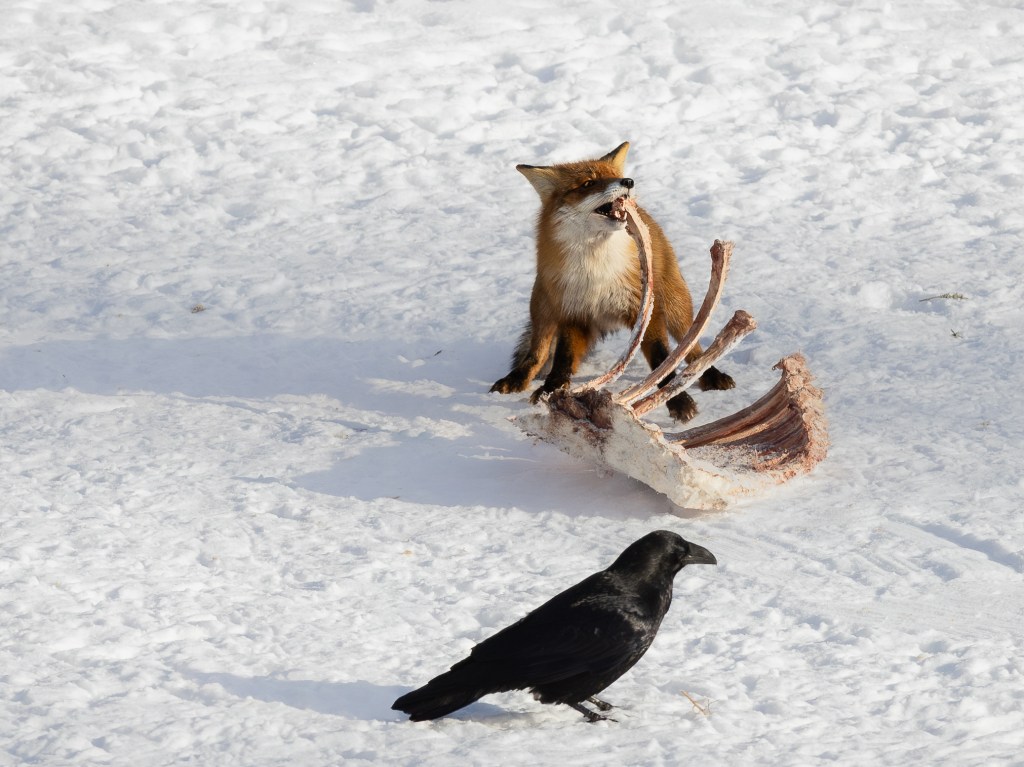
The prey was big and the fox had to struggle.
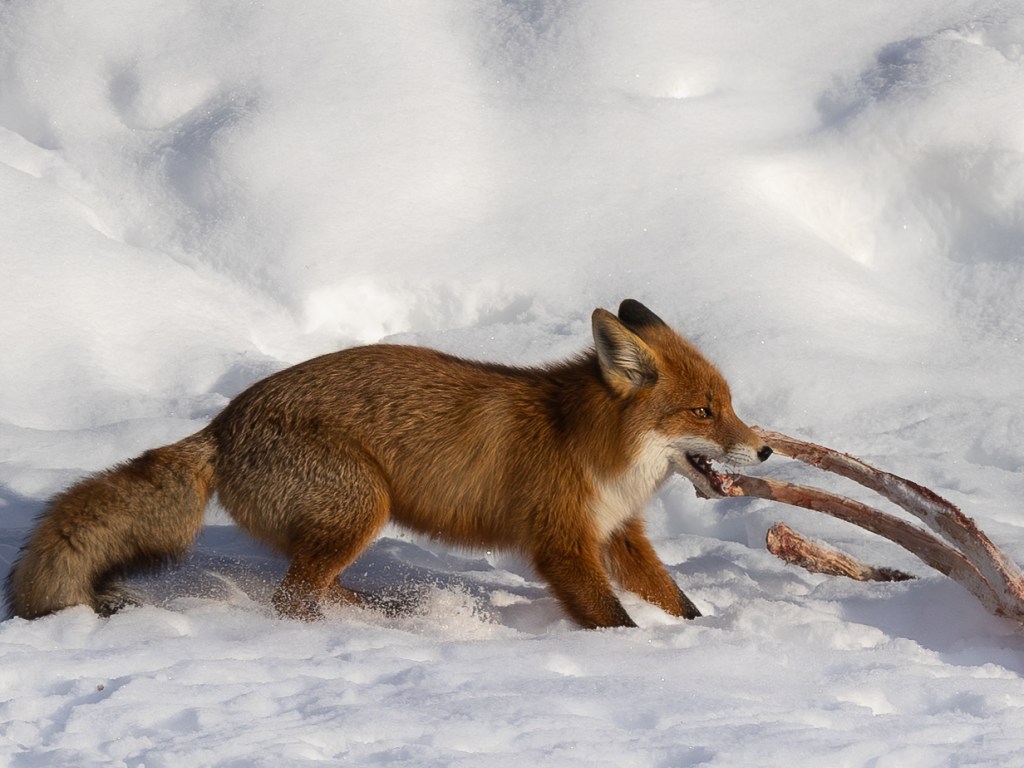
Snow flew from its paws, and at times it stopped to pant. The fox was clearly tired from the effort. I imagined I could hear its rapid breathing.
The red fox is highly adaptable and feeds on almost anything available. It eats small mammals, birds, insects, berries and carrion. In winter, carcasses can be vital, because hunting becomes more difficult.
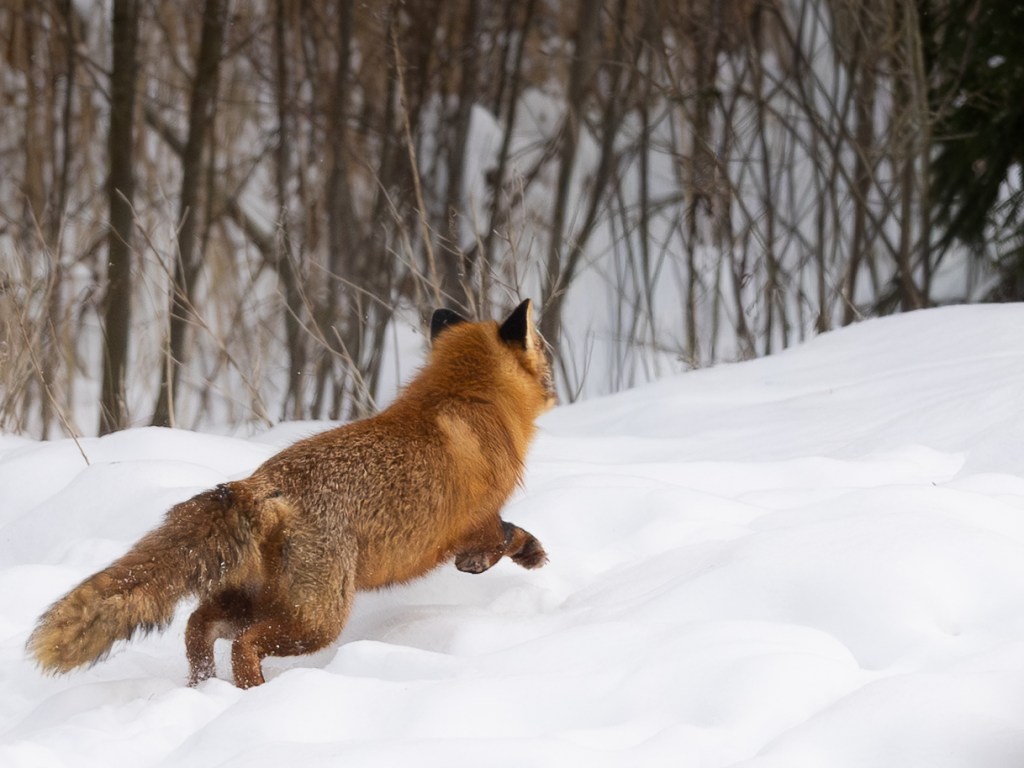
When Play Is Not Play – Winter Fox Behavior
At one point two foxes faced each other in the snow. In a photograph the moment looks like play, but the atmosphere was tense. Foxes tolerate each other outside the breeding season, but access to food in winter can quickly trigger defensive behavior.
A food cache signifies energy, and energy means survival.
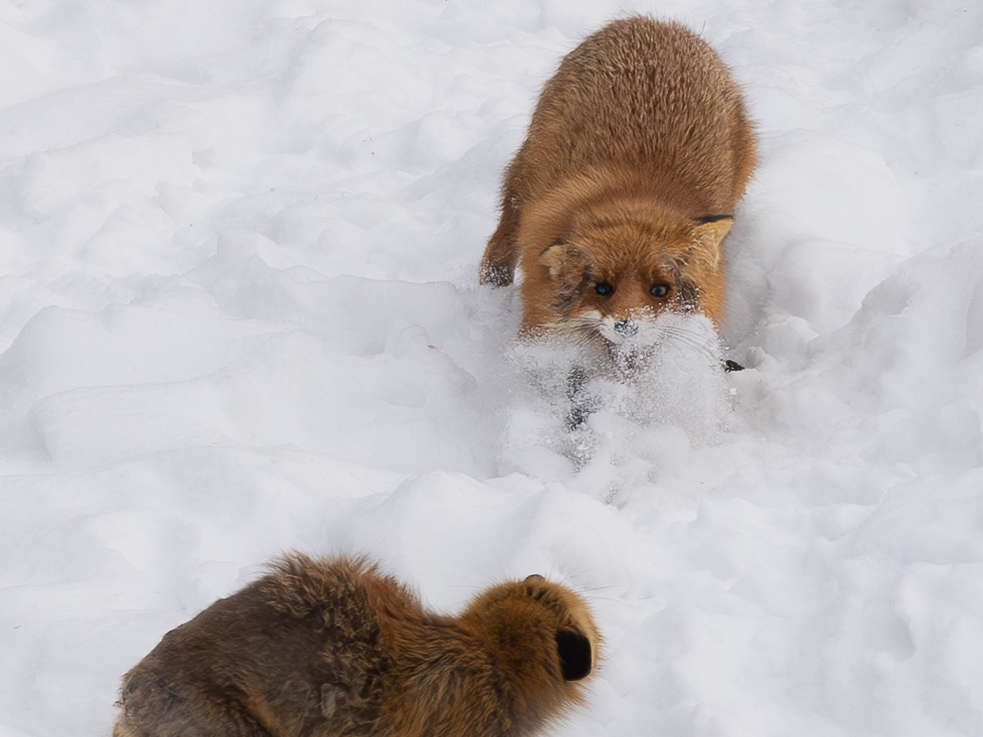
The fox positioned higher in the frame was ready to attack. It was defending its food cache and most its space.
The other fox was suffering from mange, which had stripped much of the fur from its hindquarters. The temperature was well below freezing, and I kept wondering how it can survive in the cold.
A tense exchange unfolded between the healthy and the sick individual.
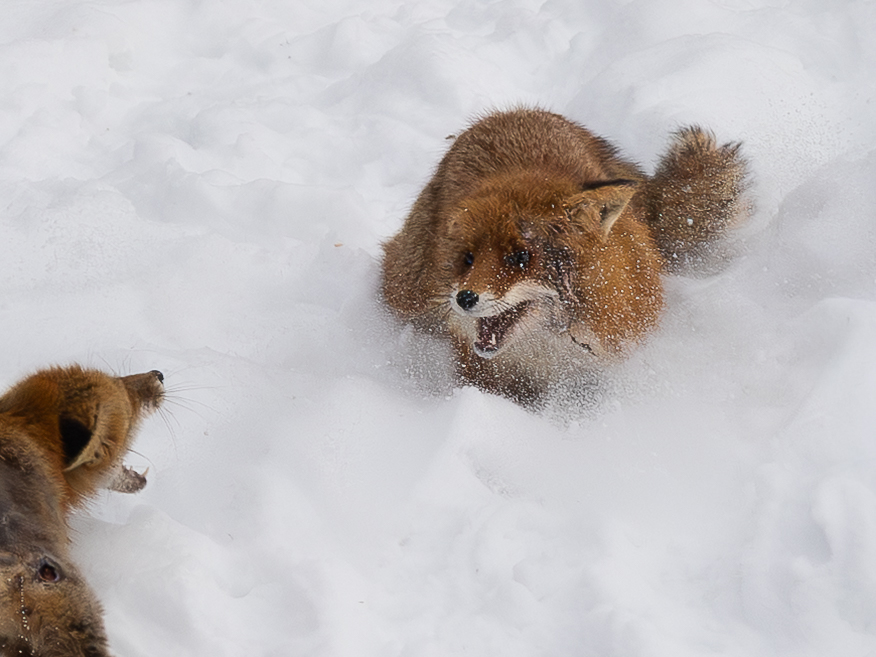
Through the lens the moment can seem almost light. In reality it was about access to food and the right to remain. In wildlife photography, play and aggression can resemble each other.
In wildlife photography, play and aggression can look almost identical.
How often do we mistake tension for tenderness when we look at wildlife images? And how much of what we see is shaped by what we want to see?
In nature, weakness is quickly exposed.
A Journey to Remember
Although I felt sadness for the sick fox, I was also grateful. I was able to follow their lives in a winter landscape. I observed moments that are not instantly visible to a passing eye. The ravens added their own layer to the scenes. They reminded me that a carcass rarely belongs to just one species.
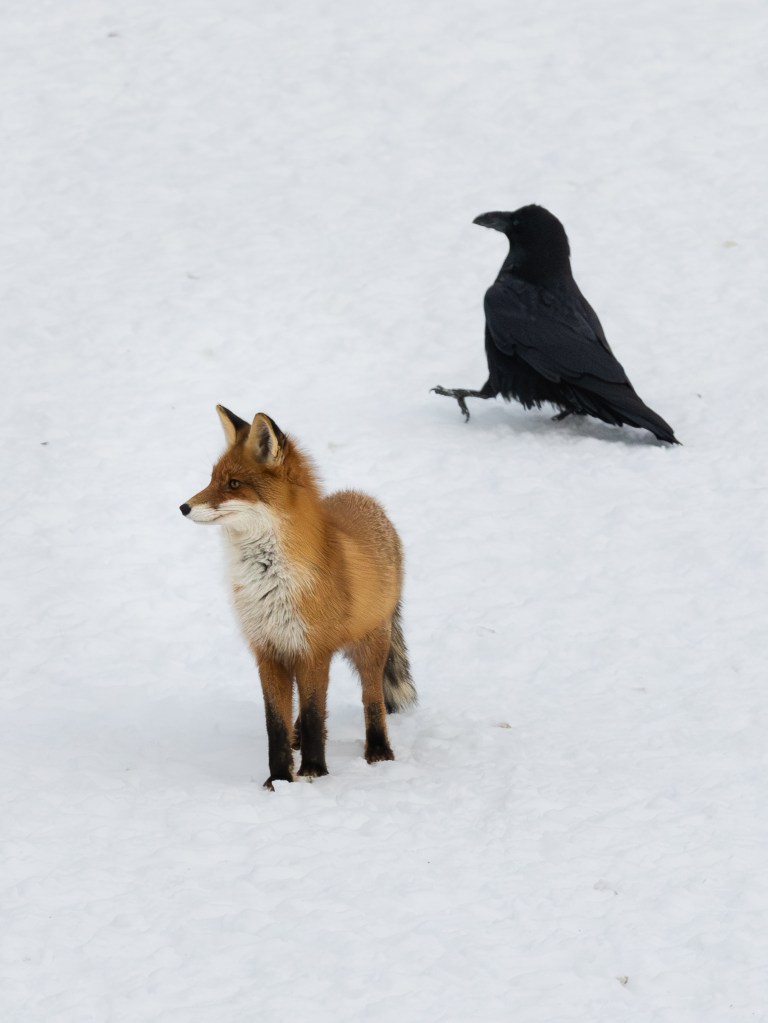
Our trip to Estonia was an unforgettable experience. We saw many birds, but the foxes were the absolute highlight for me.
These encounters reminded me that wildlife photography is not only about beauty. It is also about tension, hierarchy and survival. The camera can soften reality, but it can also reveal it.
Why Am I Fascinated by Foxes?
I have often wondered why foxes fascinate me so much. I am a cat person, and the fox belongs to the dog family. Still, something about it draws me in.
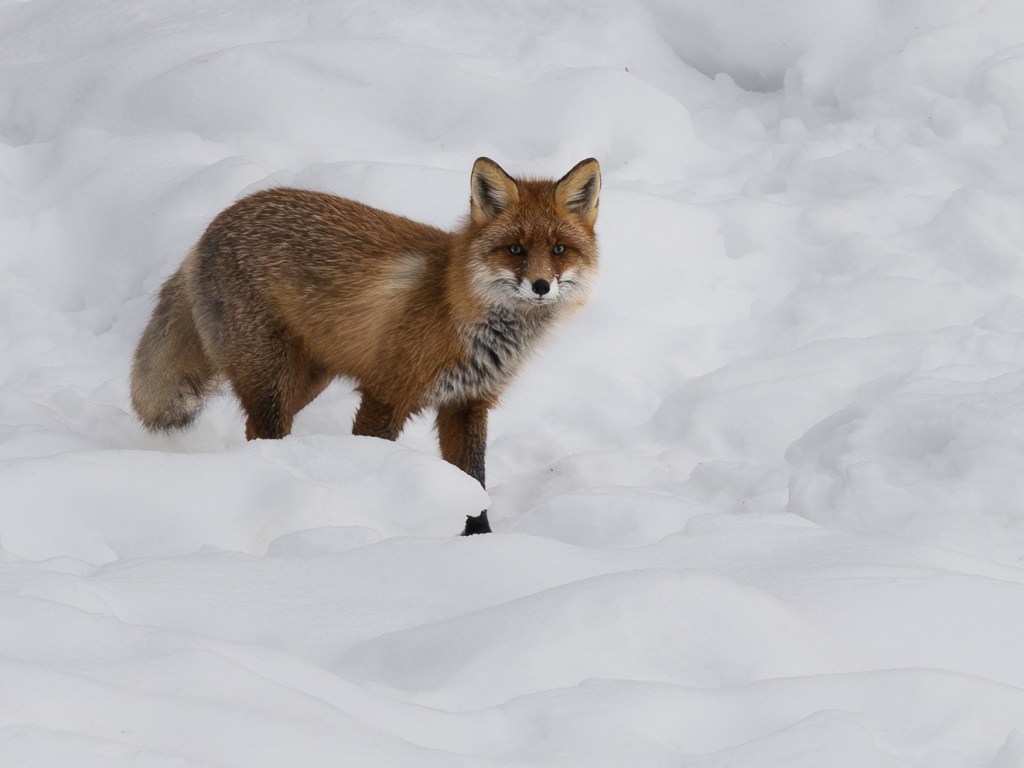
Is it the colour of its fur, which glows warmly even in winter light? Or its face, which always seems alert and expressive?
Anyway there is a certain feline grace in the way a fox moves. A quiet softness merged with sharp awareness. That balance may be what keeps me watching. By the way, do you have a favorite wild animal? And have you ever wondered why it speaks to you?
Thank You
Thank you for walking through this winter encounter with me.
Have you ever observed a moment in nature that changed how you see an animal?
When you look at a wildlife photograph, do you see play or survival?
You are warmly welcome to follow this blog. Follow along if light, nature, and the layered lives of wild animals speak to you too.
 MINNA JACOBON
Excellent shots Minna! Congratulations on getting your fox in snow.
Have you ever heard a fox laugh? They sound almost human like?
LikeLiked by 1 person
Thank you Wayne! I don’t think that I have the laugh 😄 But I have heard when they are howling 🦊🦊🦊 It would be nice to hear the laugh thoug 🤗
LikeLike
Here ya go………..https://www.youtube.com/watch?v=nb5ZR8tgc6Q
LikeLiked by 1 person
😂😂😂
LikeLike
An unforgettable trip indeed! So many encounters…and so emotinal.
LikeLiked by 1 person
It was so nice to finally see a winter fox. The trip gave me everything I was hoping for 😊
LikeLiked by 1 person
Very cool action shots! And the bright fox against the pristine snow is such nice drama.
LikeLiked by 1 person
Thank you so much! The bright fox against the snow created such a beautiful moment of contrast, one of those scenes nature composes perfectly. 🦊❄️✨
LikeLiked by 1 person
Your series of photos of this fox and its daily
LikeLiked by 1 person
I accidentally hit send so you can delete the above partial comment.
Your series of photos of this fox and then placing them in context through your explanations is fascinating. Thanks so much for sharing your experience, Minna.
LikeLiked by 1 person
Thank you so much for your kind words Lynette! It was a truly special moment to witness, and I’m very happy if the photos and the story together could share a little of that experience. 🦊✨
LikeLiked by 1 person
Thank you so much for your thoughtful comment. Seeing foxes up close truly feels like a privilege, doesn’t it? They are such beautiful and intelligent animals.
The raven in the scene fascinated me as well. They are incredibly intelligent birds and always seem to know exactly what is happening around them.
Snow can definitely make wildlife photography challenging, but it also creates such a special atmosphere. Here in Finland winter lasted for two months and we were freezing. Now the spring is finally here.
And your story about the possum touched me. Sometimes simply helping an animal survive a little longer is an act of kindness in itself. You clearly cared deeply for her.
LikeLiked by 1 person
An amazing adventure and beautiful photos!
LikeLiked by 1 person
It was amazing trip! Thank you Magickmermaid 😊
LikeLiked by 1 person
Gorgeous animals! We have red fox that pass through our backyard from time to time, I love seeing them.
LikeLiked by 2 people
Thank you Donna! Foxes are so besutiful animals. It is great to have a such an opportunity. Fox in your own backyard 🦊🦊🦊
LikeLiked by 1 person