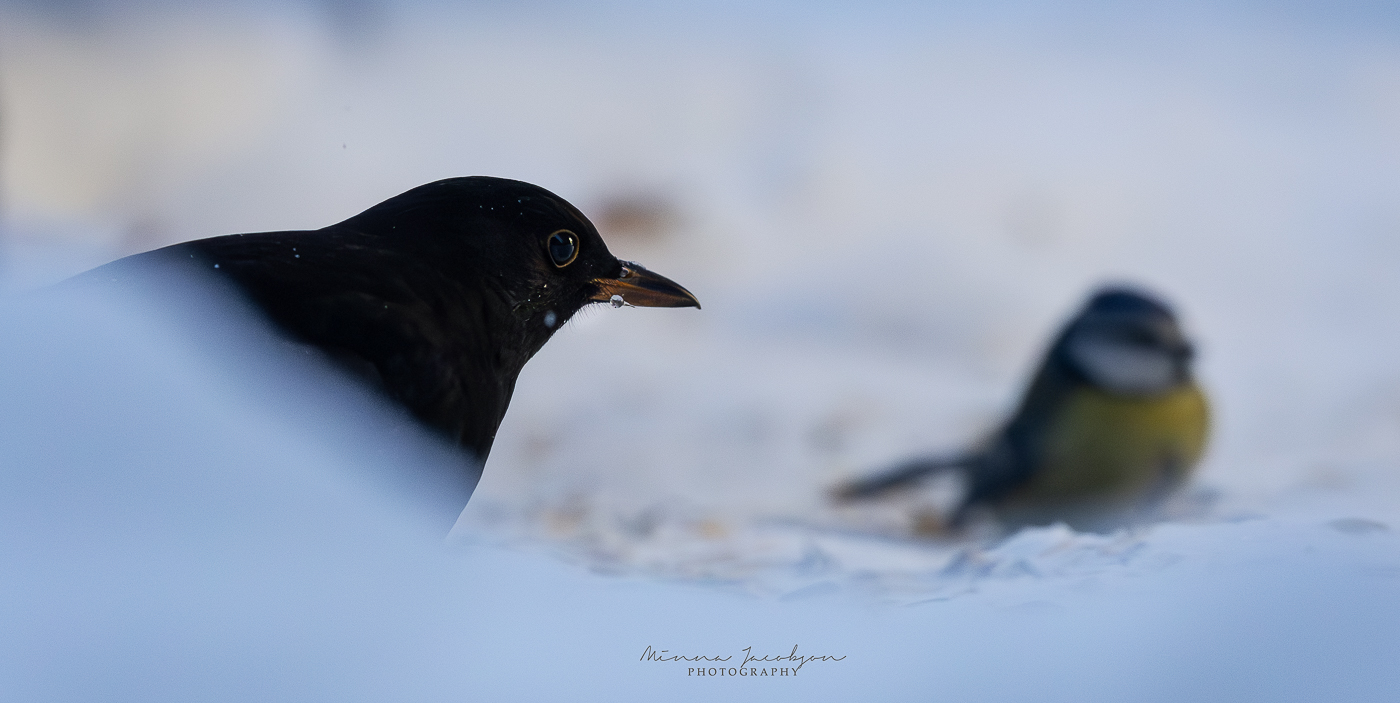
A couple of weeks ago it was really cold and gray. For me, light is essential both for photography and for my mood. Cloudy weather makes everything feel colorless, including photographs. Still, after such a long stretch of gray days, I felt the need to take my camera outside. There had to be something to photograph.
Garden full of life
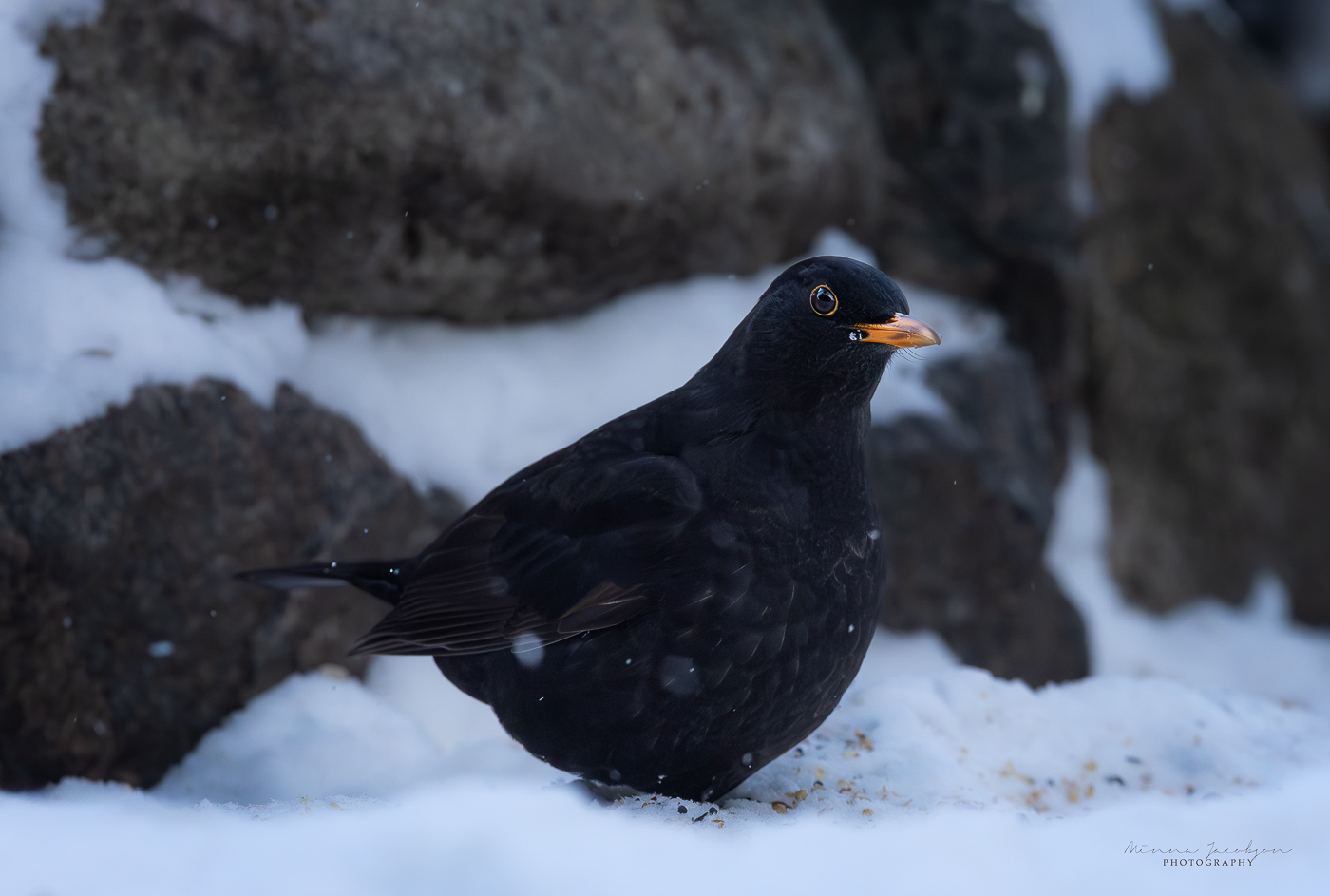
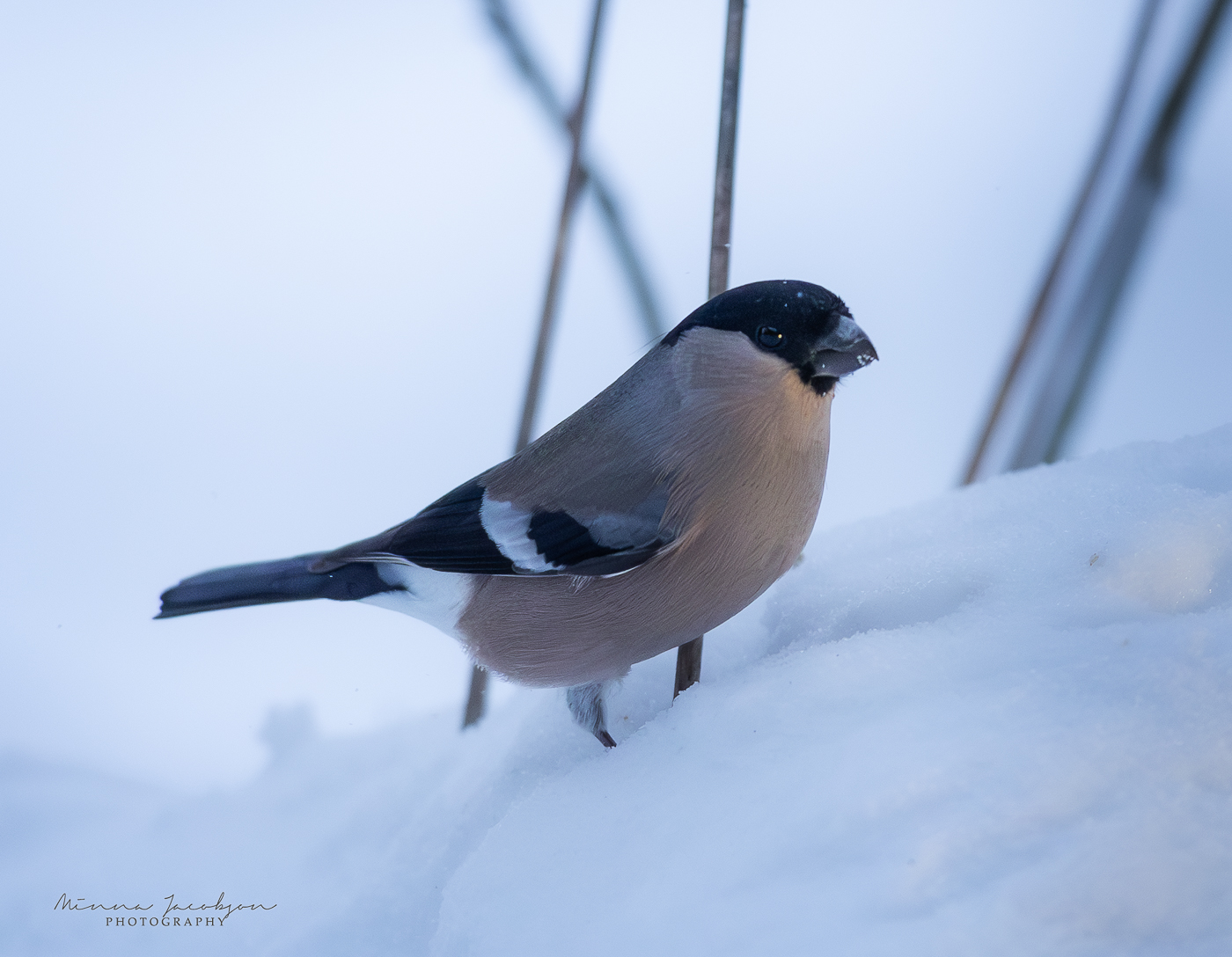
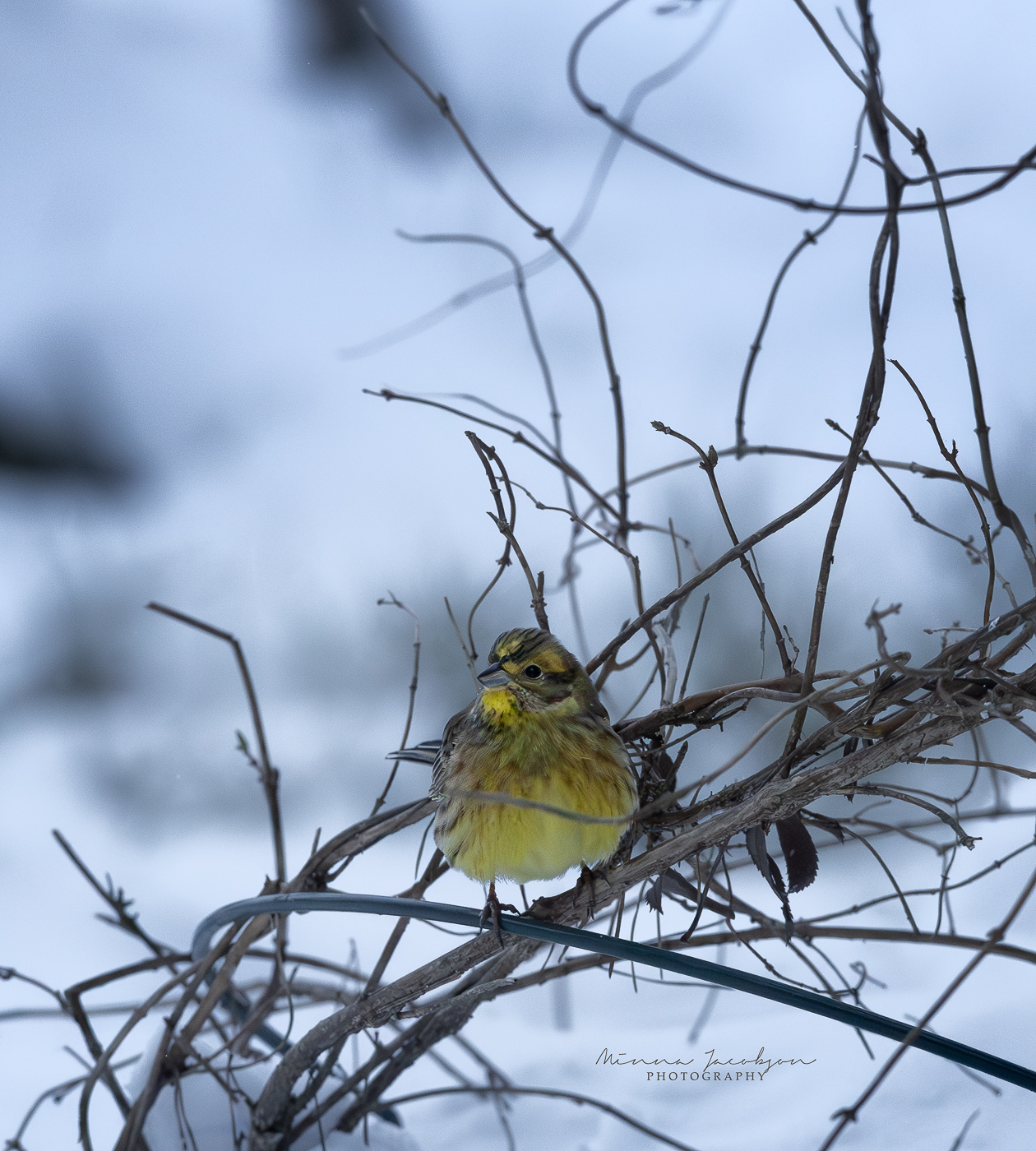
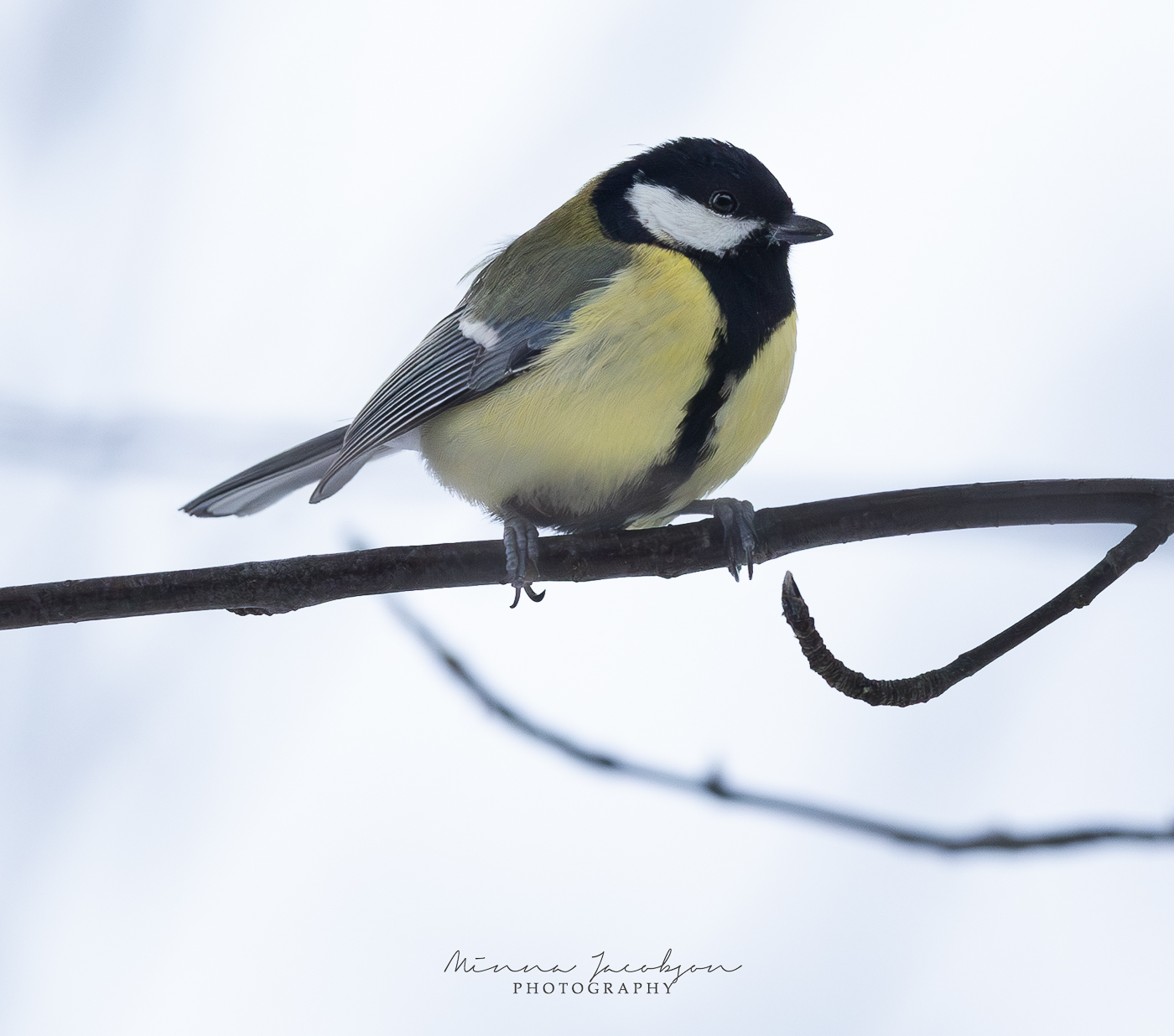
As it was cold I stayed indoors, watching the birds in our garden. I realized that the feeder became an essential stop for many birds trying to get through the winter day. Heavy traffic in and out.
I mainly saw blackbirds, yellowhammers and various tits. Also the bullfinch and great spotted woodpecker were around.
I haven’t really photographed the birds in our garden before, but this time there truly were plenty of them. Because everything outside looked so gray, I started to think about photographing them using artificial light.
Photographing with artificial light – was it worth trying?
I set up a construction site light in the garden and added a dimmer in front of it. The light was soft, but after a while I noticed that it wasn’t designed for photography. It namely showed banding in the images, especially in darker conditions. The light was flickering. Even so, I managed to get a few successful images – so the experiment was worth it.
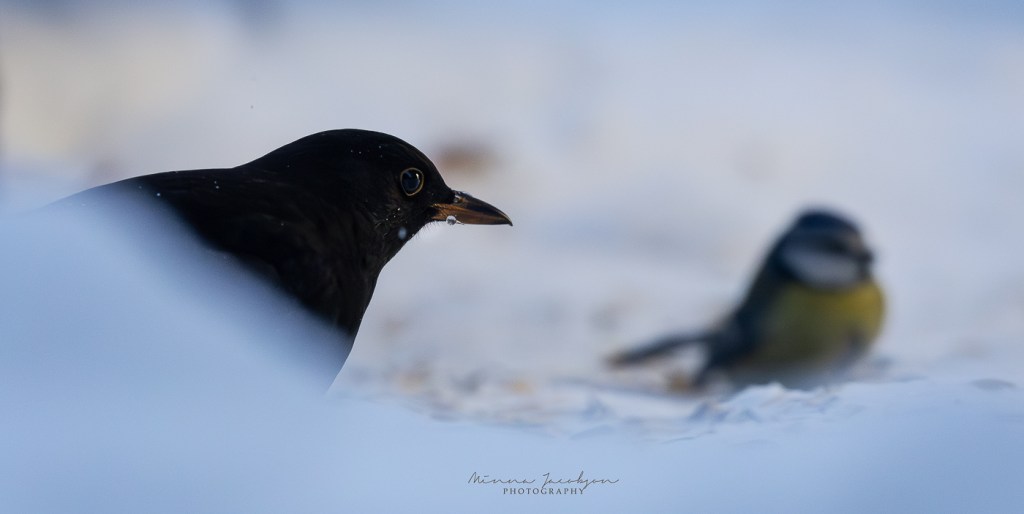
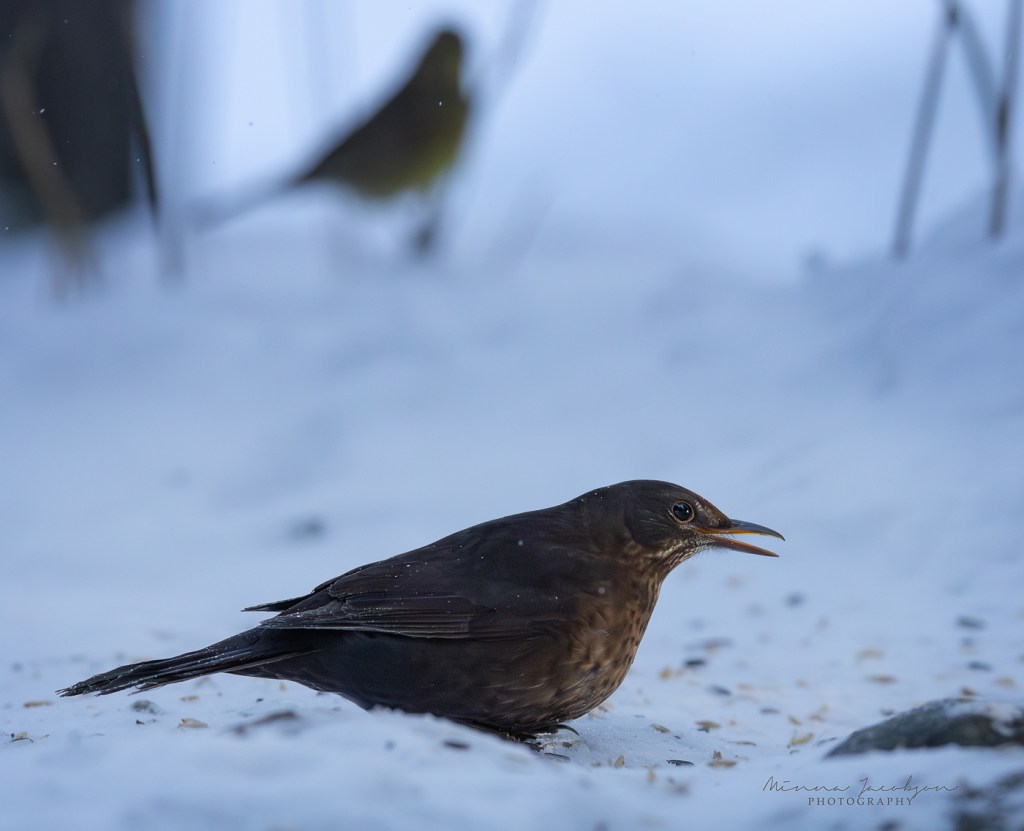
Artificial light opened up new ideas. Sometimes difficult conditions push you to try something you wouldn’t otherwise consider.
What to look for when using artificial light outdoors
Artificial light outdoors takes some trial and error. With patience, it can open up new creative possibilities, even in the darkest and grayest parts of winter.
Power of the light
Using artificial light outdoors brings a few specific challenges, especially in winter conditions. First of all, the light needs to be powerful enough to compete with ambient light, even on overcast days.
Soften the light
The same principles used in studio apply to photography outside with artificial light. At the same time, it should be possible to soften the light. And also to control the intensity of the light. A diffuser, dimmer or simply increasing the distance between the light and the subject can help create a softer result.
Flicker
One important factor is flicker. Many lights not designed for photography – such as a construction site light or some LED lights – can flicker. This means that the light appears in images as banding or uneven exposure, especially at faster shutter speeds.
Some modern cameras offer an anti-flicker or flicker reduction setting. Camera detects fluctuating light and times the exposure to reduce banding. If your camera has this feature, it’s well worth turning it on when working with artificial light.
Camera settings
Camera settings also play a role. Using a slightly slower shutter speed can sometimes reduce visible flicker. Shooting in burst mode may increase the chance of getting evenly lit frames. As always, check images on the back of the camera. Adjust settings on the spot to save a lot of frustration later.
Have you photographed birds using artificial light? What kind of light did you use? Please leave a comment, it you have experience of photography with artificial light.
Leaving the camera outside and using a timer
With temperatures close to –15°C, my fingers got cold very quickly. The feeder was busy with birds, but my hands soon went numb. I still wanted to continue photographing, so instead of staying outside, I left the camera to work on a timer.
I left the camera outside for a couple of hours. I ended up with nearly 2 000 images, of which only a couple were really good. But that’s familiar territory in bird photography.
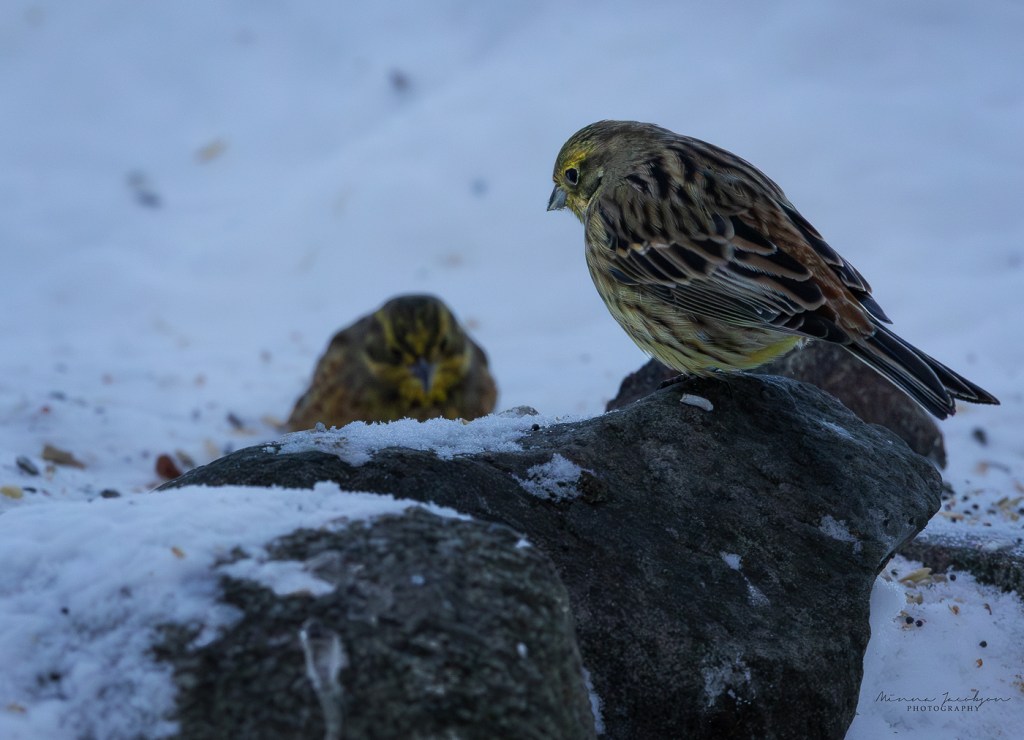
I haven’t used a timer for bird photography before, so it turned out to be excellent practice.
Tip: When a camera timer can be surprisingly useful
A camera timer isn’t just for self-portraits. In nature photography it can be a valuable tool, especially when conditions or subjects make traditional shooting difficult.
- In freezing temperatures: letting the camera work on a timer reduces the need to handle it constantly. This practice gives your hands a break.
- With shy birds and wildlife: animals often behave more naturally when the photographer is not nearby.
- At predictable spots: feeders, perches or landing areas where birds return repeatedly.
- When using eye detection and modern autofocus: sharp results are possible even without touching the camera.
- For experimentation: a timer encourages patience and can lead to unexpected, rewarding moments.
Most images won’t work, but occasionally one does and that can make the whole experiment worthwhile.
By the way, have you tried using a timer for bird or wildlife photography? It would be nice to hear about your experience how it worked out.
Snowfall brought more action
Another moment that inspired me to photograph in my garden was snowfall.
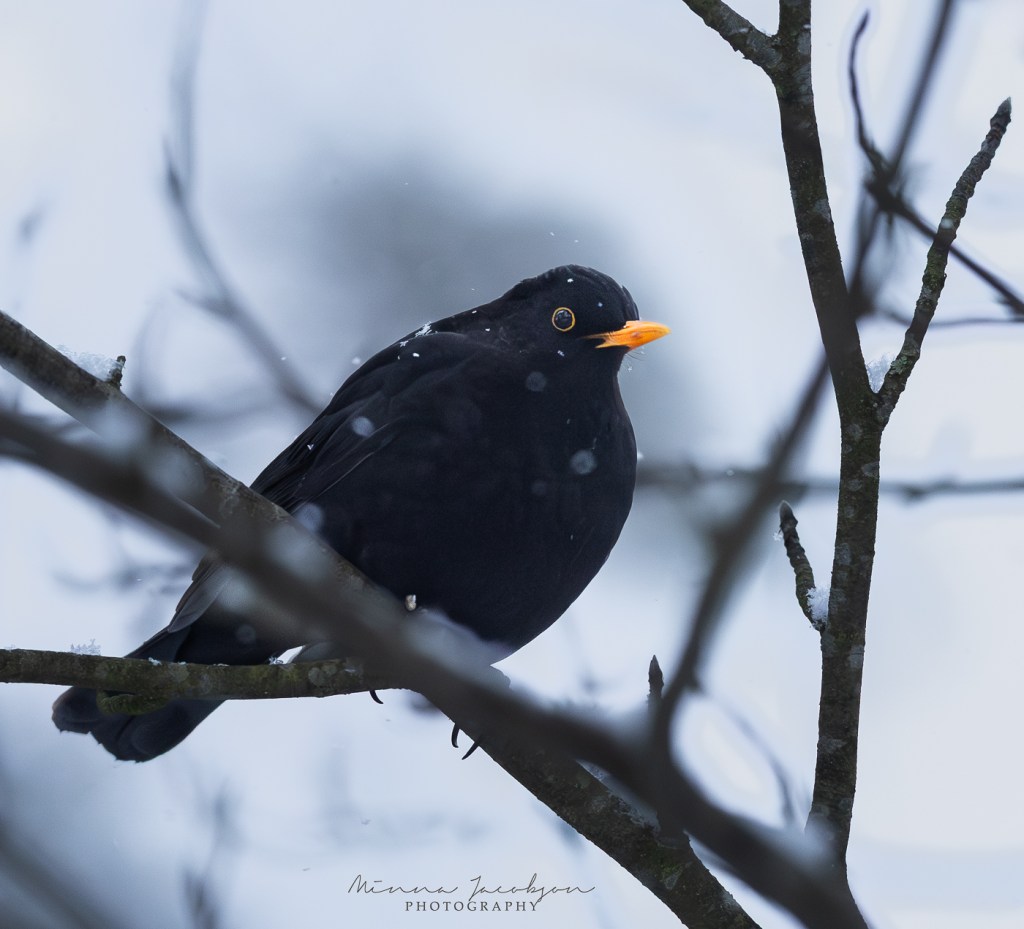
To make snow visible in images, the snowflakes need to be large enough. The light also has to be just right.
A tip for photographing snowfall
Snow shows up better when you:
- photograph into backlight or side light
- use a slightly longer shutter speed
- keep the background relatively dark
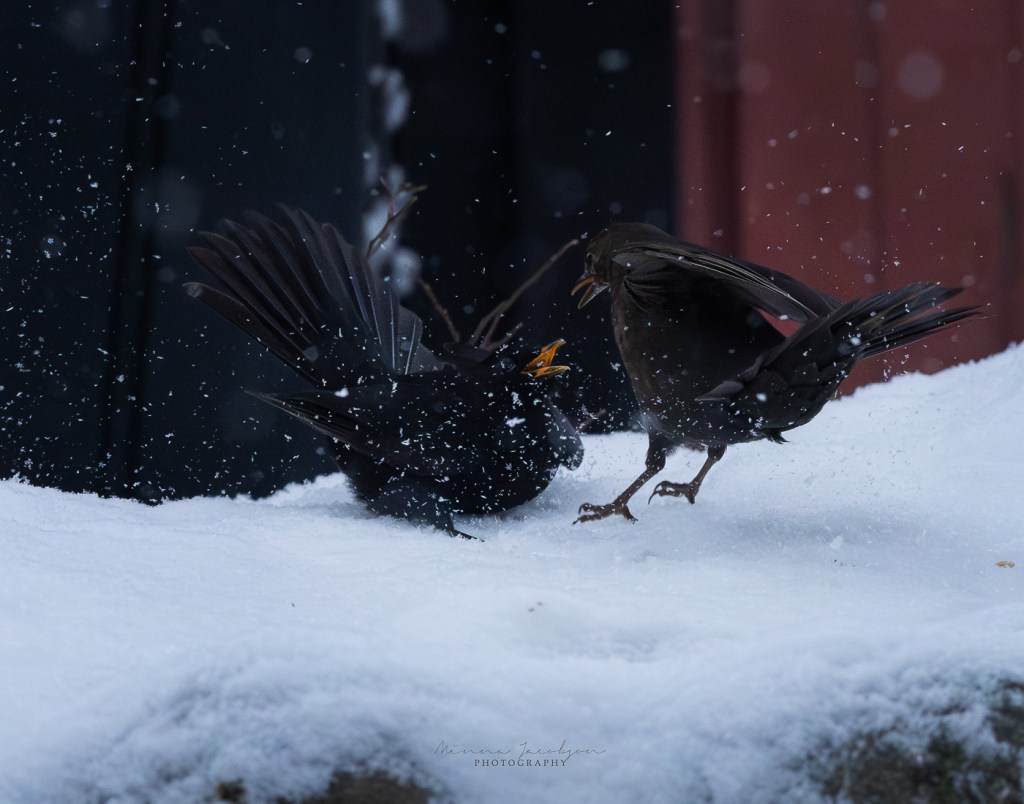
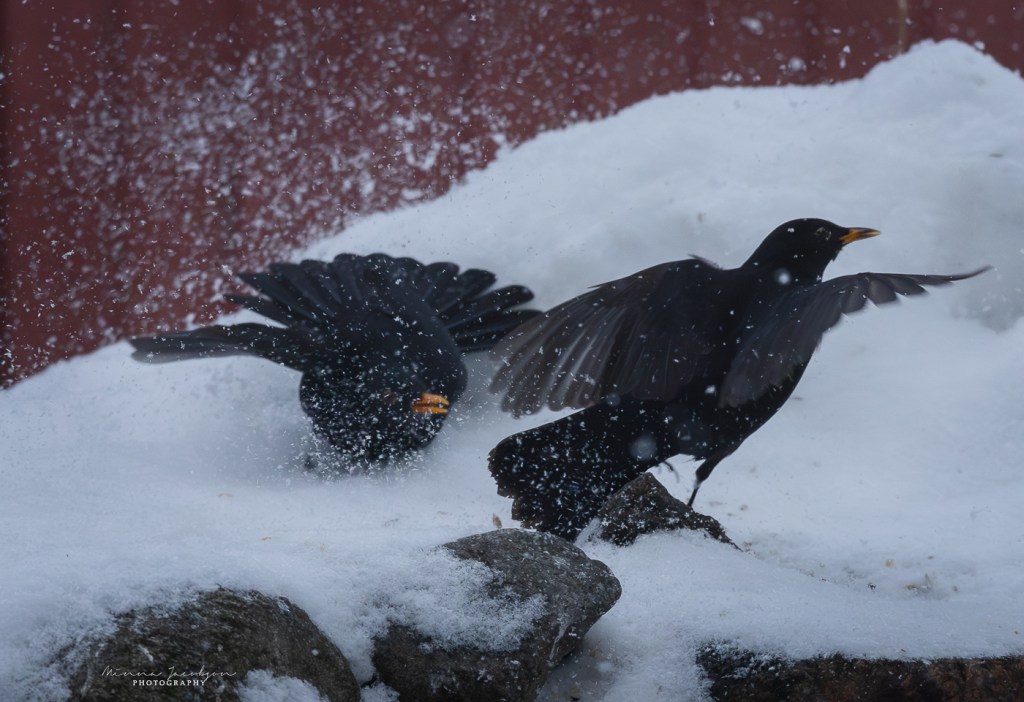
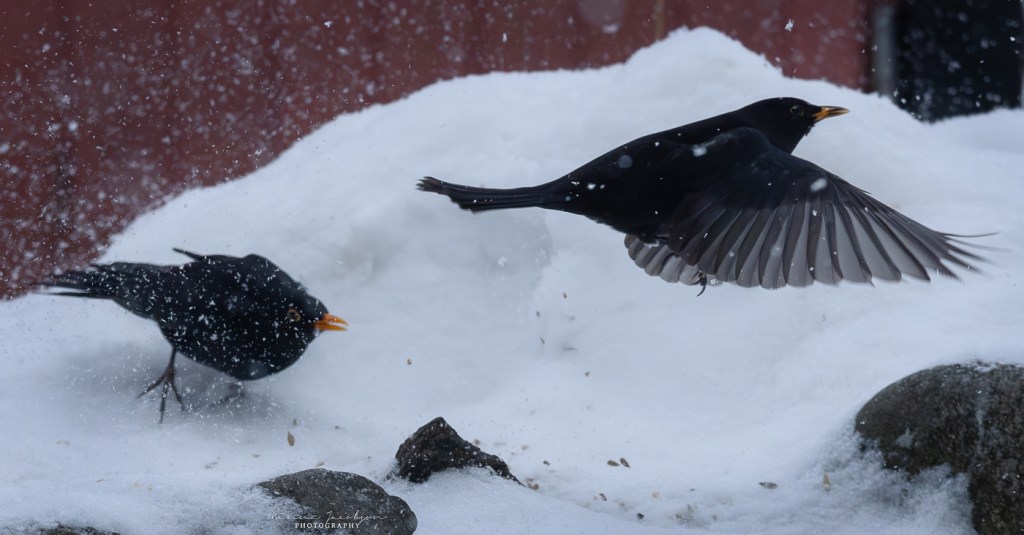
Photographing birds in motion during snowfall is not easy. To keep the wings sharp, a fast shutter speed is needed. I usually aim for something between 1/1250 and 1/2500.
Snowfall, on the other hand, often benefits from a slightly longer shutter speed to make the flakes visible. This means you have to find a compromise. For these images, I used 1/1600. Luckily, the snowfall was heavy enough to still show clearly in the photographs.
Final thoughts
Photographing birds in my garden turned out to be far more fascinating than I expected.
I was also reminded of how many possibilities there really are right outside your own door. You don’t need distant locations or perfect light to learn something new, sometimes curiosity is enough.
Trying artificial light, working with a timer and simply observing the birds more closely was fascinating. Not every experiment was successful, but each one taught me something. And a few images made all the effort worthwhile.
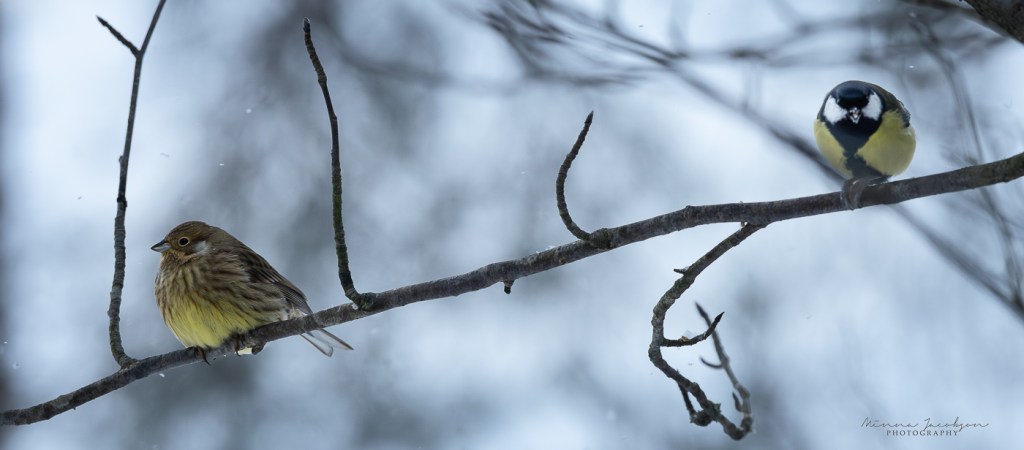
This winter was a good reminder that even familiar surroundings can still be surprising. Being open-minded, slowing down, and simply observing can lead to new ideas. Through trial and error, you often learn more than by repeating what already feels safe and familiar.
I hope you enjoyed spending a moment in my garden and found something interesting or inspiring along the way. You’re always welcome to return here again. If you enjoy my photography and storytelling, please follow the blog. I’d be happy to have you along.
 MINNA JACOBSON
Your birds are wonderful and your photos brilliant, especially the black birds. I never tire of watching birds.
LikeLiked by 1 person
Thank you so much for your kind comment. Blackbirds are lovely.
LikeLike
Birds everywhere are under such pressure and garden feeders are very helpful for them. I very much like your captures of these lovely little creatures and reading about your light experimentations. Thanks for sharing.
LikeLiked by 1 person
Thank you Lynette! I have been feeding them for many years. I have feeders also in my cottage, where I have to drive today to check up that everything is Ok. I care these little creatures ☺️
LikeLiked by 1 person
Such pretty feathered friends.
LikeLiked by 1 person
Thank you Kewtie 🥰🥰
LikeLiked by 1 person
Great photos! You definitely show these wonderful birds at their best!
LikeLiked by 1 person
Thank you so much Magickmermaid 🥰🥰 It was nice to photograph these little models 😊
LikeLike
You are very welcome! (for some reason I am never able to “like” your comment)
LikeLiked by 1 person
Hmm, that’s odd…
LikeLike