The beginning of the year was cold in Finland. On most days the temperature stayed close to –20°C, and in Lapland it dropped below –40°C. It was too cold to stay outside for long time.
I was convinced that bird migration would be delayed this spring, as it had been so cold.
But in early March the air softened. Snow began to melt. The ice on lakes and ponds slowly weakened. And just like that, spring felt possible again.
Returning to Suomenoja
Each spring I visit the Suomenoja bird wetland near our home in Espoo. It has become a small ritual. The same paths. The same anticipation.
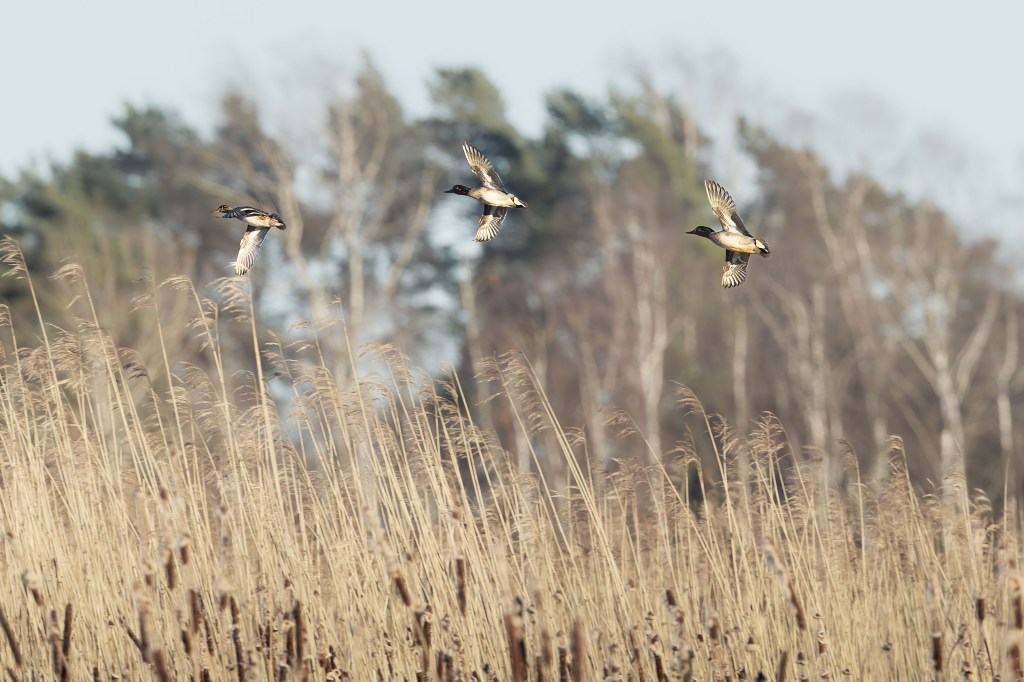
When I went there in late March this year, some of the waterfowl had already arrived. I saw familiar species: common goldeneyes, Eurasian coots, common pochards, tufted ducks and many others.
After a long winter, even the sight of a single bird on open water feels significant.
Where Do They Spend the Winter?
Many of the species that gather at Suomenoja have spent the winter far from here.
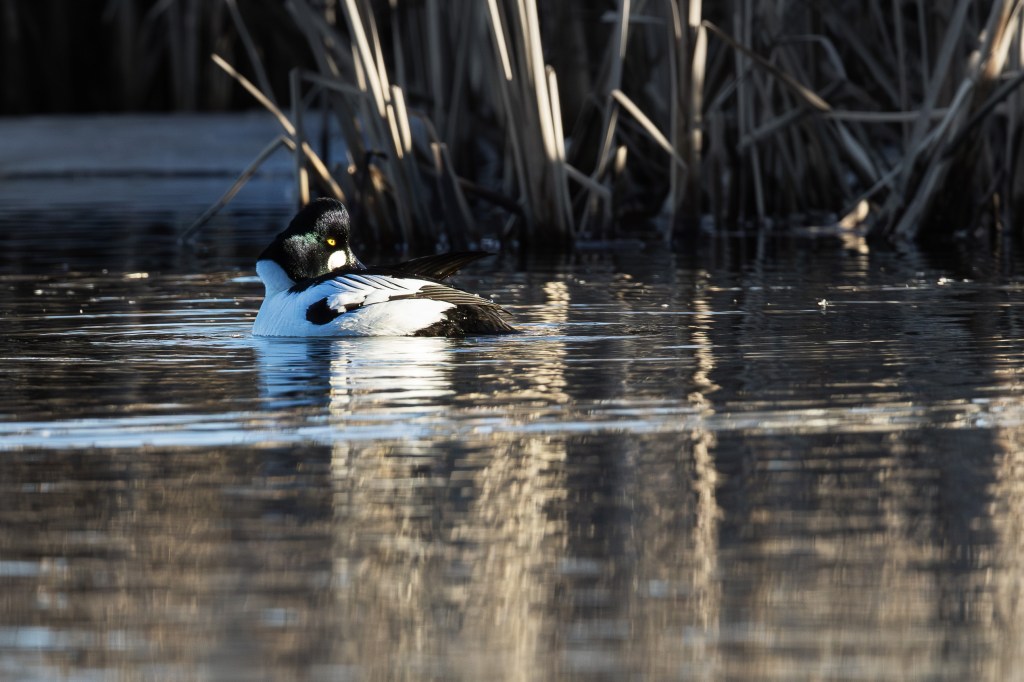
The common goldeneye (Bucephala clangula) is a hardy diver. Some individuals stay in southern Finland if there is open water along the coast. Others winter around the Baltic Sea, in Denmark, southern Sweden or further south in Central Europe. They favour coastal waters and large lakes where they can dive for molluscs and aquatic invertebrates.
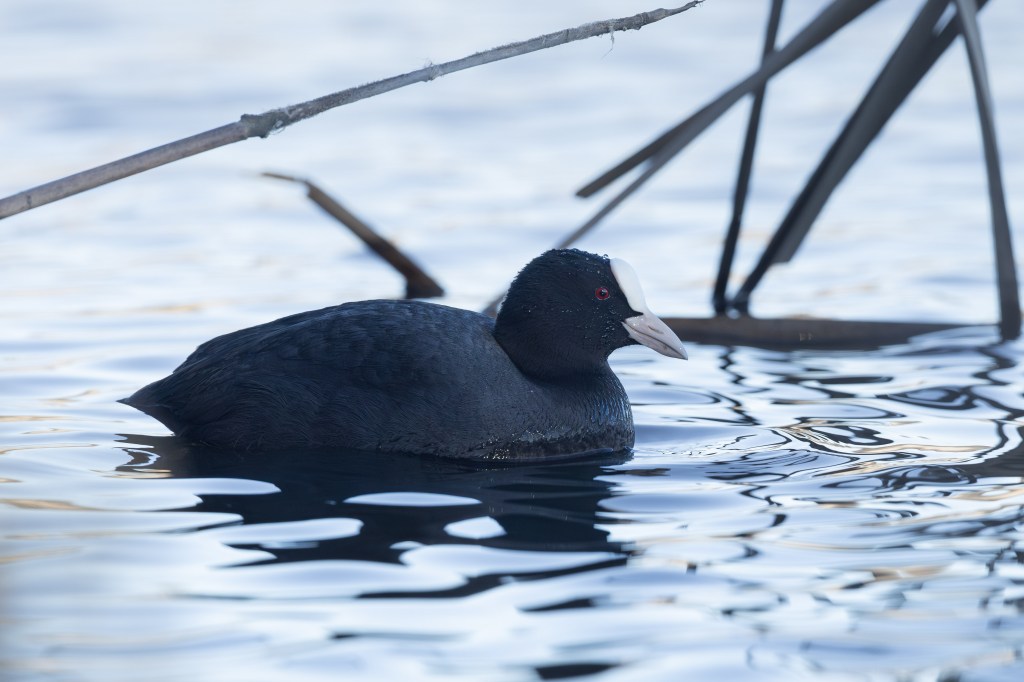
The Eurasian coot (Fulica atra) usually migrates further. Most Finnish coots winter in western and southern Europe, around the North Sea, the Atlantic coast, or large ice-free lakes. They need open freshwater areas with abundant vegetation.
The common pochard (Aythya ferina), known in Finnish as punasotka, winters mainly in western and southern Europe. Large numbers gather on coastal lagoons, estuaries and big lakes. Some continue as far as the Mediterranean and the Black Sea region.
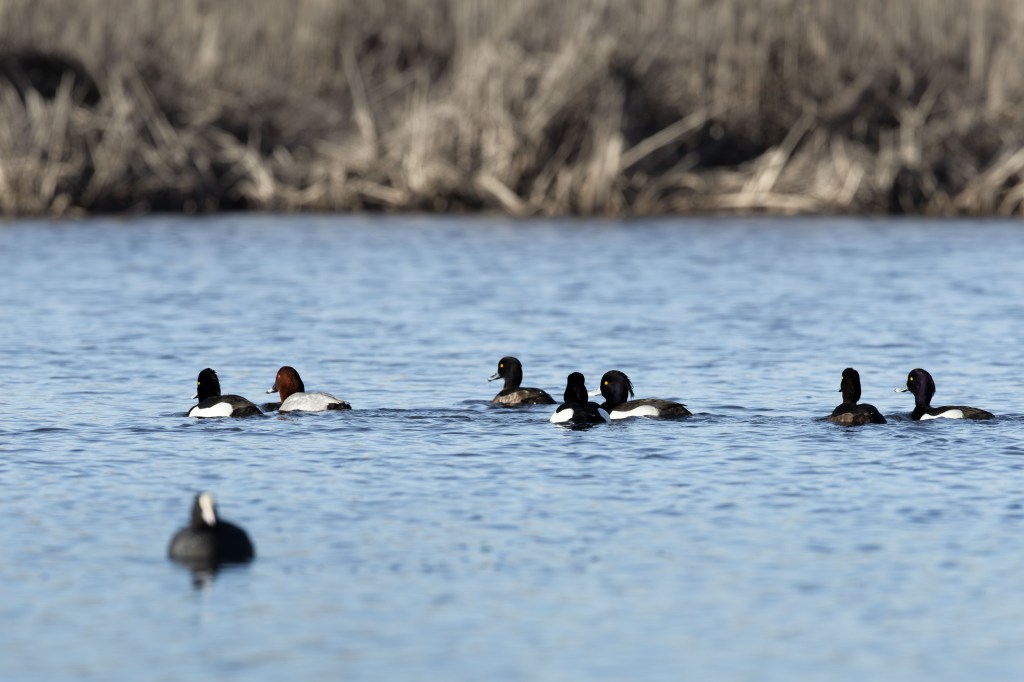
By late March, as soon as open water appears, they return.
Tension on the Water
Spring is an active season for birds – and for those of us who photograph them.
Many photographers focus on action: take-offs, landings, courtship displays and territorial fights. There is plenty of that at Suomenoja.
Coots
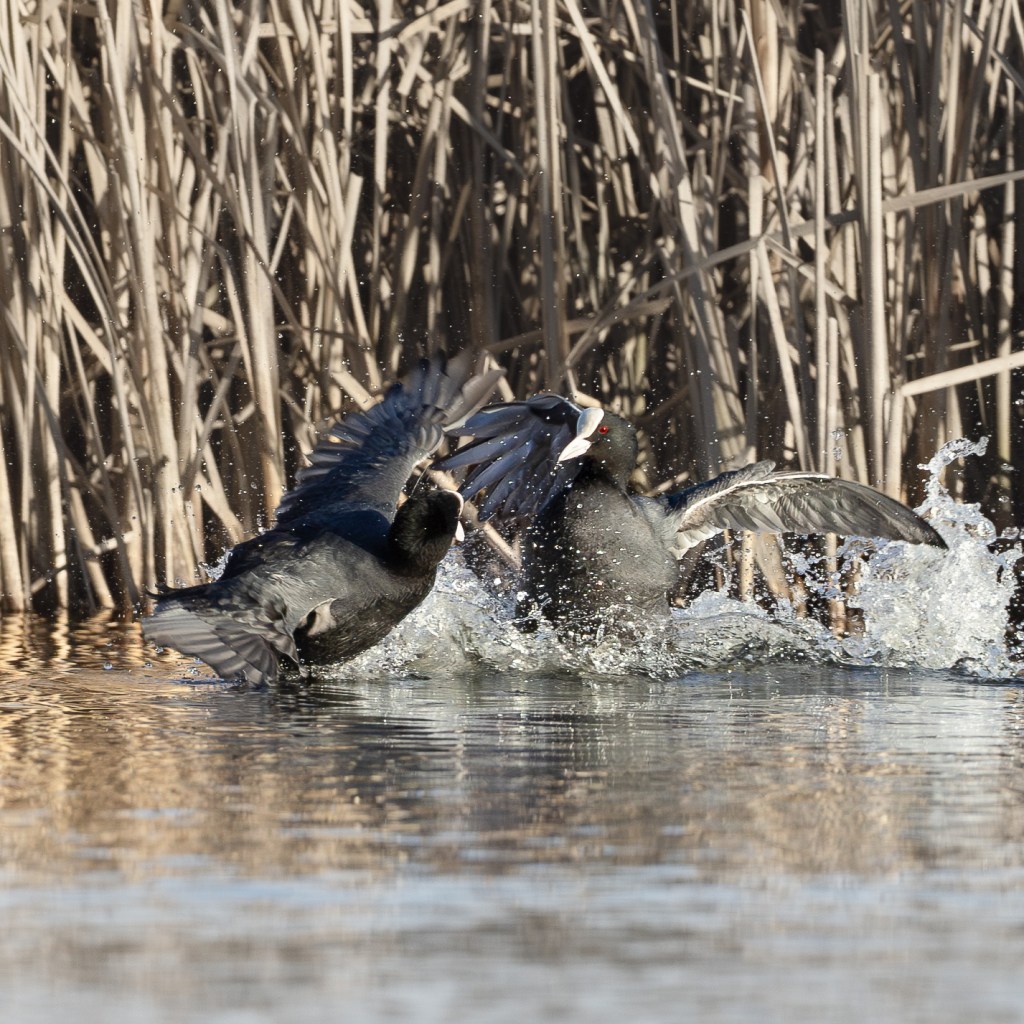
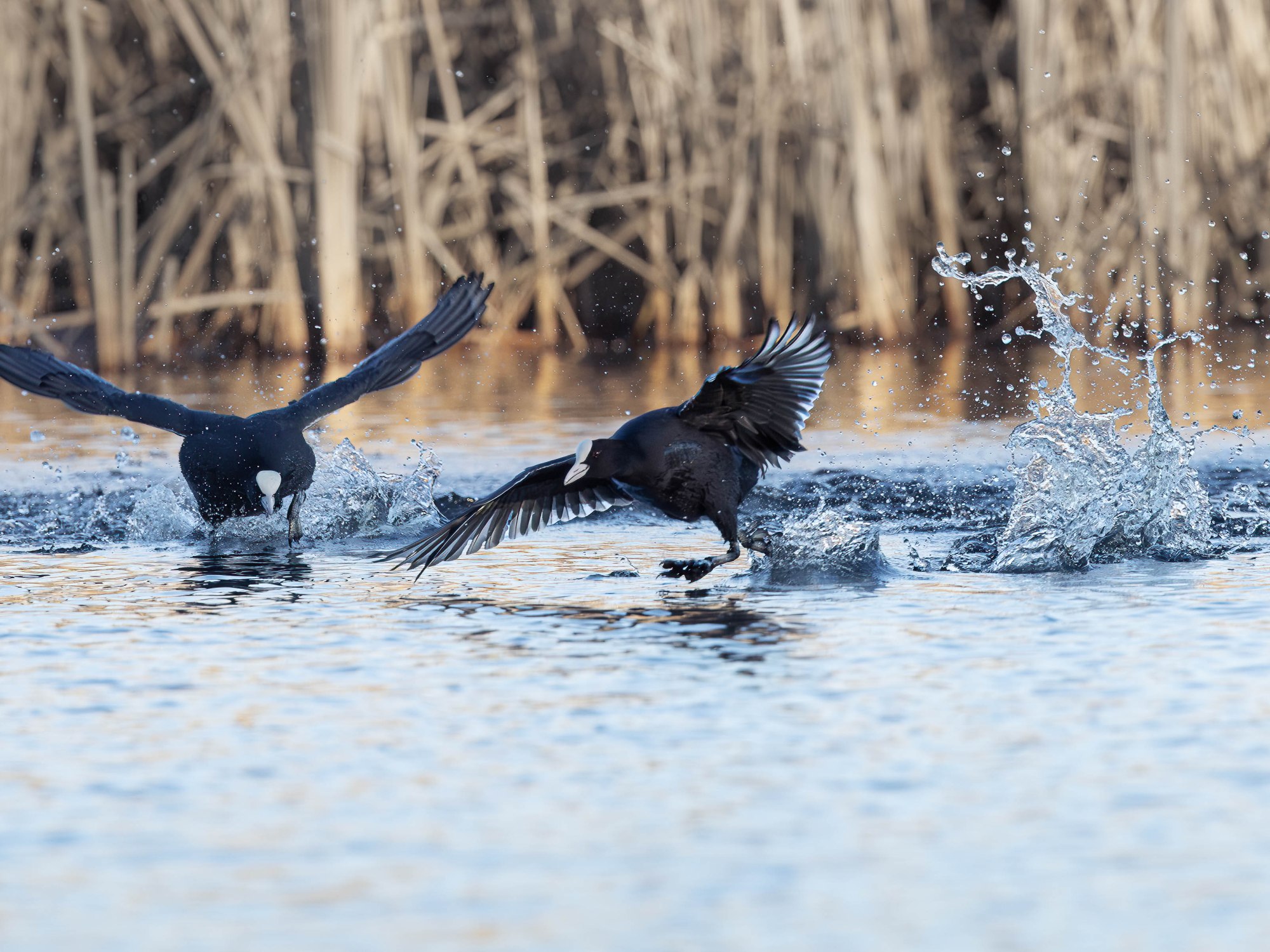
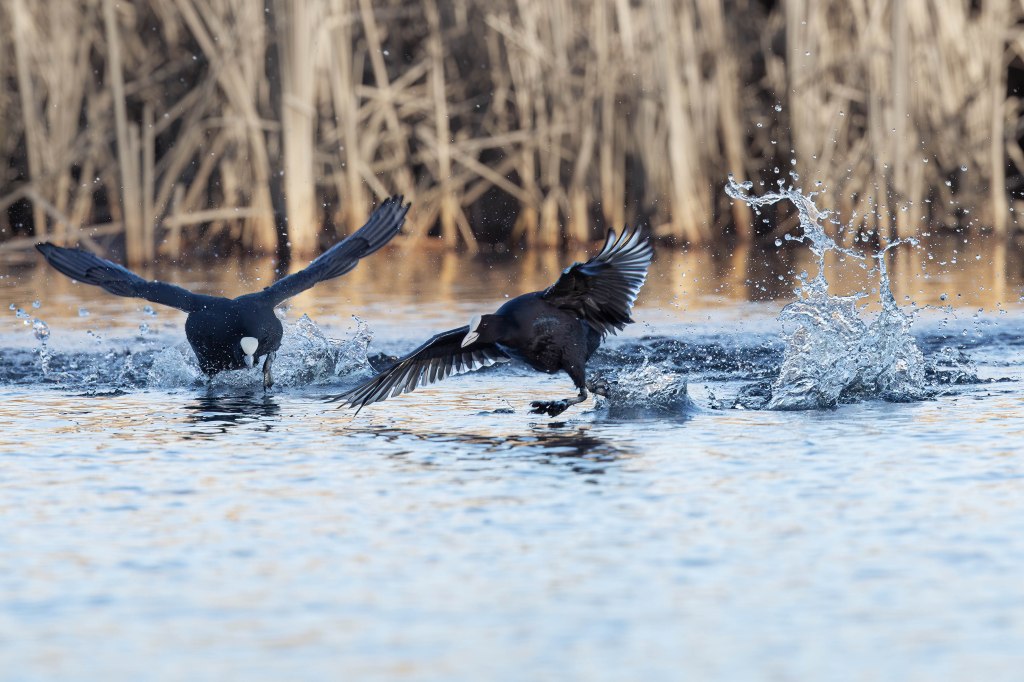
Spring tension rises. Two coots clash in a territorial dispute, kicking and splashing in the reeds. The reeds make it difficult to photograph the birds, as the autofocus tends to lock onto the reeds.
Goldeneyes and coots seem to have their emotions running high every spring. The coots run across the surface of the water with surprising speed.
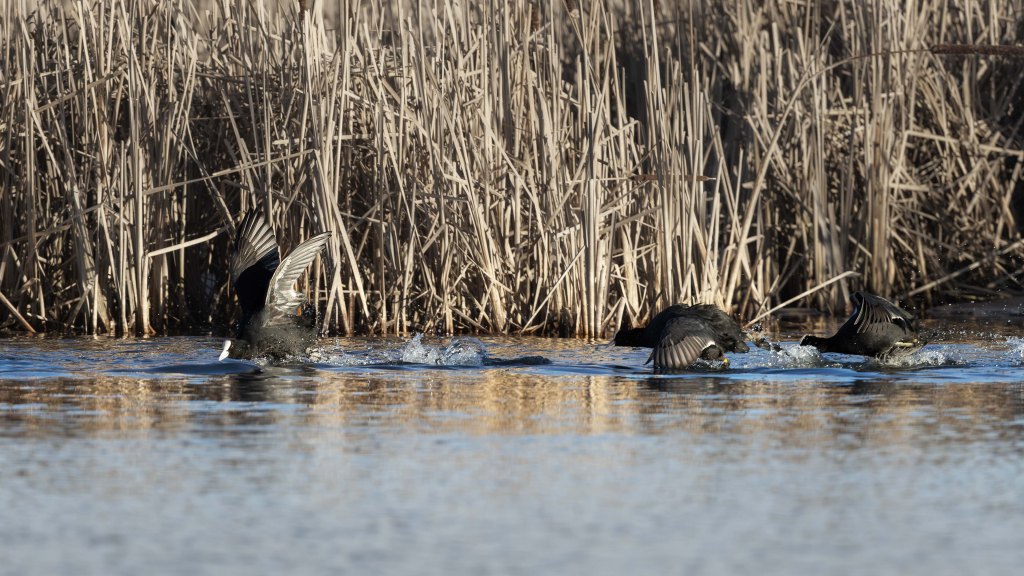
Then the fight begins. They kick at each other with their powerful lobed toes. At times it looks as if one bird is trying to force the other underwater.
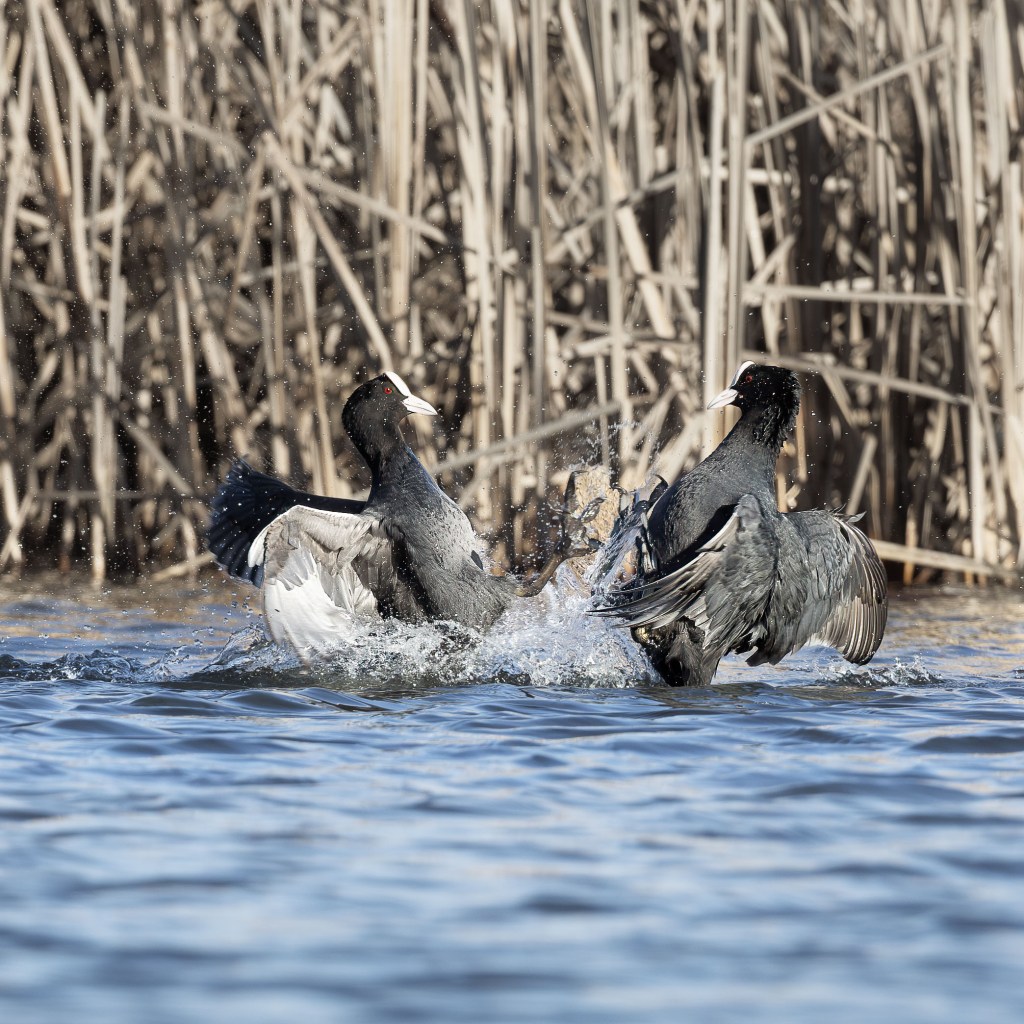
From a human perspective, the fights look harsh. They are intense and physical. I sometimes wonder how often birds are injured in these encounters. Territorial disputes are part of breeding behaviour, but they are not gentle.
Goldeneyes
Goldeneye males are equally determined. They display to females by throwing their heads back dramatically so that the crown almost touches their back. The movement is quick and theatrical. Rival males chase each other across the water in short, explosive bursts.
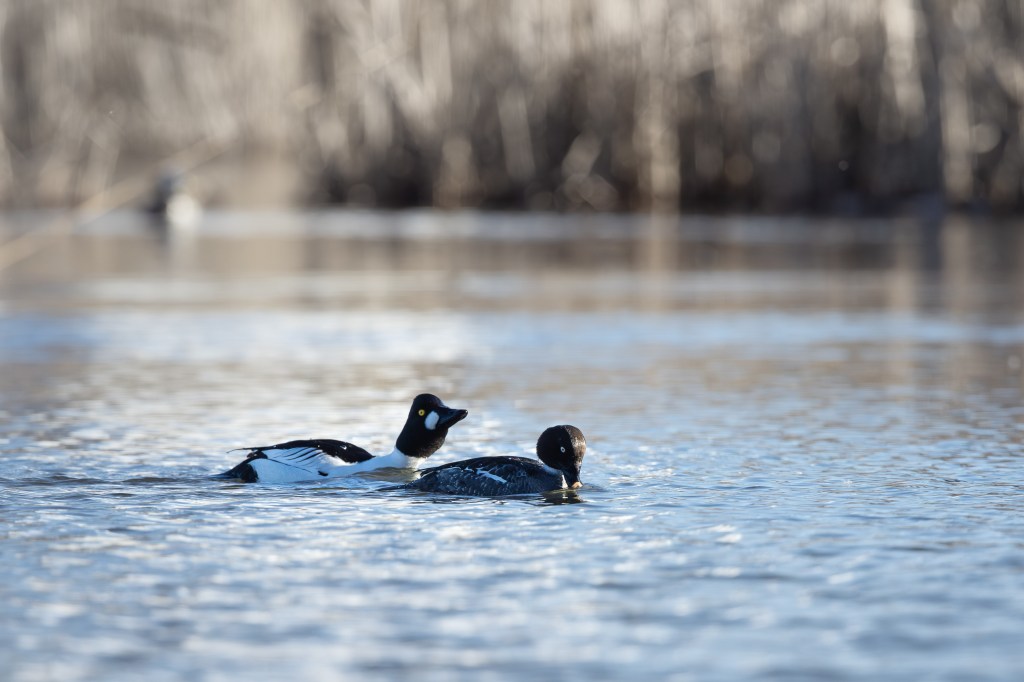
Even when I do not capture the action, it is fascinating to observe.
The Vulnerability of the Common Pochard
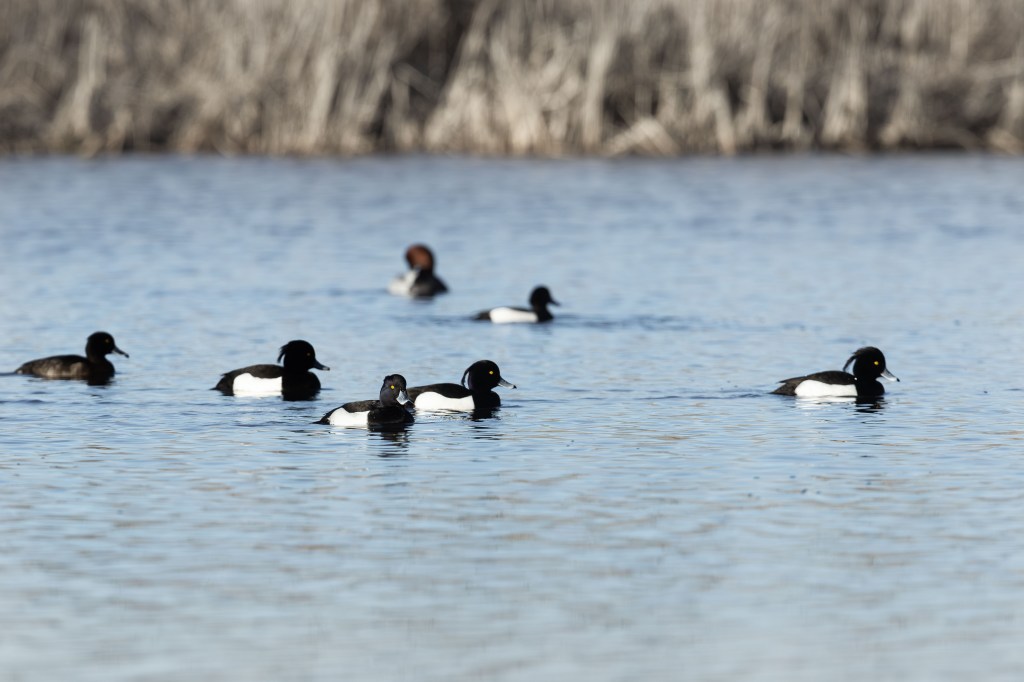
This spring there have been large flocks of tufted ducks at the wetland. Among them, several common pochards.
Seeing them always feels special.
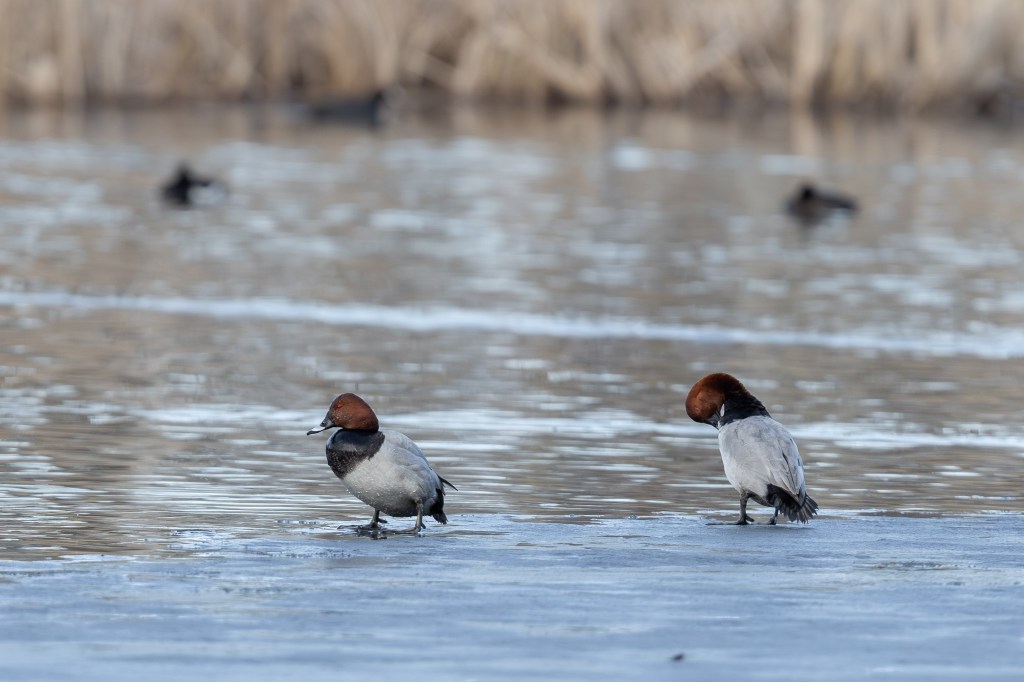
In Finland, the common pochard is classified as Critically Endangered. Its population has declined dramatically over the past decades. The reasons are complex: loss and degradation of wetlands, eutrophication, changes in water quality, predation pressure and possibly climate-related changes all play a role.
The decline is not limited to Finland. Across Europe, the species has suffered significant population decreases. For a bird that was once relatively common, the change has been sobering.
That is why Suomenoja is such an important site. Managed wetlands provide feeding and breeding opportunities. For a photographer, it is a privilege to document a species that is struggling. Images can remind us that these birds are not abstract statistics. They are present, living, moving beings.
Light Before Action
While behaviour is fascinating, I am equally drawn to light.
Early in the morning, as the sun rises, the glow on the water can transform an ordinary scene into something luminous. In the evening, when the light becomes softer and warmer, reflections wrap around the birds.
I look for the moment when the surface of the water mirrors both colour and movement. When the bird is framed by light rather than just photographed in it.
This year I have not yet captured the image I am hoping for.
But spring is only beginning. There is still time.
Swans and a Crow
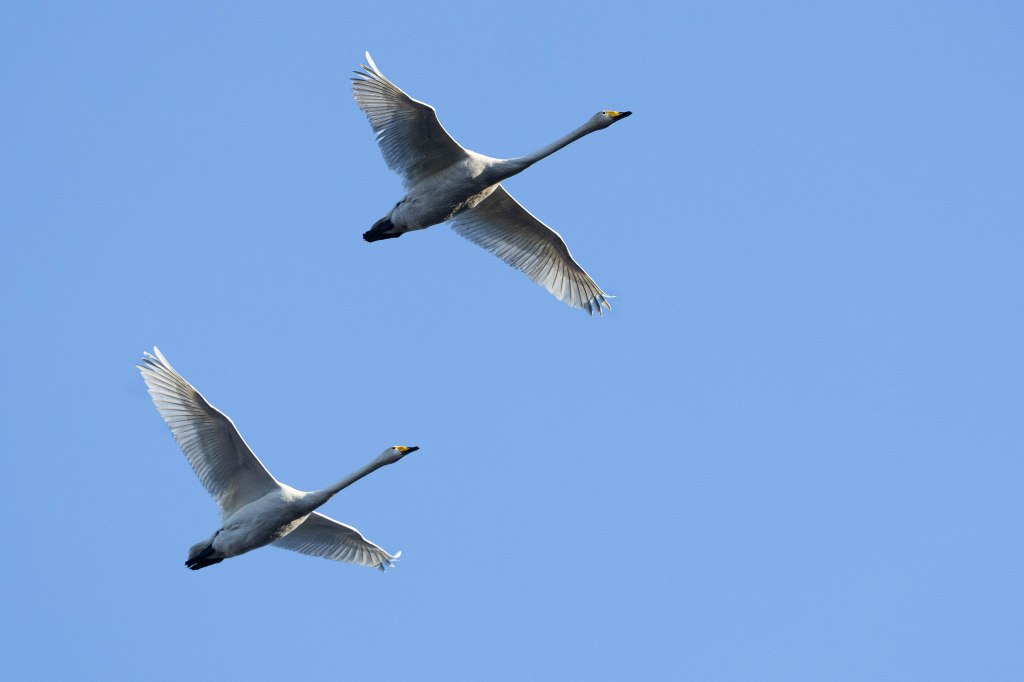
At the end of one session, whooper swans – Finland’s national bird – flew over the wetland. Large, white and powerful, their wingbeats carried across the water. The species has increased in Finland in recent decades, a conservation success story that stands in contrast to the decline of the pochard.
Before leaving, I photographed a hooded crow. They are not always appreciated. Yet they are remarkably intelligent and playful birds. When this individual seemed willing to pose, I gladly took the opportunity.
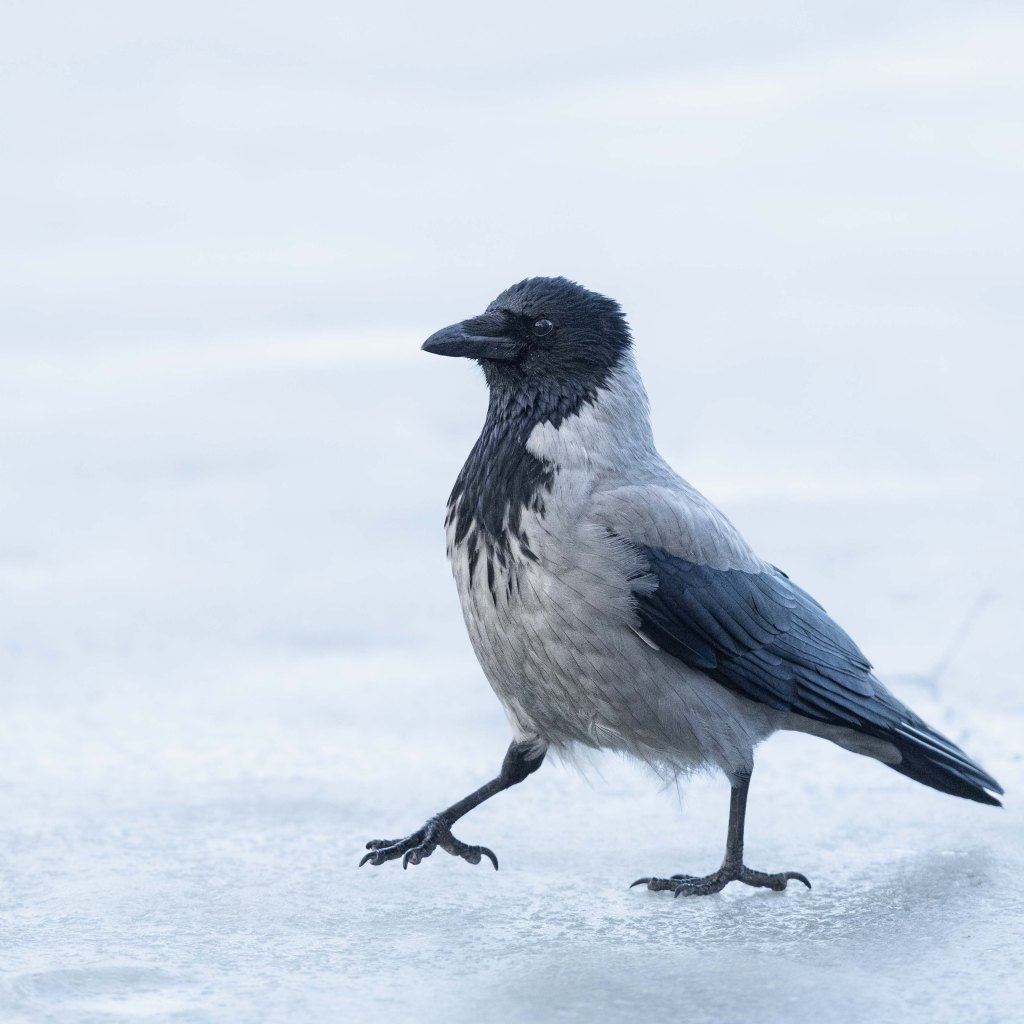
To me, the crow is a beautiful bird. Subtle in colour, confident in presence.
A Season Just Beginning
Late March at Suomenoja has still been relatively calm except the coot fightings. The full intensity of spring has not yet unfolded.
But the ice is gone. The birds are returning. The light is changing.
And that is enough.
Thank you for spending a moment of your time here.
What does early spring look like where you live? Have you already seen the first signs of returning birds?
You are warmly welcome to follow this blog for more reflections on light, nature and photography as the season continues to unfold.
 MINNA JACOBSON
Wonderful set of shots and info Minna 🙂 I do love Hooded Crows, my favourite Corvid, we don’t have them near me ……. yet
LikeLike
Impossible to name a favourite among these photos as I love them all. The crow is gorgeous and they are birds I also admire very much. I’ve never seen one like that. I did not know coots had feet like that. The action shots are so dramatic. You have such a wonderful variety of birds and it is so exciting to see them return after Winter. We seldom see a swan here, sadly. I adore them! I look forward to your captures in the coming months and I am grateful that you share them.
LikeLike
En fin plats du hittat och fantastiska actionbilder, för att inte tala om kråkan med sin pondus. Fågelvåren har varit intensiv här sedan slutet av februari och fortsätter ett tag till, om än i kanske ett annat tempo. Hinner knappt lägga ut på bloggen men är snart ikapp. Ha det bra!
LikeLike
Fantastic photography, Minna, and a very informative post.
LikeLike